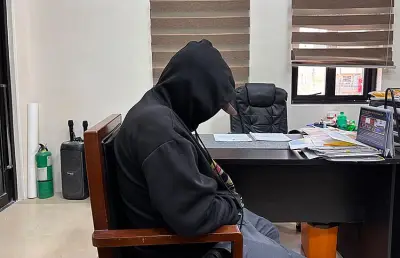
The reported school shooting incident in Tacloban City has forced a conversation that many people keep trying to soften. When a child commits a violent act inside a school, society rushes to explain it away—citing circumstances, upbringing, influence, and age. But as young people, we declare: we will not normalize violence just because it comes from someone our age.
Accountability Has No Age
Children in Conflict with the Law (CICL) are often spoken about as if they exist outside the reach of accountability. As if age alone dissolves responsibility. From our perspective as youth, that mindset is dangerous. Today’s minor offender does not stay a minor forever; they grow up and become adults in the same communities we live in. If violence is repeatedly excused at the start, it does not magically disappear later—it matures.
We are not asking for cruelty. We are asking for seriousness. When a young person commits a violent offense, especially something as severe as an attack inside a school, the response cannot be treated like a temporary inconvenience. The justice system must stop sending the message that consequences are optional depending on age. Rehabilitation should exist, but without firm accountability, it becomes permission for repetition.

Parents and Guardians Must Be Held Accountable
Responsibility cannot stop with the offender alone. Parents and guardians must also be part of the conversation—not as an afterthought, but as a central factor. A child does not grow in isolation. Homes shape behavior, discipline, and understanding of right and wrong. When that foundation collapses, the impact reaches schools, streets, and strangers.
We also need to stop pretending that facilities like Bahay Pag-Asa are waiting rooms for troubled youth. These centers must be structured, disciplined environments with clear rules and consequences—not places that feel temporary or meaningless. Intervention must be firm enough to correct behavior, not simply contain it until release.
Rejecting Permanent Exclusion
At the same time, we reject the idea that CICL should be permanently discarded by society. That is not justice; that is how cycles of harm deepen. Accountability does not mean a lifetime of exclusion. It means consequences that are real, corrective, and serious enough to prevent repetition.
But we also cannot ignore where this begins. Violence is not born in courtrooms or detention centers. It begins in homes where conflict is unmanaged, in communities where aggression is normalized, and in systems that respond too late. If the government is serious about preventing another Tacloban incident, it must confront not only the offender but the environment that produced the offender. This includes addressing domestic violence, strengthening school safety, and ensuring intervention happens before tragedy, not after.
Public Leaders Must Act
Even public leaders are not outside this responsibility. When officials tolerate violent culture, ignore warning signs, or fail to strengthen child protection systems, they contribute to a society where violence becomes easier to commit and harder to stop.
We are the youth, and we are telling you plainly: we will not inherit a future where violence is excused simply because the perpetrator is young. Because we are also the ones who will grow up beside them. We will share workplaces, streets, and communities with the same individuals society once refused to hold fully accountable. Accountability has no age. If we fail to teach that now, we will all be forced to live with what comes after.