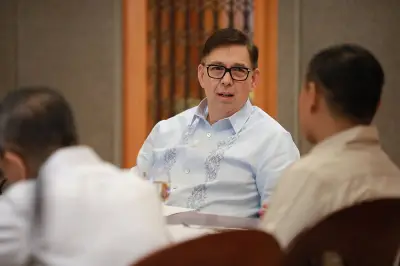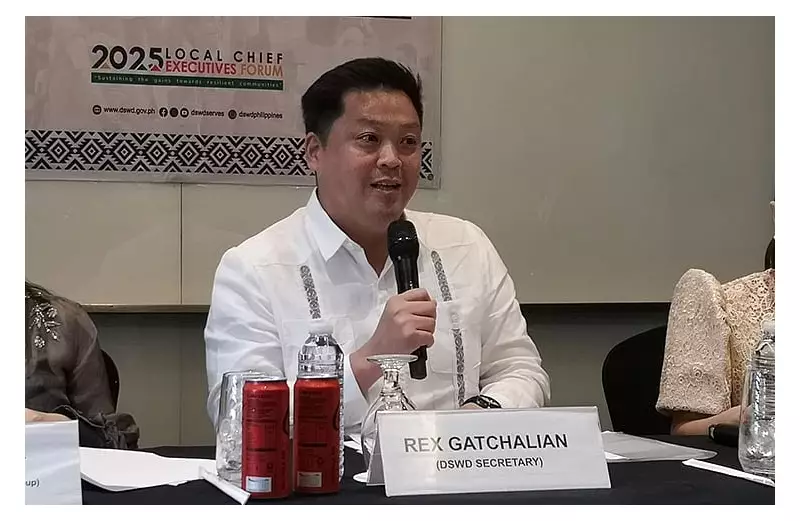
Social Welfare Secretary Rex Gatchalian has emphasized the critical role of community-driven development in bringing timely and effective projects to the Philippines' most remote and vulnerable communities.
Empowering Communities Through Bottom-Up Approach
The program's strength lies in its revolutionary bottom-up structure, where residents themselves identify and choose projects that match their specific needs. Unlike traditional top-down government programs, this initiative allows proposals to originate directly from community members.
"Let's talk about the benefits, the impact, and the transparency. It empowers communities because they choose the projects that fit their needs," Gatchalian stated during his recent announcement.

He explained that "this comes from the people themselves. These are their ideas, funded according to what they need, not something imposed by the national government."
Targeting Geographically Isolated Areas
The development platform proves particularly vital for geographically isolated and disadvantaged areas, including mountain communities, island populations, and sitios located far from urban centers. Without this approach, many of these communities would remain unnoticed and underserved.
Although individual projects are relatively small with budgets not exceeding P5 million each, Gatchalian emphasized they are "highly impactful because people use them every day." Typical projects include essential infrastructure such as water systems, community lighting, post-harvest facilities, daycare centers, and local bridges.
The government maintains an "open menu" system that allows communities to propose what they genuinely need, with exceptions only for items on a negative list like vehicles or land purchases that don't benefit the wider population.
Transparent and Efficient Implementation
Transparency remains a cornerstone of the program, with procurement handled directly by community members themselves. "We train them, they choose, they procure, they build, and they maintain the projects. That's why the process is efficient," Gatchalian explained, noting the system utilizes a community procurement mechanism.
Comparative analysis shows that community-led construction often proves more efficient than traditional government methods. The secretary described it as "an innovative way of spreading government resources to the poorest, farthest, and smallest communities."
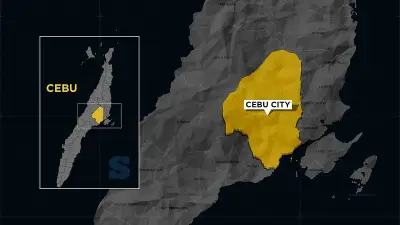
The program's recent rollout in Cebu comes at a crucial time, as the region has recently become the epicenter of natural disasters, including an earthquake that affected parts of the Visayas and Mindanao.
Addressing Disaster Vulnerability and Sustainability
Target municipalities have been pre-identified based on their high disaster risk and vulnerability to climate-related hazards. "When communities are so prone to disasters, poverty incidence rises again. Setbacks bring people back to hardship," Gatchalian noted.
While acknowledging that limited resources remain the biggest challenge - explaining that even P56 billion spread over three years across 500 municipalities remains modest - he stressed that success isn't measured by program size but by whether projects truly match community needs.
The program requires Local Government Units (LGUs) to provide a 20 percent counterpart, reduced from the previous 30 percent requirement. This contribution can be provided in non-cash forms such as labor, office space, or technical expertise.
"They can do it. We've seen 20 years of partnership. It's not all about cash, LGUs have capacities we help tap, like municipal engineers," Gatchalian urged, encouraging the public not to underestimate local governments.
Sustainability has proven strong, with monitoring showing approximately 98 percent of completed projects remain operational because LGUs help operate and maintain them. "When local governments contribute, they take care of the project. They have a stake in it," Gatchalian affirmed.

Strategic Allocation and Future Expansion
Project allocation isn't determined by region alone but by specific criteria including poverty incidence, disaster vulnerability, susceptibility to climate change, and the presence of Indigenous Peoples. For example, 42 LGUs in Central Visayas were identified using these measurements.
The Department of Social Welfare and Development remains open to exploring different modalities, including using the community-driven model to help expand classroom infrastructure nationwide. While Gatchalian doesn't dictate what communities should build, he noted the mechanism can support various needs from water systems and classrooms to food security initiatives.
"Community mobilization happens on the ground, and local government units cannot be excluded," Gatchalian added, stressing that people's organizations rely heavily on LGUs for counterpart support.
He reiterated the fundamental principle of the bottom-up approach: "We cannot impose on communities what they should build. If they say they need a water system, we cannot force them to build classrooms instead."
Gatchalian emphasized that this initiative represents a more inclusive method of delivering government assistance. "This is an innovative way of spreading resources. Instead of concentrating them in highly urbanized areas, we bring help to the poorest, the farthest, and the most remote LGUs," he concluded.