The Davao City Social Welfare and Development Office (CSWDO) is intensifying school-based child protection and early intervention programs while reporting a decline in the number of residents at Bahay Pag-asa for Boys, emphasizing its rehabilitation and reintegration efforts for children in conflict with the law.
Drop in Bahay Pag-asa residents
Social Welfare Officer Fulgencia Autida said Bahay Pag-asa for Boys currently houses 49 residents, a significant decrease from around 80 residents last year and about 120 residents when she headed the facility in 2019. The facility has a capacity of about 70 to 80 beds and currently has enough space to accommodate additional residents since it serves as a temporary shelter while cases are pending before the courts.
Autida explained that many children admitted to the center have unresolved family issues, including neglect, parenting problems, bullying, peer pressure, and untreated mental health concerns. Before children are reintegrated into their communities, CSWDO prepares both the child and the family through counseling, parenting interventions, psychological evaluation, capability-building activities, and educational programs conducted by visiting teachers and in-house psychometricians.

Early intervention and school-based campaigns
Autida said the city is expanding its preventive interventions through school-to-school advocacy campaigns, family support services, and psychosocial programs to address increasing youth-related concerns before they worsen. "Dili na nato hulaton nga mo-worsen pa. We are creating early intervention (We should not wait for the situation to worsen. We are creating early intervention)," Autida said during the ISpeak Media Forum on July 9, 2026, at the City Mayor’s Office.
She said social workers assigned in barangays now regularly visit schools to conduct campaigns on juvenile delinquency prevention, child protection, anti-bullying, and mental health awareness. For children who become victims of violence or traumatic incidents, the office coordinates with families, schools, and guidance counselors to establish strong support systems and educational plans to prevent disruptions in their studies through psychosocial intervention.
Reintegration process and legal framework
Autida said children are only released after determining that both the child and the family are ready for reintegration. If the family is not yet prepared, CSWDO will request parenting capability assessment reports from community social workers before recommending extending the child's stay. "Magdepende na siya sa response sa assessment pud sa atong multidisciplinary team. Sa law ta mag-base. The law says one year ang ilang minimum nga intervention sulod sa atong facility. Kung dili pa ready pwede ra i-extend depende sa behaviour and response sa bata (It depends on the assessment response from our multidisciplinary team. The law provides a minimum one-year intervention inside the facility. If the child is still not ready, the stay may be extended depending on the child's behavior and response)," Autida said.
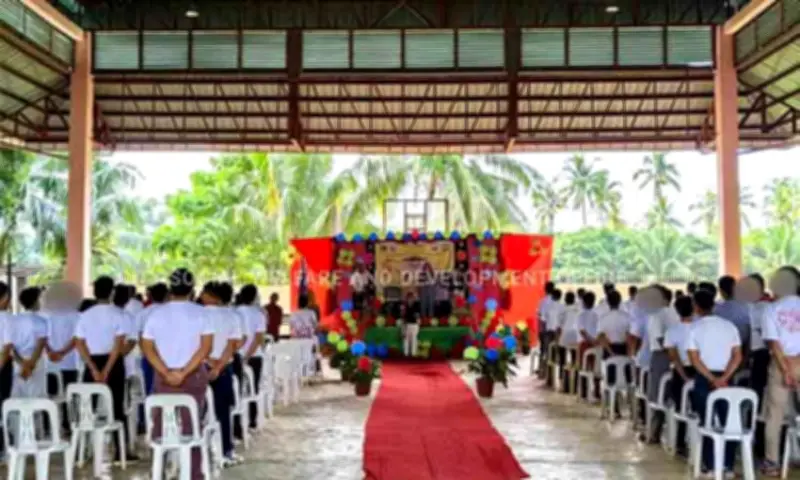
The facility occupies nearly one hectare and includes four classrooms, a chapel, counseling rooms, a clinic, a gymnasium for sports and outdoor activities, and separate accommodations according to age groups. Children aged 14 and below are housed separately from older residents.
Funding and community involvement
Autida also assured the public that funding remains sufficient. "There is no problem with the funding. The children do not have to pay for food, toiletries, or any basic needs. Everything is provided for by the city government free of charge," she said, adding that monthly funding exceeds P200,000 depending on the residents' needs.

Responding to concerns over youth-related incidents in the city, Autida said the CSWDO continues to strengthen family development sessions, parenting education, coping mechanisms, school-based campaigns, and community advocacy involving child development centers, parents' groups, senior citizens, women, and the youth. She clarified that the youths involved in the reported Ramos incident were not identified as gang members. "Actually, wala silay ginaangkon nga gang member sila. Niagi ra daw kay nagpagupit ra siya (Actually, they did not claim to be gang members. They said they had merely passed by because one of them had gone for a haircut)," she said.
Curfew enforcement and rehabilitation success stories
Autida explained that children found violating the city's curfew ordinance are rescued by police, brought to the station, documented by the Quick Response Team for Children's Concerns (QRTCC), and later turned over to barangay authorities and their families for intervention. She added that successful rehabilitation stories are regularly highlighted during Bahay Pag-asa activities to encourage other children to reform.
Autida also invited the public to participate in the Pag-asa Youth Association of the Philippines (PYAP) Founding Anniversary on July 29, which will be held at the Barangay 76-A Gym. The celebration will feature poster-making and dance competitions, as well as the search for the most functional PYAP organizations among Davao City's 182 barangays. She said the annual celebration aims to encourage youth participation in positive community activities and divert them from risky behavior through leadership and civic engagement.