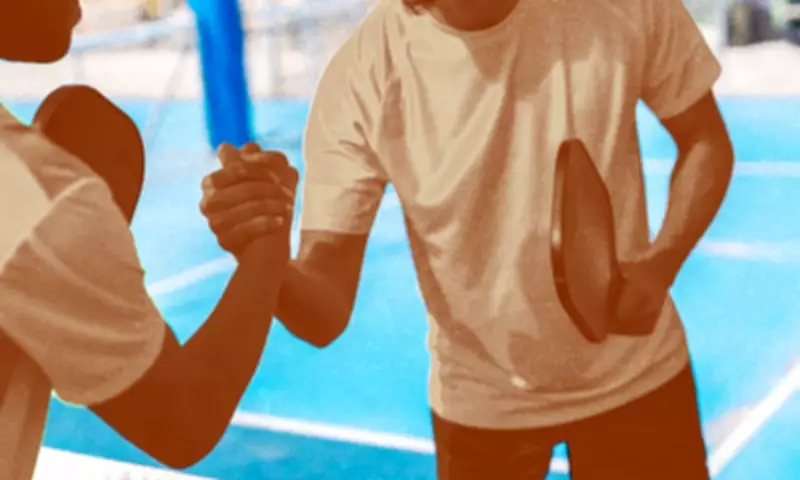
Whether you are playing with friends or strangers, chances are you will encounter some individuals who can pass as John McEnroe's minions. No, they will not unleash profanity-laced tirades at opponents or doubles partners, but they possess a scene-stealing, soul-sucking, super bratty attitude that everyone on the court will notice. They are still just minions, not true-to-size, living, breathing replicas. Most importantly, we are not talking about tennis. Welcome to pickleball.
The Rise of Pickleball
The rise of pickleball as a sport is a phenomenon in itself, so parabolic that 24-hour open courts are often fully booked. As this article is being printed or published online, more and more courts are being introduced to the public. Despite niche outlooks that paint pickleball as an elite sport carrying costly upgrades from paddles to court shoes for a proper workout, recreational play can still come at very affordable rates. A court for P500 an hour can be split by six people, which is less than P100 each.
But with the meteoric ascent comes unchecked privileges. Every good experience starts off heavenly until whispers are heard across courts all over town. When the euphoria spreads and pickleball is painted as the next utopian destination, things start to crumble. Because pickleball involves people, and people, as history would dictate, are a very complicated lot.

This is an open letter, an observation from someone engrossed in the sport. Here are the five people that make pickleball feel more like a chore than the holistic lifestyle workout it was envisioned to be from its inception in the 1960s Hippie America.
The Coach
He usually reveals himself early. A missed return gets a quick correction. A rally ends and there is immediate feedback on what could have been done differently. It continues point after point until the game starts to feel less like play and more like a running lesson. The intention is often good, but constant coaching has a way of pulling you out of your own rhythm. Instead of reacting naturally, you begin to think through every shot. In a game that relies so much on instinct, that shift is enough to disrupt everything else. Coaching is not a bad thing; humility goes a long way in improving one's game. But so does empathy and the ability to read the room, or in this case, the court.
The Mental Wanderer
This one is less obvious at first but becomes harder to ignore as the game goes on. You get ready to serve and realize one player is not paying attention. Not because he asked for time, but because his focus is somewhere else entirely. Maybe it is another game, maybe it is a conversation happening nearby. You wait, reset, and try again. It happens just often enough to break the pace. Pickleball depends on a shared sense of timing, and when one person keeps stepping out of that, the whole game feels uneven. Pickleball is one of the more inclusive sports invented, allowing people of all ages and genders to participate. It works best when everyone stays present.
The Stoic
There is a different kind of disconnect that happens with the player who simply does not respond. You acknowledge a good shot and get nothing back. You call for the ball and there is no adjustment. You apologize for a mistake and it lands in silence. It is not about needing constant conversation, but doubles relies on small signals that help two people move together. Without those, you start to feel like you are playing alongside someone rather than with them, and the game loses a bit of its energy.
The Method Actor
Competitiveness is part of the appeal, but there is a version of it that changes the tone of a game. It often begins subtly, with a reaction to a missed shot or a slight shift in body language after a few lost points. Over time, it builds until every rally feels heavier than it should. Paddles are smacked against structures, guttural screams on mute are felt because the eyes never lie. The court starts to feel tighter, the pace more tense. When that happens, the lightness that makes pickleball enjoyable starts to fade, replaced by a pressure that was never really necessary in the first place.

The Disruptor
Sometimes in pickleball, games are pre-determined so players just have to wait their turn before they can play on the court. And there are times when the flow of games is natural and goes on without a hitch. But there are also instances when players who feel like they need better matches start to supersede organizers and demand to play with a group they prefer, avoiding those who are either too good to beat or too unskilled to enjoy a competitive game with. The result is that the entire flow of games is botched just to accommodate the untimely request of the select few.
How to Keep Your Peace, Keep Playing
Pickleball enthusiasts should never underestimate finding a core group. This is like eight to 12 people that you can play with often enough that the game feels familiar before it even starts. You learn together, progress together, and develop an understanding that does not need to be talked through every point. Over time, everyone reaches a certain ceiling, and that is usually when you begin to explore open plays or tournaments, sometimes together and sometimes on your own. But having that group to return to matters more than you expect. It resets the game. It reminds you what it feels like when everything is simple again. Because at its best, pickleball is not complicated. It is just four people finding the same rhythm and staying there for as long as they can.