ArchaeoBot: AI and Robotics Revolutionize the Discovery of Ancient Filipino Seafaring
Long before Spanish colonization, the Philippine archipelago was inhabited by skilled seafarers who navigated open waters and hunted marine life with sophisticated technology. Today, groundbreaking innovations are transforming how we explore this distant past. In a recent Ateneo Breakthroughs lecture, archaeologist Dr. Alfred Pawlik unveiled ArchaeoBot, a pioneering project developed in collaboration with the Ateneo Laboratory for Intelligent Visual Environments (ALIVE). This initiative integrates robotics and machine learning into archaeological excavation, enhancing precision, reducing human error, and uncovering new details about early human life in the region.
Bridging Ancient History and Modern Technology
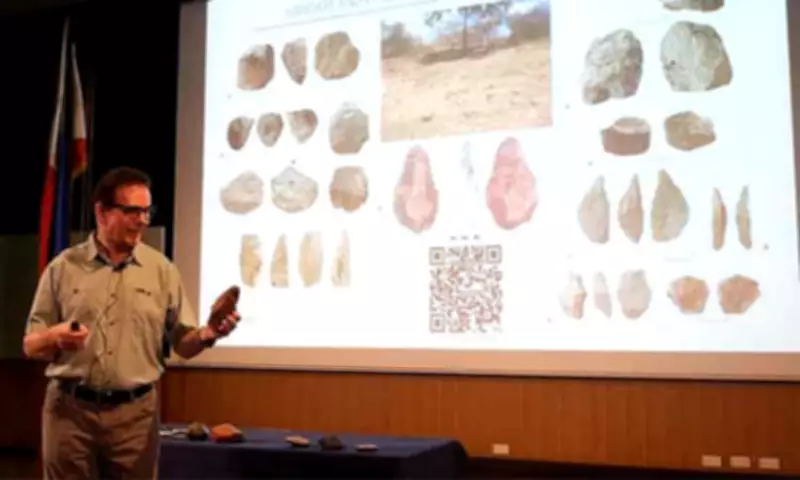
Dr. Alfred Pawlik, a professor at the Department of Sociology and Anthropology at Ateneo de Manila University, presented his findings on March 27, 2026, at Escaler Hall. His work focuses on Southeast Asian archaeology, hunter-gatherer societies, and past human behavior, supported by his roles as Research Coordinator of the Dr. Rosita G. Leong School of Social Sciences and Director of the Anthropological and Sociology Institute of Ateneo. Through ArchaeoBot, he connects ancient history with cutting-edge innovation, offering deeper insights into archaeological discovery.
How ArchaeoBot Enhances Archaeological Excavation
ArchaeoBot is designed to excavate sites with greater consistency, precision, and care than manual methods. Dr. Pawlik explained that the project emerged from a long-standing ambition to create a machine that handles physically demanding tasks while minimizing errors common in fieldwork, such as those caused by fatigue or inexperience. This smart, multipurpose system can detect artifacts, recognize archaeological features, and retrieve objects without damage, functioning as a comprehensive archaeological assistant.

Key features of ArchaeoBot include:
- Integration of robotics, sensing, and machine learning into a single platform.
- Sensors that identify artifacts, burials, hearths, and other subtle traces.
- Adaptive learning capabilities to improve performance in various excavation conditions.
- Support for tasks beyond digging, such as cleaning, recording, bagging, and storage.
Uncovering Early Human Migration and Survival Strategies
Dr. Pawlik presented evidence that humans reached Luzon hundreds of thousands of years ago and ventured across island chains like Palawan and Mindoro by around 40,000 years ago. These journeys were not accidental; since the Philippines was never connected to the mainland during the Ice Age, they required deliberate sea crossings. The "Palawan-Mindoro Corridor" is identified as a crucial migration route, positioning the archipelago as a gateway in Southeast Asian human migration.
Archaeological discoveries highlight the advanced capabilities of early communities:
- Remains of tuna, sharks, and other pelagic species indicate sophisticated fishing strategies.
- Bone gorges and modified stone weights reveal mastery of marine technology over millennia.
- Adaptation to both land and ocean environments, including plant use, demonstrates innovative survival skills.
The Future of Archaeological Research
Together with ArchaeoBot, interdisciplinary efforts aim to reconstruct entire systems of knowledge, making invisible technologies from the past visible. Dr. Maria Luz Vilches, Vice President for Higher Education, emphasized in her opening remarks that such scholarship provides access to generations and civilizations otherwise lost to history. This research underscores the Philippines as a historical space of movement, ingenuity, and connection, reshaping our understanding of early human life in the region.