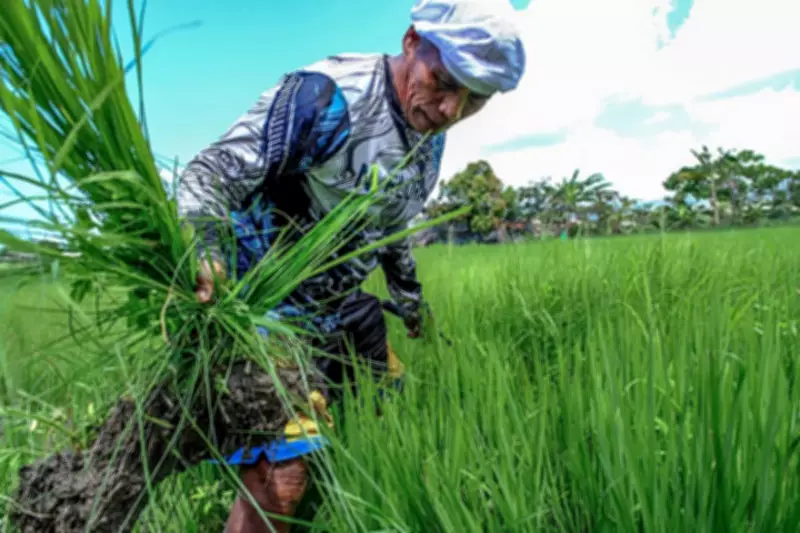
The Center for Asian Mission for the Poor Asia Inc. (Camp Asia) is set to launch Phase 2 of its agriculture development program in Mindanao, a Korean-funded initiative aimed at boosting farmer incomes through stronger cooperatives, climate-resilient farming systems, and improved market access, an official said.
Project Background and Funding
The project, supported by the Korea International Cooperation Agency (Koica), is formally titled “Income Enhancement of Farmers Through Strengthening a Sustainable Agricultural Environment in Mindanao.” It builds on earlier interventions that began in 2023 and were institutionalized in 2024, with a strong focus on organizing smallholder farmers into collective production and marketing systems.
Damafaco as Model Cooperative in Davao
A key component of the project is the development and strengthening of the Davao Mt. Apo Agricultural Farmers Cooperative (Damafaco), which has emerged as one of the pilot cooperative models under the program. Damafaco operates primarily in Davao City, particularly in the Calinan and Tugbok districts, where smallholder farmers were initially organized into clusters to test cooperative farming and marketing systems.

According to Camp Asia Project Officer Samuel Park during the Habi at Kape at Abreeza, Ayala Malls, Davao City, on May 6, 2026, Damafaco was formally established in 2024 following initial groundwork in 2023, with early implementation covering four barangays as a pilot phase. The second phase now aims to expand into nearby communities to scale up production and strengthen the cooperative’s value chain.
From Fragmented Farming to Collective Market Power
Park explained that the core challenge addressed by Damafaco is the fragmentation of smallholder farming, where individual farmers often struggle to negotiate fair prices due to low production volumes. He said the cooperative structure was designed to change this dynamic by consolidating farm outputs and enabling farmers to access larger and more profitable markets.
“So when we have organized the farmers so that they could consolidate their products, they could sell it at a higher price in the market. So they have market power,” Park said. He added that prior to the cooperative system, many farmers relied on passing traders or “middlemen” who purchased produce directly at farm gates, often at significantly lower prices. With Damafaco, produce is now aggregated, sorted, and marketed collectively.
Expanding Crops Beyond Durian and Cacao
While Damafaco initially focused on durian production, the cooperative has since expanded its coverage to include cacao and a wider range of crops grown by member farmers. Park noted that the program is not crop-restricted; instead, it supports all agricultural products cultivated within participating farms. This approach allows farmers to diversify income sources while strengthening the overall resilience of the cooperative. He stressed that Phase 2 will continue to prioritize productivity and quality improvement before moving toward advanced processing and export readiness.
Climate Resilience at the Center of Farming Reforms
One of the most critical challenges faced by Damafaco farmers is climate change, particularly the impact of the 2024 El Niño phenomenon, which disrupted planting cycles and harvest schedules. “Of course, ang biggest challenge we had is climate change,” Park said, noting that shifting weather patterns have made it difficult for farmers to predict crop cycles and market timing. In response, Camp Asia developed a “climate resilience farming” system based on years of study, introducing adaptive practices for both dry and wet seasons. These methods are designed to stabilize production even under unpredictable weather conditions.
Science-Based and Eco-Friendly Farming Transition
Beyond climate adaptation, the project is also promoting a shift toward more sustainable agricultural practices. Farmers are being encouraged to gradually reduce reliance on chemical fertilizers and adopt eco-friendly alternatives based on soil analysis rather than traditional or social media-based farming advice. Park said the goal is to professionalize farming practices by grounding decisions in scientific data, particularly soil health assessments, to ensure long-term productivity.

Quality Control and Direct Market Linkage
Damafaco also enforces strict quality standards through an Internal Quality Control (IQC) system, ensuring that only properly graded produce is marketed under the cooperative’s name. Park said this system helps eliminate rejects and improves consistency in supply, which is essential for building trust with buyers. The cooperative has also started building direct market linkages with partners in Luzon and other buyer networks. While export readiness is still being developed, Park clarified that the immediate priority is to strengthen domestic supply chains.
Income Gains Through Consolidation
Under the cooperative model, Damafaco now covers around 74 farmers managing roughly 100 hectares of farmland. Instead of selling individually, farmers consolidate their harvests, allowing for bulk selling and improved pricing. The cooperative also benefits from logistical support, including transport assistance provided through the project, enabling more efficient delivery of goods to markets. Park said this system has significantly improved income potential compared to the previous reliance on opportunistic farmgate buyers.
Expanding Phase 2 Implementation
As Camp Asia prepares for the formal rollout of Phase 2, the focus will be on expanding Damafaco’s reach into nearby barangays, strengthening climate-resilient agriculture, and further improving cooperative management systems. Park said the long-term goal is to develop a scalable model that can be replicated across other farming communities in Mindanao, ensuring that smallholder farmers are better equipped to compete in both domestic and future international markets.