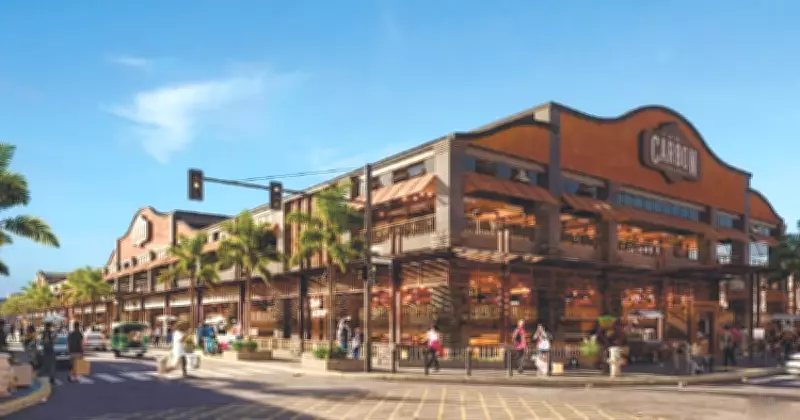
Cebu City's Carbon Market Modernization Triggers Financial and Legal Dilemma
A multibillion-peso joint venture aimed at upgrading Cebu City's historic Carbon Public Market has ensnared local officials in a rigid contractual agreement, compelling a stark choice between protecting vendors from escalating rents and confronting severe financial penalties. The project, initiated with an unsolicited proposal in 2019 from Megawide Construction Corp., has evolved into a complex legal and fiscal challenge for the city government.
The Genesis and Structure of the Joint Venture
The modernization effort began with a P5.5 billion joint venture agreement (JVA) signed in early 2020 under the late Mayor Edgardo Labella. By 2022, a supplemental agreement was forged under then-Mayor Michael Rama to address perceived ambiguities, increasing the project cost to P8 billion and securing an initial P50 million payment for the City. Operating under a 50-year concession, the agreement delineates the downtown market into two zones: the City retains authority over public market spaces, including Freedom Park, Warwick Barracks, and Units 1, 2, and 3, where the developer's subsidiary, Cebu2World Development Inc. (C2W), is restricted to maintenance and fee collection. In contrast, the developer holds full control over commercial and mixed-use areas, managing leasing and fees directly.
Rental Increases and Vendor Pressures
The core conflict arises from Section 12.3 of the 2021 agreement and Annex D, which enforce a strict schedule of rental hikes. Base rents in the public market surged from P16 per square meter in 2021 to P28 in 2024, with a separate city regulation, Ordinance 2719, pushing rates to P26 by 2026. Vendors face additional financial burdens from inflation-tied entrance fees, utility charges, maintenance costs, and a three percent monthly penalty for late payments. Under Section 7.3, non-payment grants vendors a one-month grace period, after which the City must evict them following a seven-day notice.

Financial Traps and City Liabilities
If the City attempts to halt these rate increases to protect vendors, it triggers financial liabilities under the JVA. Section 12.3 outlines scenarios requiring compensation to the developer, including failing to increase rental rates and entrance fees as scheduled, Material Adverse Government Action (Maga), unjustified interruptions to the developer's site possession for 12 months, delays from city-requested variations, unjustified withholding of the Certificate of Final Acceptance, or expropriation of project land. To settle these, the City must extend the 50-year contract term, reduce its revenue share, or pay direct cash compensation. Additionally, the JVA mandates site clearance, with failure to relocate residents like those in Sitio Bato constituting an "event of default" and incurring penalties.
Current Disputes and Legal Actions
The dispute has escalated beyond implementation logistics to questioning the contract's foundational terms. The Cebu City Council is preparing a resolution to revisit the agreement, focusing on fee collection boundaries, vendor protections, and city liabilities. In response, Mayor Nestor Archival froze fee collections in February 2026 after the developer proposed to start collecting in March, while Vice Mayor Tomas Osmeña petitioned the Supreme Court in January to halt construction entirely. As the developer aims to complete the main public market building by December 2026, the City faces a narrowing window to resolve issues affecting 1,000 regular stallholders and 4,000 ambulant vendors.
Broader Implications and Future Outlook
This situation highlights the tensions between urban development and social equity in Cebu City. The restoration of Freedom Park, completed in October 2022 by Cebu2World Development Inc., serves as a precursor to the larger market revamp, with Block 2 slated for completion in the first quarter of 2026. The outcome will set a precedent for how local governments balance modernization efforts with the welfare of small-scale vendors, potentially influencing similar projects across the Philippines.