Pump Pain Persists as Fuel Prices Remain Elevated
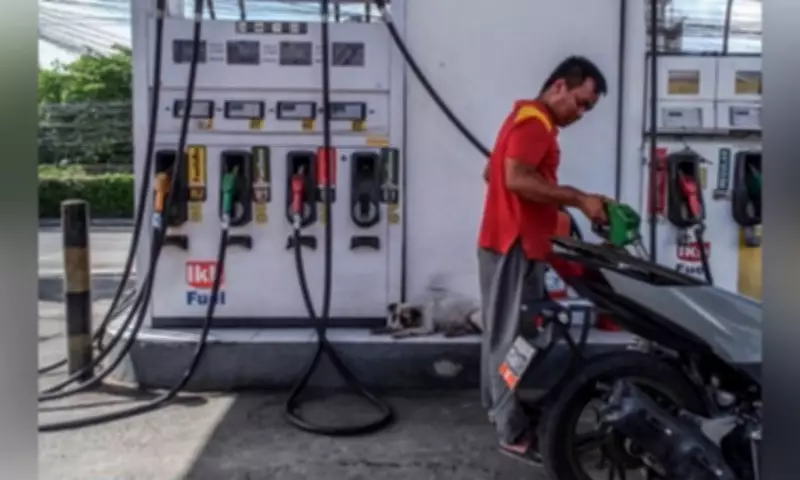
Business groups across the Philippines are rallying behind government initiatives to secure oil sourcing and stabilize prices as pump costs continue to burden consumers. The persistent elevation in fuel prices has created widespread economic strain, prompting urgent calls for structural solutions rather than temporary fixes.
Lawmaker Sounds Alarm on Soaring Diesel Costs
PPP Party-list Representative Harold Duterte issued a stark warning on April 7, 2026, demanding immediate government intervention to address the escalating fuel crisis. Duterte emphasized that ordinary Filipinos are suffering disproportionately from the price hikes, with diesel costs skyrocketing from approximately ₱50 to a staggering ₱170 per liter.
The dramatic increase is primarily driven by geopolitical tensions in the Middle East that have severely disrupted global oil supply chains. Duterte highlighted that transport workers, agricultural producers, and small business owners are bearing the heaviest burden of these market fluctuations.

Critique of Current Government Measures
While acknowledging that the administration has implemented excise tax reductions and targeted cash assistance programs, Duterte characterized these efforts as insufficient stopgap solutions. "These measures offer only short-term relief," he stated, "and they are not always the most equitable approach. They leave ordinary Filipinos to face the same problem again tomorrow without addressing the root causes."
The lawmaker specifically questioned government spending priorities, pointing to reports of ₱118 billion lost to flood control project irregularities while the Department of Public Works and Highways maintains a ₱529-billion budget. "That ₱118 billion could have directly helped Filipinos struggling with rising fuel prices," Duterte emphasized, noting that financial mismanagement persists despite substantial budgetary allocations.
Proposal for Oil Price Stabilization Fund
Duterte presented a concrete proposal to establish an oil price stabilization fund designed to manage pump prices and shield consumers from global market volatility. "We can establish an oil price stabilization fund to control diesel prices at the pump and protect our people from global shocks," he asserted. "And yes—we have the money to do this."
This initiative mirrors similar programs implemented in other nations that utilize stabilization funds to cushion the impact of oil price spikes. The proposal comes as analysts confirm that higher fuel costs continue to drive up transportation expenses and food prices, creating a disproportionate burden on lower-income households.
Broader Economic Consequences
The ripple effects of elevated fuel prices are already manifesting across the Philippine economy. Duterte noted that rising fuel costs are directly contributing to increased transport fares and food prices, exacerbating the financial strain on vulnerable populations.
He also criticized fellow lawmakers for focusing on political maneuvering rather than addressing urgent economic concerns. "Filipinos need concrete relief and decisive leadership," Duterte stressed, calling for a shift in legislative priorities toward substantive economic solutions.
Government Response and Structural Challenges
The current administration has rolled out subsidies for public utility vehicle drivers and proposed adjustments to fuel excise taxes under the Tax Reform for Acceleration and Inclusion (TRAIN) law. However, critics argue these measures provide only temporary respite without confronting the structural issues plaguing the energy sector.
As the Philippines grapples with volatile fuel prices linked to global crude markets, calls for long-term solutions continue to intensify. Duterte's stabilization fund proposal represents one potential pathway toward greater energy security and economic resilience in the face of ongoing global uncertainties.