The Asean Business Advisory Council is urging Southeast Asia to pursue more oil exploration and strengthen regional cooperation on fuel, food and fertilizer supply chains as geopolitical tensions threaten global trade flows and energy security.
Call for Oil Exploration
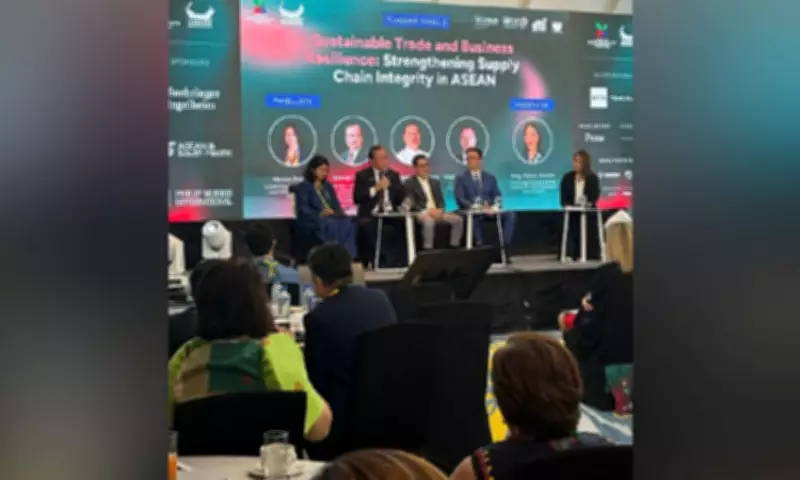
Speaking during a forum on supply chain disruptions and sustainability, George Barcelon, a member of the council, said the Association of Southeast Asian Nations (Asean) remains highly dependent on imported fuel and vulnerable to external shocks, particularly amid tensions affecting oil shipments through the Strait of Hormuz.
“The Asean region should look forward to more oil exploration,” Barcelon said at the Asean-European Union Business Summit on Thursday, May 7, 2026. He noted that some existing oil fields in the region are nearing the end of their productive life. He welcomed the Philippine government’s move to allow more exploration treaties, calling energy security critical for the region’s long-term competitiveness.

Focus on Fuel, Food and Fertilizer
Barcelon, who also serves as a member of the Asean Business Advisory Council, said the Philippines and Asean’s combined population of about 680 million makes the bloc one of the world’s largest trading regions, but supply chain vulnerabilities remain a major concern for businesses.
“Our main concern is the three Fs — fuel, food and fertilizer,” he said, warning that fertilizer supplies controlled largely by Russia, the United States and China could be weaponized during geopolitical conflicts.
He said Asean countries must work together to build more resilient supply chains, especially for essential commodities. Barcelon cited Indonesia’s assurance of continued coal supply to the Philippines, which sources about 70 percent of its coal requirements from the neighboring country.
He also noted that the Philippines has begun sourcing fuel from non-traditional partners such as Russia and may explore imports from China amid ongoing Middle East instability.
“These are extraordinary times. Countries have to be flexible. The more friends we have, the better,” he said.
Barcelon also raised concerns over the Philippines’ high logistics costs, which he said account for about 22 percent of business input costs based on a World Bank study. He said customs procedures and regulatory delays contribute significantly to the problem.
“Too many rules and compliance requirements delay the delivery of goods and add to the cost,” he said, expressing hope that Asean-wide information sharing and a “single window” customs system could improve efficiency.
Energy Transition and Sustainability
On sustainability and climate policy, Barcelon urged governments to adopt a more pragmatic approach to the energy transition. While supporting green energy initiatives, he said the Philippines’ moratorium on new coal investments has contributed to high power costs, making the country less competitive compared to its regional peers.
“We’re all for green energy, but we have to be sensible,” he said, noting that the Philippines contributes only a small share to global carbon emissions.
Barcelon also emphasized the need to support micro, small and medium enterprises (MSMEs) as they comply with sustainability and supply chain standards. He said the private sector, through groups such as the Philippine Chamber of Commerce and Industry, has been mentoring smaller firms and linking them with larger companies under “big brother-small brother” programs.
He welcomed recent government initiatives, including financing support for returning overseas Filipino workers with viable business projects, saying such measures could help smaller enterprises remain competitive despite rising compliance costs.
Still, Barcelon cautioned that sustainability regulations such as extended producer responsibility policies must be balanced across Asean economies to avoid disadvantaging countries with weaker compliance capacity.
“There has to be balance,” he said. “We cannot have a situation where one country strictly complies while others simply import goods and avoid responsibility.”