President Marcos Engages Business Council to Fortify Employment Against Global Volatility
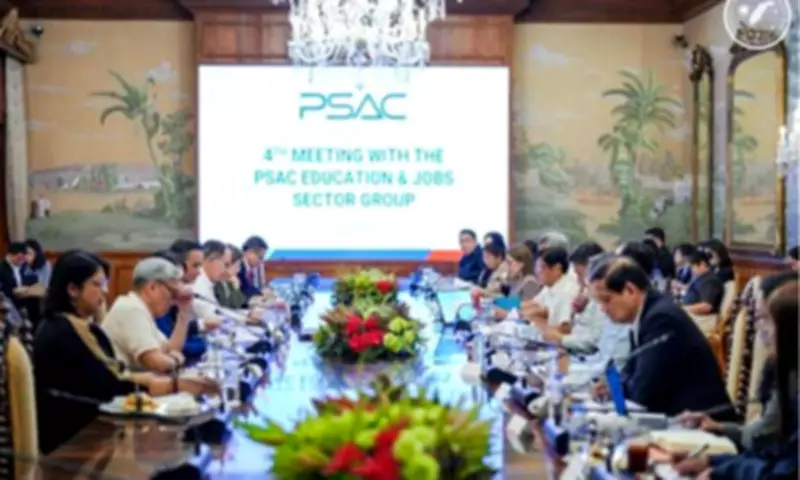
President Ferdinand R. Marcos Jr. held a crucial meeting with the Private Sector Advisory Council (PSAC) at Malacañan Palace in Manila on Wednesday, April 8, 2026. The primary agenda focused on crafting robust interventions to protect Filipino workers and sustain quality job creation, as escalating tensions in the Middle East exert significant pressure on fuel markets, international supply chains, and employment stability.
Private Sector Proposals for Immediate and Long-Term Workforce Resilience
During the high-level discussion, PSAC representatives presented a comprehensive suite of recommendations designed to mitigate the adverse effects of global economic volatility on both workers and enterprises. President Marcos expressed strong alignment with the private sector's proposed measures, stating, "The good result here is we are very much in agreement with the private sector advisors on what should be done to mitigate the effects of what is happening in the Middle East."
The council's proposals emphasized three core strategies: rapid job matching, efficient workforce redeployment, and accelerated project execution to absorb displaced workers. Specific initiatives include expanding nationwide job fairs, expediting hiring processes in government and private sectors, and fast-tracking the restart of infrastructure and school construction projects.

Targeted Support for Overseas Workers and Digital Transformation
To cushion potential displacement among overseas Filipino workers (OFWs), the PSAC advocated for streamlined redeployment procedures, micro-credential training programs across key industries, and enhanced support for entrepreneurship and micro, small, and medium enterprises (MSMEs). Sabin Aboitiz, PSAC Lead Convener and President of Aboitiz Group, underscored the dual focus on immediate job preservation and long-term workforce transformation. "By investing in skills, accelerating job matching, and supporting enterprises, we can help ensure that Filipinos remain productive and competitive despite global headwinds," Aboitiz remarked.
The council also recommended digital distribution of targeted subsidies and potential extensions of tax incentives for export-oriented firms, acknowledging that rising fuel prices are driving operational costs higher. Additionally, sustaining subsidies for public utility vehicle operations was highlighted as essential to maintain uninterrupted transport services.
Accelerating Digital Infrastructure and AI Upskilling Initiatives
A significant component of the PSAC's plan involves accelerating the rollout of digital infrastructure to facilitate remote work and reduce dependence on physical mobility. Another innovative proposal is the AI Upskilling para sa Digital Asenso (AIUDA) program, a rapid re-skilling initiative designed to transition workers into digital and remote roles within weeks. This program outlines tiered pathways—from basic AI-assisted tasks to higher-value digital work—enabling employment in areas such as data annotation, virtual assistance, analytics, and online entrepreneurship.
The AIUDA initiative builds upon existing private sector efforts, including the Aboitiz Foundation's Elevate AIDA program, which trains Filipino women for AI-related digital jobs and connects them to opportunities in the digital economy. The PSAC further advocated for greater flexibility in learning modalities, faster release of government subsidies for students and institutions, and regulatory adjustments to empower schools and training providers, thereby promoting long-term economic resilience.
Political Tensions Surface Amid Crisis Response Efforts
Meanwhile, Palace Press Officer Claire Castro criticized Vice President Sara Duterte for what she described as a lack of awareness regarding the government's ongoing efforts to cushion the impact of Middle East tensions on the Philippines. Castro asserted, "That's the problem with VP Sara. She does not know the programs, directives, accomplishments, and interventions of the government. VP Sara is part of the government, but she does not know any solution to the present issues. All she does is criticize."

Castro's comments came in response to Duterte's earlier criticisms of the administration's handling of the Middle East crisis and rising fuel costs. Emphasizing the need for constructive action, Castro added, "Their attacks do not help address the crisis in the Middle East. What should be done now is to focus on the work, not to spread their own mess."
The meeting between President Marcos and the PSAC underscores a collaborative approach to navigating economic challenges, with a clear emphasis on safeguarding employment, enhancing digital capabilities, and fostering public-private partnerships to ensure stability amid global uncertainties.