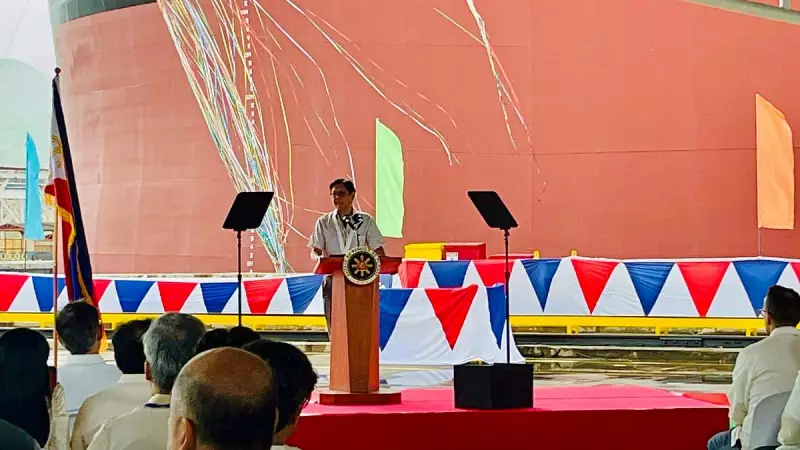
President Ferdinand "Bongbong" Marcos Jr. has officially launched the Philippines' first methanol dual-fueled bulk carrier, heralding a new era for the country's shipbuilding industry and its commitment to cleaner global shipping.
A Pioneering Vessel for Global Waters
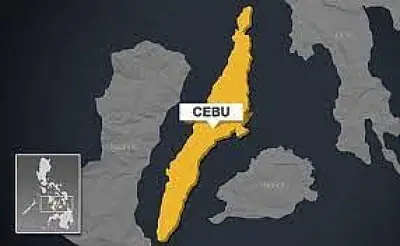
The ceremony for the 81,200-deadweight-ton vessel, named the "Brave Pioneer," took place on Thursday, January 15, 2026, at the Tsuneishi Shipyard in Balamban, western Cebu. Built by Tsuneishi Heavy Industries (THI), this green Kamsarmax bulk carrier is among the first of its kind in the world. A Kamsarmax is specifically designed as the largest dry bulk ship capable of safely navigating the Port of Kamsar in Guinea, West Africa.
President Marcos emphasized that this achievement signals the Philippines' readiness to become a major player in low-carbon maritime transport. "As global regulations become stricter, the demand for low-emission and alternative-fuel vessels will only grow," he stated. He added that Philippine shipyards capable of delivering such advanced vessels are now positioned to access premium international markets.

Showcasing Filipino Skill and Sustainable Growth
While the project is a result of cooperation between Japan's Tsuneishi Group and the Philippines' Aboitiz Group, Marcos was quick to highlight that the vessel is a testament to Filipino craftsmanship and competitiveness. He pointed to supportive policies like the Corporate Recovery and Tax Incentives for Enterprises (Create) Law as part of his commitment to strengthening the industry.
The President outlined the broader economic potential, noting that green vessels create opportunities for sustainability-linked loans, green bonds, and climate finance. This, in turn, could attract more investments not just in shipbuilding, but also in related sectors like marine components, advanced materials, and energy-efficient systems.
Marcos provided key statistics to underscore the industry's vitality:
- Over 130 registered shipyards nationwide.
- Employment for more than 11,000 workers, with 70% being skilled professionals like welders and fitters.
- Construction of 484 vessels in 2024 alone, ranging from fishing boats to passenger and cargo ships.
Environmental Impact and Community Transformation
The environmental benefits of the Brave Pioneer are substantial. According to Tsuneishi, compared to conventional bulk carriers, it is designed to:
- Cut carbon dioxide (CO2) emissions by around 10%.
- Reduce nitrogen oxides (NOx) by up to 80%.
- Slash sulfur oxides (SOx) by as much as 99%.
The use of methanol as an alternative fuel directly supports the International Maritime Organization's goal of reducing greenhouse gas emissions from shipping by at least 40% by 2030.
The ship's assembly was completed in April 2025 at Aboitiz InfraCapital's West Cebu Estate in Balamban, with its hull first launched on July 17, 2025. Sabin Aboitiz, President and CEO of the Aboitiz Group, credited the estate with transforming Balamban from a small coastal town into the nation's shipbuilding capital. He reported that the estate has generated about 12,000 jobs and supported the construction of nearly 400 ships, with over 380 delivered internationally. "All built by Filipino hands and sailed by Filipinos throughout the world’s oceans," Aboitiz said proudly.
Aboitiz also thanked President Marcos for approving a Presidential Proclamation in December that expanded the West Cebu Industrial Park Special Economic Zone. This expansion is expected to unlock about $1.8 billion in new investments and create over 2,000 additional jobs for the local community.
The Brave Pioneer is scheduled to begin its maiden voyage later this month, carrying the flag of Philippine innovation and sustainable industry onto the world stage.