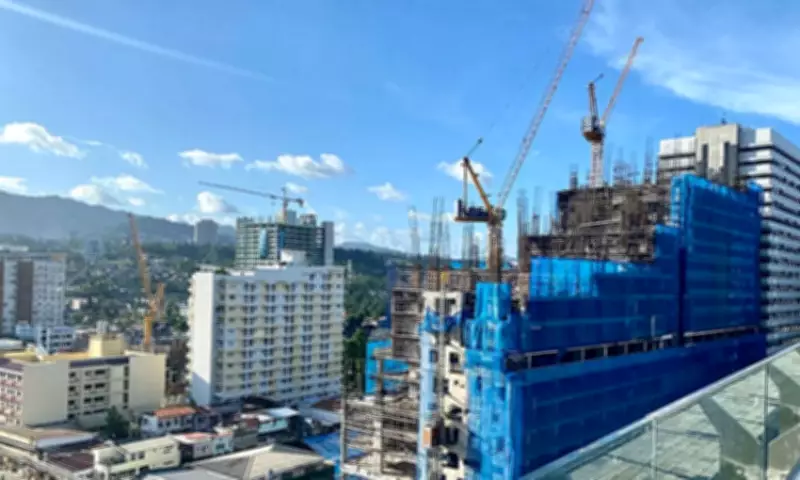
Construction cranes continue to dominate the skyline of Cebu, symbolizing ongoing urban development even as the broader construction landscape in Central Visayas shows signs of moderation. According to the latest data, the region's construction sector experienced a notable slowdown in 2025, with total building value declining by 5.2 percent. This downturn reflects softer spending, primarily due to a sharp contraction in residential projects, as detailed in the Central Visayas 2025 Report released by the Department of Economy, Planning and Development.
Key Statistics Highlight the Decline
Data from the Philippine Statistics Authority reveals that total construction value fell to P37.28 billion in 2025, down from P39.30 billion in 2024. Approved building permits dropped by 6.4 percent to 12,670, while total floor area declined by 5 percent to 3.10 million square meters. The slowdown was largely driven by a steep decline in residential construction, which saw its value plummet by 21.8 percent to P13.14 billion. This segment also posted reductions in both permits and floor area, indicating weaker housing development across the region.
Residential Construction: A Tale of Two Cities
Cebu City recorded the sharpest contraction, with residential construction value plunging 74.5 percent. Analysts attribute this to constraints such as land scarcity and rising property costs, which limit large-scale developments. In stark contrast, nearby urban centers experienced robust growth. Lapu-Lapu City and Mandaue City saw residential construction surge by 177.4 percent and 132.1 percent, respectively. This shift points to a growing demand for housing in more affordable and accessible locations outside Cebu City.

Experts suggest that hybrid work arrangements, particularly in the business process outsourcing sector, are fueling this trend. These arrangements allow workers to live farther from traditional business districts while maintaining access to workplaces, thereby reshaping housing patterns in the region.
Non-Residential Segment Provides a Bright Spot
Despite the overall slowdown, non-residential construction emerged as a bright spot, growing by 19.4 percent to P21.76 billion in 2025. This increase was driven by fewer but larger-scale projects. Mandaue City posted an impressive 430.7 percent surge, indicating the approval of major infrastructure developments. Cebu City also recorded a 16.2 percent rise, while Lapu-Lapu City saw modest growth, underscoring the resilience of this segment amid broader challenges.
Declines in Other Construction Activities
Other construction activities weakened significantly in 2025. Construction additions plunged 72.4 percent to P133.6 million, while alteration and repair work dropped 40 percent to P2 billion. Other construction activities declined by 47.4 percent. These declines suggest a reduction in smaller-scale projects and a normalization following post-pandemic upgrades, reflecting a shift in priorities within the construction sector.
Outlook for 2026: Gradual Recovery Expected
Looking ahead, construction activity in Central Visayas is expected to gradually recover in 2026. This recovery is likely to be supported by easing financing conditions, continued infrastructure rollout, and tourism-related investments. Additionally, rebuilding efforts following a recent earthquake and typhoon Tino may boost construction demand. However, the pace of recovery will depend on factors such as insurance payouts, financing access, and government support, highlighting the need for strategic interventions to sustain growth.