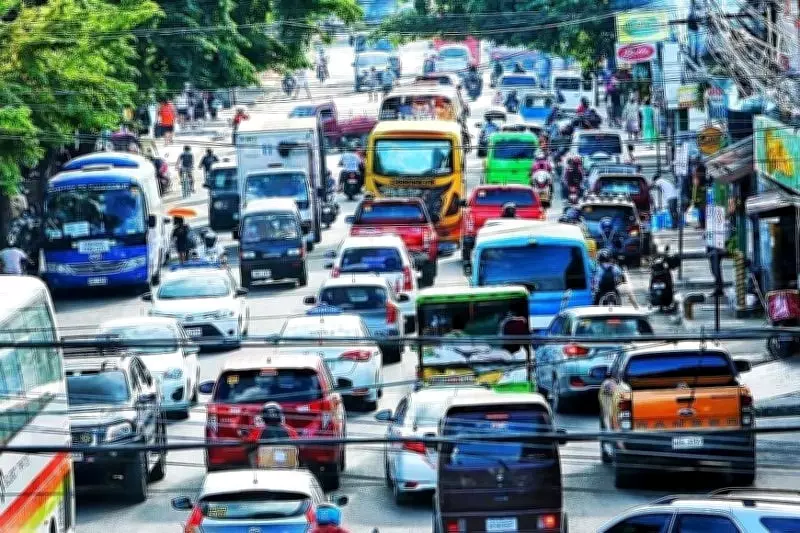
The Land Transportation Franchising and Regulatory Board (LTFRB) has officially sanctioned a series of fare increases across various public transportation modes in response to the escalating oil crisis triggered by ongoing conflicts in the Middle East. This decision, announced on March 17, 2026, will take effect starting Thursday, March 19, 2026, impacting millions of commuters nationwide.
Jeepney Fare Adjustments
For traditional jeepneys, the base fare covering the first four kilometers will rise to P14 from the current P13, marking a P1 increase. Additionally, the fare for each succeeding kilometer will be adjusted to P2, up by P0.20 from the previous rate.
Modern jeepneys will see a more substantial hike, with the base fare for the first four kilometers increasing by P2 to P17 from P15. The charge for each subsequent kilometer will be raised to P2.40, an increment of P0.20 from the existing P2.20.

Bus and Taxi Fare Revisions
The LTFRB has also approved fare increases for metro buses. Ordinary metro buses will now have a base fare of P15, up from P13, while air-conditioned units will increase to P18 from P15. For every succeeding kilometer, ordinary metro buses will charge an additional P2.49, a P0.24 rise from P2.25, and air-conditioned units will add P2.98, up from P2.65.
Airport taxis will experience a significant fare adjustment, with the base fare for the first 500 meters jumping to P115 from P75, a P40 increase. Each succeeding 300 meters will now cost an additional P4.
Transportation Network Vehicle Services Updates
Transportation Network Vehicle Services (TNVS), including sedan, sports or Asian utility vehicle, hatchback, and premium categories, have been authorized to impose a P20 fare hike. This raises the existing base fares from P45, P55, P35, and P145, respectively.
These changes follow the LTFRB's earlier issuance of a new fare matrix for provincial buses, covering ordinary, regular aircon, deluxe, super deluxe, and luxury classes. The board cited the looming oil crisis as the primary driver for these adjustments, aiming to help operators cope with rising fuel costs while maintaining service viability.