Iloilo Transport and Consumer Groups Announce Nationwide Strike Over Soaring Fuel Prices
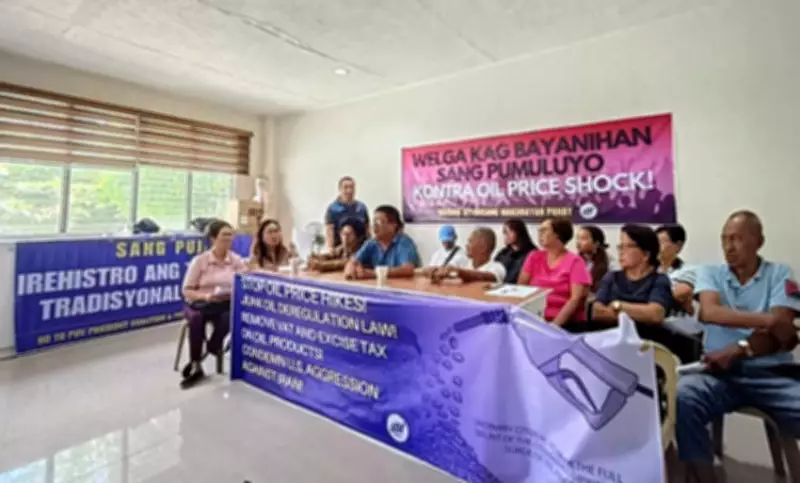
Transport organizations, consumer advocates, and multi-sector groups in Iloilo City have issued a urgent call for a nationwide "Welga ng Bayan" (People's Strike) scheduled for March 19 to 20, 2026. This mobilization comes in response to fuel prices skyrocketing past P110 per liter, exacerbating an ongoing oil crisis and placing immense financial pressure on drivers and consumers across the region.
Severe Economic Impact on Drivers and Consumers
The No to PUV Phaseout Coalition Panay, Panay Consumers Alliance (PCA), and Bagong Alyansang Makabayan (Bayan) Panay have highlighted the devastating effects of the continuous price hikes. They describe the situation as triggering "severe economic shockwaves, pushing the people to the brink of survival," and are demanding immediate government intervention to address the crisis.
According to the groups, public utility jeepney drivers are suffering daily losses of up to P1,000 due to escalating fuel costs, with an average daily consumption of 20 liters. The recent P1 fare increase approved by the Land Transportation Franchising and Regulatory Board (LTFRB) provides only about P200 in additional daily income, which they deem grossly insufficient to offset these mounting losses.

Criticism of Government Response and Policies
Government assistance measures have also come under fire, with the P5,000 aid described as "meager, selective, and unsustainable." The groups argue that many affected sectors remain excluded from this support, and even for beneficiaries, the amount covers merely a few days of operational losses, failing to provide meaningful relief.
While acknowledging global tensions, particularly referencing the "US–Israel war of aggression against Iran," as contributing factors to the fuel price spike, the organizations emphasize that domestic policies have significantly worsened the situation. They specifically criticize the Oil Deregulation Law for enabling oil companies to implement "unregulated and speculative pricing," resulting in billions of pesos in profits at the expense of the public.
Despite projections indicating that local fuel supply will last until the end of April, the groups accuse oil firms of continuing to impose price increases, exploiting weak government regulation. They further note that the ongoing imposition of value-added tax and excise taxes on petroleum products adds an additional burden to drivers, operators, and consumers already struggling with high costs.
"While oil companies and the government profit, the people suffer. This is a double burden on drivers and the Filipino masses," the groups stated, underscoring the perceived inequity in the current system.Proposed Solutions and Funding Alternatives
To address concerns about potential revenue losses from suspending fuel taxes, the groups have pointed to several alternative funding sources. These include recovering a portion of the estimated P1 trillion lost to corruption and mismanagement in infrastructure projects. They also propose realigning discretionary funds, such as pork barrel allocations, toward social protection programs.
Additionally, the organizations suggest imposing a wealth tax on billionaires, even at a modest rate of one to three percent, which they estimate could generate up to P500 billion in revenue to support subsidies and enhance public services.
Demands of the Planned Nationwide Strike
In response to the escalating crisis, the groups have announced the nationwide People's Strike, urging transport groups, workers, and various sectors to join in protest against rising oil prices, current taxation policies, and what they characterize as the government's failure to effectively regulate the oil industry.
"This is not just a transport issue; it is a people's crisis. We call for welga kag bayanihan sang pumuluyo to defend our livelihoods and assert the rights of the Filipino people," the groups declared, emphasizing the broad societal impact of the fuel price surge.The strike aims to advance several key demands, including:

- The repeal of the Oil Deregulation Law and the restoration of state regulation over oil prices.
- The renationalization of Petron to ensure public control of the energy sector.
- The immediate suspension and eventual removal of excise taxes and value-added tax on petroleum products.
- The provision of "genuine, sufficient, and inclusive subsidies" for sectors affected by rising fuel costs.
- Accountability for oil companies accused of profiteering.
- The implementation of long-term policies to guarantee affordable and accessible energy for all.
As fuel prices continue their upward trajectory, the groups stress that both decisive government action and collective mobilization are essential to effectively address the situation and alleviate the widespread hardship faced by Filipinos.