Smartphone Overload: How Filipino Students Navigate Academic Pressure in Digital Age
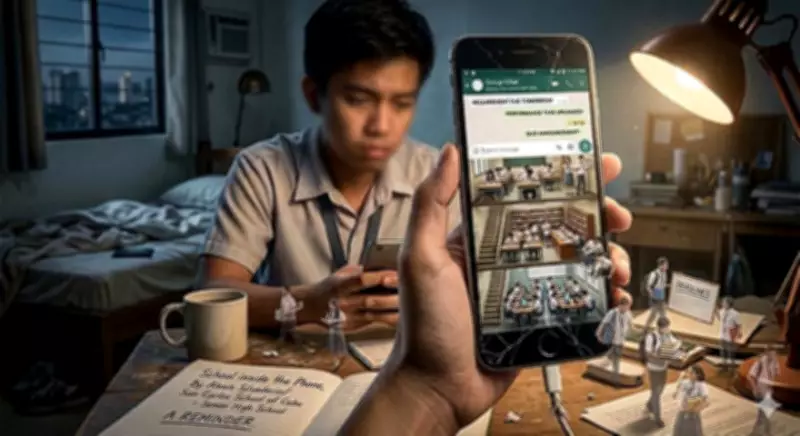
For senior high school students across the Philippines, the boundary between school responsibilities and personal life has completely dissolved, merging into the single screen of their smartphones. A reminder about a requirement due tomorrow, posted in a class group chat just an hour ago, exemplifies how academic deadlines now arrive alongside music, conversations, and digital escapes.
The Escape That Never Lasts
Jupiter Lim, a Grade 11 ABM student at the University of Cebu, describes his smartphone as primarily a tool for temporary relief from reality. "The device is more of something to escape reality," he explains. "To feel relief, even if it meant to only enjoy it temporarily." However, this escape is constantly interrupted by school requirements that appear in the same chat applications he uses to unwind.
Lim strives to maintain a clear separation between schoolwork and home life, but finds the smartphone makes this boundary nearly impossible to sustain. "Whenever I feel stagnant, stressed, under academic pressure, I keep using my phone as a pacifying device," he admits, highlighting the cyclical nature of using the same device that causes stress to alleviate it.

Discipline Versus Overstimulation
Earl Baring Enriquez, a Grade 11 HUMSS student at La Consolacion College Liloan, approaches smartphone use with a different perspective. He views the device as a tool that requires disciplined time management rather than inherently causing harm. "If you aren't set on time management, you won't hesitate to miss a performance task," Enriquez notes. "But for announcements, we'd highly recommend checking notifications so you don't miss daily updates."
Despite this disciplined approach, Enriquez acknowledges experiencing digital overstimulation when performance tasks, activities, and quizzes all arrive simultaneously. "Some nights I'd be shifting between all assignments simultaneously. It gets frustrating. But in the end, it gets fixed," he says, demonstrating how students adapt to overwhelming academic demands delivered through digital channels.
The Research Behind the Reality
A comprehensive 2024 study focusing on Filipino students established a direct correlation between digital device engagement and elevated stress levels. The research revealed that students feel a constant compulsion to keep their smartphones nearby simply to maintain academic progress. Most participants reported reaching for their devices within minutes of waking and checking them again immediately before sleeping.
For the majority of students surveyed, the smartphone has ceased to be exclusively either a school tool or a personal device. It has evolved into both simultaneously, with the distinction between these functions disappearing entirely. The continuous stream of notifications creates an environment where disconnecting feels more challenging than remaining constantly connected.
As Alexis Silvederio from San Carlos School of Cebu Senior High School observes, the digital integration has reached a point where putting the device down represents the more difficult choice for students navigating their academic and personal lives through a single screen.