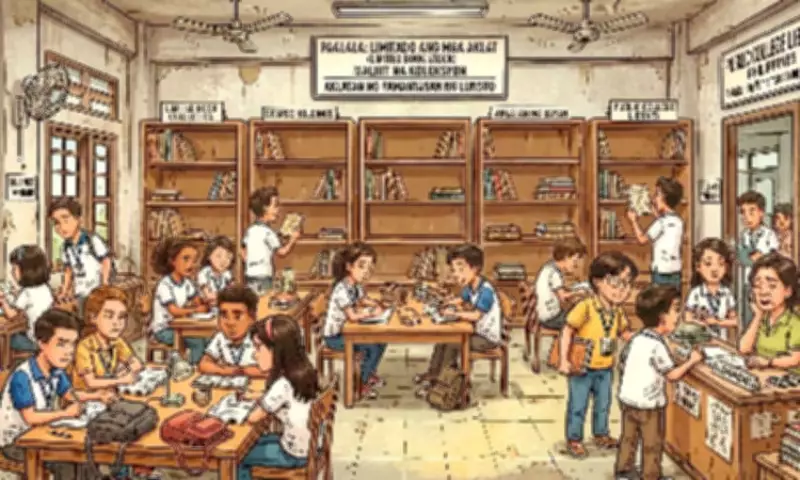
Students Grapple with Textbook Shortages in Public Colleges, Hampering Academic Progress
As academic demands intensify, students across various educational institutions are facing significant challenges due to limited access to required textbooks, adversely affecting their study habits and overall learning outcomes. This issue is particularly pronounced in public colleges, where budget constraints often lead to inadequate library collections.
Personal Experiences Highlight Widespread Struggles
Angelica Nassar, a third-year student at Cordova Public College, shared her frustration with the situation. "It is hard for me to study in advance when the book is not available in the library," Nassar explained. She noted that while private institutions may boast more comprehensive learning resources, public colleges frequently suffer from financial limitations that restrict their ability to maintain robust collections.
To address this gap, Nassar has resorted to searching for alternative references related to the required textbooks. She advocates for libraries to provide both digital and physical copies, suggesting that access to PDF versions or scanned materials would empower students to study more flexibly and take notes with greater efficiency.

Limited Copies and Borrowing Challenges Exacerbate Issues
Jevy Castro, a fourth-year student from Benedicto College, echoed these concerns, pointing out that required books are often unavailable due to limited copies and high demand from borrowers. "It affects our studies because assignments get delayed and it becomes difficult to find accurate information," Castro stated. In response, he turns to online sources, borrows books from classmates, or seeks guidance from teachers.
Castro added that students from other public institutions face similar difficulties, expressing hope that libraries will enhance their collections by incorporating more updated materials and strengthening digital access to support diverse learning needs.
Comprehension Suffers Without Adequate Resources
Jouani Presbitero, a second-year student at Trinidad Municipal College, highlighted how the shortage of required textbooks has made certain subjects, such as Logic, particularly challenging to grasp. "There were not enough copies of the Logic textbook we needed for class and I had difficulty understanding the topic without a complete reference," Presbitero remarked.
Although internet research can offer some assistance, she emphasized that certain lessons necessitate complete textbooks for deeper understanding. When books are inaccessible, she borrows from peers or searches for online materials. Presbitero observed that this problem is common in many public schools, whereas larger universities typically maintain more updated and accessible collections.
She recommended that libraries increase the quantity of required textbooks, regularly update editions, and provide online access to enable students to study at their convenience.
Broader Implications for Student Success
The experiences shared by Nassar, Castro, and Presbitero underscore a widespread concern among students who heavily depend on campus libraries for academic support. As educational requirements continue to expand, ensuring improved access to essential learning materials remains critical for fostering student achievement and success in higher education.