There are lessons we learn in school, lessons we absorb in training, and lessons we gain from experience. We study, prepare, and train in the hope that when the time comes, we will be ready. Nothing, however, truly prepares you for Ground Zero.
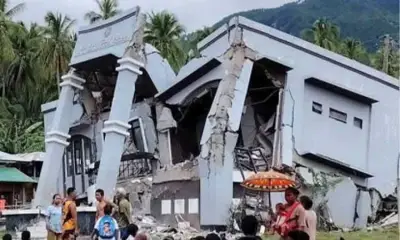
The dawn of May 24 is something I will never forget. A massive concrete structure still under construction in Barangay Balibago, Angeles City suddenly collapsed into an enormous mountain of steel, scaffolding, concrete, and debris. As soon as I arrived at the site and saw the scale of the devastation, I knew one thing immediately: I would not be going home anytime soon.
Fortunately, we had a leader who understood exactly what needed to be done. Mayor Carmelo "Jon" B. Lazatin II arrived at the scene composed, calm, and collected. He was not the type to create unnecessary drama or seek attention. Instead, he immediately ordered the activation of the Incident Command System (ICS).

Given the overwhelming magnitude of the disaster, we quickly realized that a Unified Command Management Option would be the most effective approach. Mayor Jon Lazatin assumed the role of Responsible Official (RO). The Bureau of Fire Protection led the Search, Rescue, and Retrieval Operations. The Angeles City Disaster Risk Reduction and Management Office (ACDRRMO) handled logistics and the Command Post. The Angeles City Police Office (ACPO) took charge of security. By the Mayor's directive, I was designated as the Public Information Officer of the Unified Command. I was later accompanied by BFP's PIO - FSupt. Ma. Leah Sajili.
The moment I released the first official information about the incident, my phone erupted with calls and messages. Disaster management offices from across the country, local government units, volunteer groups, embassies, national agencies, and media organizations all wanted updates. The calls came nonstop. I could only accommodate one at a time. Little did I know that this would become my reality for the next two weeks.
What followed was a remarkable display of Filipino bayanihan. Volunteers and responders arrived from various parts of the country, ready to help without hesitation. Specialized rescue teams, K9 units, heavy equipment operators, medical personnel, and logistics volunteers all converged on Ground Zero with one mission: save lives and bring closure to families.
Yet while the spirit of unity was on full display at the site, another reality unfolded online. From the comfort of their smartphones, some netizens were quick to criticize the operation. Many passed judgment without understanding the complexity of search and rescue work. They failed to realize that every movement, every cut, every lift, and every decision had to be calculated to ensure the safety of both the trapped victims and the responders risking their lives. Search and rescue is not guesswork. It is a discipline. It is a science. And most importantly, it requires patience.
There were also those who came to Ground Zero not to help but simply to be seen. While many genuinely offered sympathy and support, others appeared more interested in attention than assistance.
The first few days were among the most difficult. Our personal comfort was never a priority. Saving lives was. Available red tents served as our temporary shelter from the scorching sun and sudden rains. In reality, they offered little protection from either. I lost count of how many bottles of water I consumed just to fend off dehydration. For eighteen straight days, the Incident Command Post became our office, and, in many ways, our shelter.
Despite the tragedy surrounding us, there were moments when hope emerged. Responders managed to establish contact with two trapped victims who were still alive beneath the rubble. One of our City Health Office physicians courageously entered a confined void space within the collapsed structure and successfully administered intravenous fluids to one of the victims. For a moment, we believed a miracle was within reach.
Sadly, fate had other plans. Although one victim was extricated alive, he suffered cardiac arrest while being transported to the ambulance. The second victim met the same heartbreaking fate.

As the days passed, another reality settled over Ground Zero. The smell. The unmistakable stench of death lingered in the air as responders dug deeper into the debris. More victims were discovered. Mayor Jon gave clear instructions: every victim was to be recovered whole whenever possible and handled with dignity, care, and respect. No shortcuts. No compromises. Every life mattered.
Technology became one of our greatest allies. Several local government units, including Pasig, Olongapo, Bulacan, and the City of San Fernando, deployed sophisticated life locator equipment capable of detecting breathing patterns and heartbeats beneath rubble. Each signal generated hope. Each reading brought anticipation. But not all signs led to survivors. In some instances, the detected life forms most likely turned out to be rodents, cats, or other animals within the wreckage.
The Philippine Coast Guard K9 units proved invaluable. Their highly trained dogs helped identify target areas and guided responders toward possible locations of the missing. Still, with every passing day, the casualty count continued to rise. The numbers became more difficult to bear. Women. Children. Entire families whose lives were cut short. Each recovery brought another wave of grief.
In the end, thirty lives were lost. The final victim recovered was believed to be the security guard assigned to the building. A shotgun was later found near his remains, marking the final chapter of the retrieval operation.
The operation's conclusion coincided with a significant moment in the life of our city—the Solemn Proclamation of the Minor Basilica. After attending the Holy Mass, Mayor Jon immediately returned to Ground Zero. There was no celebration, no pause. He went straight back to the Incident Command Post for the final briefing and demobilization of the responders who had spent nearly three weeks battling fatigue, weather, danger, and heartbreak.
Looking back, several lessons remain clear.
Lessons from the Tragedy
Leadership Matters
In times of crisis, a calm and composed leader can make all the difference. Angeles City was fortunate to have Mayor Jon Lazatin providing steady leadership throughout the ordeal.
Training Works
The Incident Command System is not merely a concept discussed in seminars. During those eighteen days, ICS proved its value. The countless hours spent studying and training paid off when they were needed most.
Bayanihan Endures
The Filipino spirit of bayanihan remains alive and well. Despite the tragedy, people from different agencies, organizations, and communities came together for a common cause.
The Work Continues
While the search, rescue, and retrieval operations have ended, the pursuit of truth and accountability continues. Parallel to the emergency response, Mayor Lazatin established a fact-finding body through an Executive Order to conduct a comprehensive investigation into the collapse. No stone should be left unturned. The victims deserve answers. Their families deserve justice. And all of us must learn from this tragedy to ensure that such a disaster never happens again.
For eighteen days, Ground Zero became our world. It was a place of hope and heartbreak, sacrifice and service, exhaustion and resilience. It was a place that changed many of us forever.