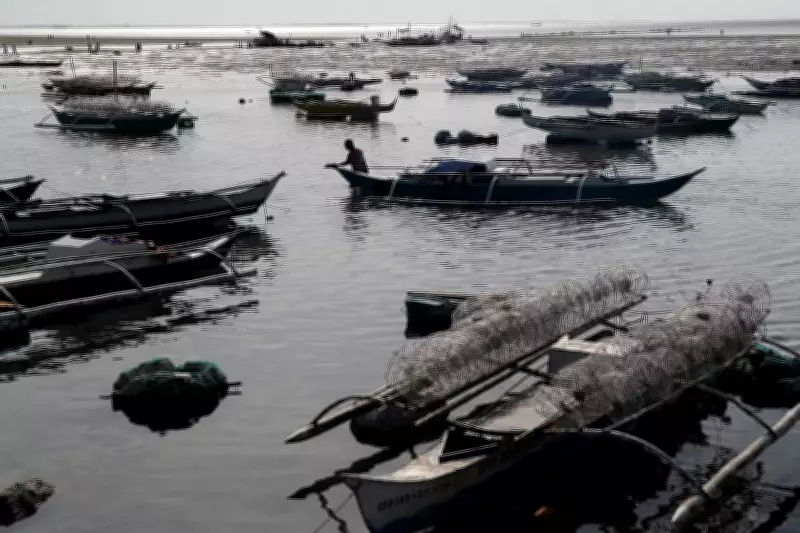
Cebu Emerges as National Leader in Subsistence Fishing, Reinforcing Food Security for Coastal Households
In the province of Cebu, fishing transcends mere commerce, serving as a fundamental pillar for daily sustenance and household food security. According to the Philippine Statistics Authority (PSA), the island leads the entire nation in marine capture fishing activities primarily aimed at personal consumption, with a majority of operations focused on household use rather than commercial sale.
Key Findings from the 2022 Census of Agriculture and Fisheries
The data, released on Wednesday, April 8, 2026, reveals that Cebu ranks first among all provinces in categories such as "only for own consumption" and "mainly for own consumption with some for sale." This underscores the critical importance of fishing as a primary food source for coastal families, highlighting its role beyond economic transactions.
Regional and National Insights on Fishing Operations
At the regional level, Central Visayas has emerged as one of the country's foremost fishing centers, recording 85,663 household-based fishing operations, accounting for 11.4 percent of the national total. Central Visayas leads in operations dedicated solely to own consumption, while Eastern Visayas tops in operations mainly for own consumption with minor sales. Specifically, 25,758 operations are exclusively for own consumption, and 15,273 are primarily for own consumption with some for sale.

Nationally, Cebu consistently features in the top 10 across all fishing purposes. It holds the number one position in "only for own consumption" and "mainly for own consumption with some for sale," while ranking tenth in "only for sale," fifth in "mainly for sale with some for own consumption," and fourth in "half for sale and half for own consumption."
Comparative Performance of Other Provinces
In other categories, Palawan leads as the top province for "only for sale," and Negros Occidental is foremost in "half for sale and half for own consumption." Bohol also demonstrates strong performance, ranking second in "only for own consumption," fifth in "mainly for sale," and fourth in "mainly for own consumption," reflecting the robustness of its household-based fishing sector.
Industry Structure and Infrastructure Challenges
The national data further indicates that the fishing industry remains largely informal and dominated by individual operators, with 98.6 percent of the 750,575 fishing operations classified as single proprietorships. This emphasizes the ongoing reliance of coastal communities in Cebu on fishing as a livelihood and food source.
Additionally, the PSA reports that most fishing operations nationwide depend on traditional landing centers, which lack formal infrastructure. Out of 750,473 operations, 75.6 percent unload their catch at these traditional sites, followed by private landing centers (13.6 percent) and those managed by local governments (6.1 percent). Only a minimal number utilize facilities run by fishing associations or cooperatives (1.0 percent) or the Philippine Fisheries Development Authority (0.2 percent).
Vessel Ownership and Types in the Fishing Sector
The data also shows that vessels used in fishing remain predominantly small and owner-operated. Among the 612,744 vessels recorded nationally, 79.1 percent are owned by operators, while 15.3 percent are used rent-free and 5.7 percent are rented. In terms of vessel types, those with engines and outriggers are the most common at 60.9 percent, followed by non-motorized vessels with outriggers (15.7 percent), motorized vessels without outriggers (13.7 percent), and non-motorized vessels without outriggers (9.7 percent).