The Metropolitan Cebu Water District (MCWD) has intensified preparations for the potential effects of the El Niño phenomenon after recording a daily water supply deficit exceeding 16,000 cubic meters, raising concerns over water availability in Metro Cebu in the coming months.
Current Water Production and Demand
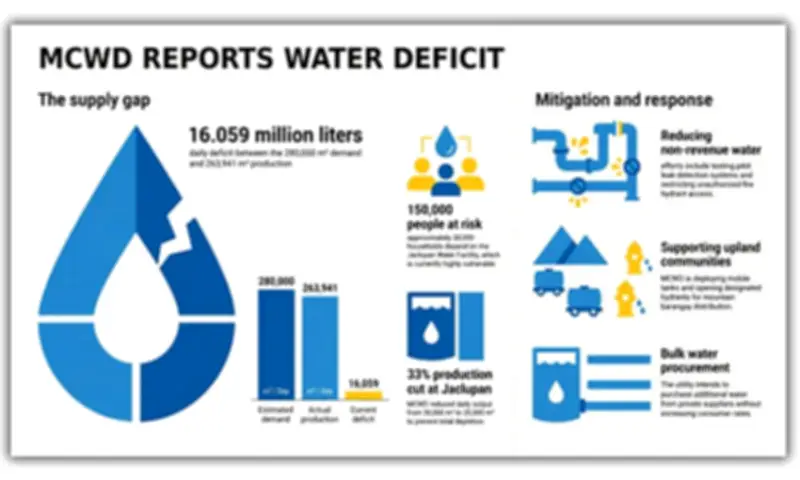
During a press conference on Wednesday, June 17, 2026, MCWD general manager John Dx Lapid and operations department manager Edgar Ortega disclosed that the water utility produces an average of 263,941 cubic meters of water per day, falling short of the estimated daily demand of 280,000 cubic meters. This results in a deficit of 16,059 cubic meters per day, equivalent to 16.059 million liters of water—enough to fill over 16 million one-liter bottles.
Mitigation Measures
Despite the shortfall, Lapid emphasized that MCWD remains in a state of preparedness, not alarm, as it implements measures to reduce the impact of El Niño on its water supply. These include rehabilitating existing wells, reducing non-revenue water (NRW), and restricting unauthorized access to fire hydrants. Lapid noted that unauthorized hydrant use contributes to water losses and poses contamination risks to the potable water supply.

“We have designated metered hydrants for emergency use and coordinated with the Bureau of Fire Protection to ensure that hydrants are used only during emergencies,” Lapid said.
Support for Upland Communities
MCWD is also assisting upland communities facing water supply problems. Residents of Barangays Guba and Agsungot have received water containers, while the utility is studying the deployment of mobile water tanks in mountain barangays, including Cambinocot, Bonbon, and Paril. The utility has allowed Cebu City Government water tankers to draw water from designated hydrants for distribution to upland communities.
Cebu City Mayor Nestor Archival Sr. stated that the city has strengthened coordination with MCWD to ensure continued water access for residents in mountain barangays. A designated hydrant in Barangay Guba has been opened as a controlled water source, and the city has deployed a tanker truck to deliver water daily at no cost to residents. Archival supported MCWD’s move to limit hydrant access, saying it would reduce water losses and prevent low-pressure problems in supply-constrained areas. He added that the city is considering other interventions, including distributing water storage containers and possibly declaring a state of calamity if conditions worsen.
Jaclupan Water Facility at Risk
Ortega identified the Jaclupan Water Facility as one of MCWD’s most vulnerable sources during prolonged dry conditions. The facility supplies many southern barangays in Cebu City and parts of Talisay City. To preserve groundwater reserves, production has been cut to 20,000 cubic meters per day from 30,000 cubic meters per day.
Ortega said MCWD is monitoring groundwater levels and managing extraction rates to keep the source operational until the next rainy season. “If we continue operating at previous production levels, the source could be depleted within three months,” he warned. MCWD estimates that about 30,000 households, or 150,000 individuals, could be affected if the Jaclupan source runs dry.
Seeking New Supply Sources
To augment supply, MCWD may purchase additional water from bulk suppliers, including those in Mambaling, although Ortega clarified this would not lead to an increase in water rates. The utility is also pursuing new groundwater development projects in several public schools and testing a pilot leak-detection system in Cordova to help reduce NRW and improve pipeline monitoring.
Lapid urged consumers to conserve water by repairing leaks, reducing unnecessary use, and reusing water when possible. “Water security is a shared responsibility. It is not the responsibility of MCWD alone. Local government units, communities, and consumers all have a role to play in ensuring that there will be enough water for everyone,” he said.
As Cebu prepares for a prolonged dry spell, MCWD remains focused on maintaining supply, reducing losses, and ensuring continued access to safe potable water.