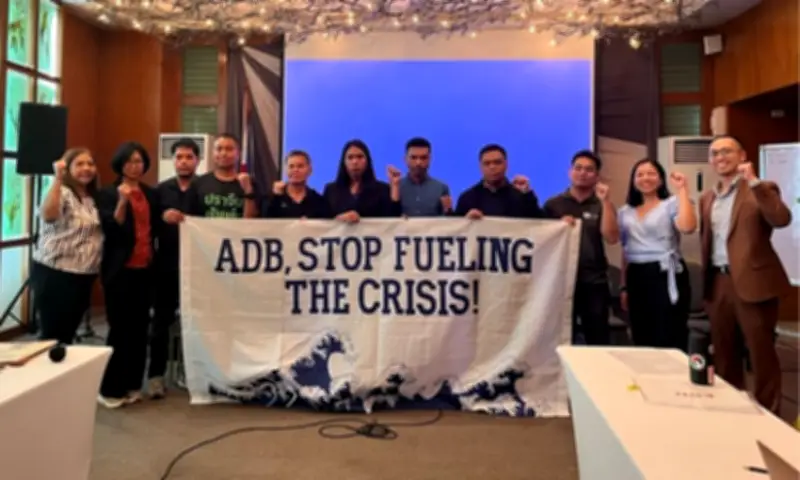
At the opening of the Asian Development Bank's Asia Clean Energy Forum 2026, civil society groups and environmental justice advocates called on the Bank to stop financing waste-to-energy (WTE) incineration, refuse-derived fuel, co-processing, chemical recycling, and other false solutions that have deepened pollution, displacement, debt, and harm to marginalized communities across the Asia Pacific.
Community Voices from Smokey Mountain and Prachin Buri
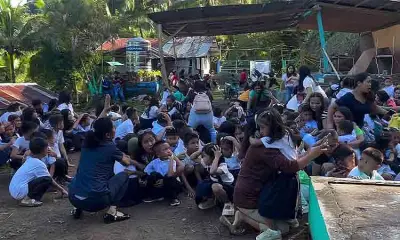
Affected communities from Smokey Mountain, Philippines, and Prachin Buri, Thailand, shared their experiences of displacement, lack of meaningful consultation, and concerns over incomplete cumulative impact assessments in projects financed by ADB and other banks. The launch conducted on June 9th was organized by the Coalition for Human Rights in Development, together with partners Global Alliance for Incinerator Alternatives, NGO Forum on ADB, Rivers & Rights, Heinrich Böll Stiftung Southeast Asia, Asian Forum for Human Rights and Development (FORUM-ASIA), and Asia Pacific Network of Environmental Defenders (APNED).
GAIA Asia Pacific Denounces False Solutions
GAIA Asia Pacific, its member organizations, and allies denounced the Bank's continued support for technologies presented as climate and waste solutions despite their long-term environmental, social, economic, and human rights risks. Brex Arevalo, Climate and Anti-Incineration Campaigner of GAIA Asia Pacific, stated: "Over $20 billion spent on false solutions means $20+ billion spent locking developing countries into crisis. Over a decade of investments in waste-to-energy plants, RDF, and chemical recycling facilities have not even caused a dent in the interlinked pollution, energy, and climate crisis we continue to struggle with. Even worse, these technologies are intrinsically linked with blatant human rights violations - so much so that even the UN Special Rapporteur on Climate Change is calling for inputs on waste-to-energy impacts."

Thailand: GWTE Circular Economy Project Concerns
The GWTE Circular Economy Project in Thailand is one of the clearest examples of ADB's questionable investments. Co-financed by the Asian Infrastructure Investment Bank (AIIB), the project approved 12 waste-to-energy plants under a single project. Serious concerns have been raised over the inadequacy of due diligence, environmental and social risk assessments, stakeholder consultations, and information disclosure. Dawan Chantarahesdee of Ecological Alert and Recovery Thailand (EARTH) said: "Approving financing for this industrial waste-to-energy project was a major mistake by the ADB management. From the very beginning, the project failed to prioritize transparency and timely disclosure of project information, restricted meaningful participation by affected communities, and did not adequately assess its environmental and social impacts." Sumet Rienpongnam of Strong Prachinburi Community Network added: "By approving a loan for this project despite these serious concerns, ADB risks sending a dangerous message: that intimidation, harassment, and the exclusion of affected people from decision-making are acceptable practices in projects financed by international development institutions."

Philippines: Undermining the Incineration Ban
In the Philippines, advocates said ADB's support for WTE incineration has undermined the country's 26-year national ban on incineration, citing technical assistance as far back as the 2012 Solid Waste Management Sector Project, where it started to push for policy advice and partnerships with the private sector in several cities. The groups noted that the Baguio waste-to-energy project was scrapped in 2024 due to public opposition, while the Dumaguete facility was closed in 2025 because of environmental violations. In Smokey Mountain in Tondo, Manila, they said ADB's technical assistance provided political, technical, and business facilitation support, which is now causing the illegal displacement and harassment of hundreds of families. Anora Madrid, Vice President of Samahan ng Maralita sa Upper Smokey Mountain (SMUSM), stated: "We call on ADB to stop funding WTE incinerator projects in the Philippines because in communities like Smokey Mountain, many people will be affected, including waste workers, urban farmers, and families who depend on community-based livelihoods." EcoWaste Coalition also criticized ADB's continued support for waste-to-energy in the country, saying it contradicts the Bank's development mandate. Shey Levita of EcoWaste Coalition said: "The Asian Development Bank must do some serious soul-searching on the true meaning of 'development' because bankrolling and providing technical assistance to false solutions like the Smokey Mountain waste-to-energy plant only serves large capitalists while destroying our communities."
Extractive Transition and EV Battery Concerns
Meanwhile, they also warned that ADB has promoted an extractive transition by supporting critical minerals mining while framing EV battery recycling as an offset for mining impacts. Mageswari Sangaralingam of the Consumers' Association of Penang said electric vehicle policies must move beyond narrow emissions claims and address the full life cycle of batteries and mobility systems: "Electric vehicle policies must move beyond the illusion of zero emissions. True sustainability demands that we confront battery end-of-life management, prioritize repair and reuse, embed resource efficiency, and reduce dependence on private cars. Zero emissions must mean zero waste. Only then can mobility be both clean and just."
Maldives: Thilafushi Incinerator Risks
In the Maldives, advocates also raised concern over the Thilafushi waste-to-energy incineration project, which they said exposed policy, technical, financial, and social risks in the country's climate and resource management direction. Ahmed Afrah Ismail, Co-Founder of Zero Waste Maldives, said ADB financed the Thilafushi incinerator despite the Maldives' weak environmental governance frameworks and poor implementation history with waste-to-energy projects: "This is not climate action. It is a waste disposal project dressed up as climate mitigation, built on a system where segregation has been reduced to burnable and non-burnable waste so the plant gets fed. ADB should stop using weak waste laws as an entry point for foreign incinerator operators and fund the real solution: waste reduction, source segregation, composting, reuse, repair, recycling, and community-led zero waste systems."
Call for a Just Transition
GAIA Asia Pacific and its allies said that a truly just transition must prioritize community benefits over corporate interests. ADB must prioritize waste reduction, reuse, collection, segregation and recycling over incineration as it committed in its ADB Energy Policy 2021. They called on the Bank to strengthen information disclosure, ensure meaningful public participation, respect the rule of law, provide remedies for affected communities, and ensure environmental protection, central to its governance principles.