Metro Cebu Air Quality Deteriorates to 'Unhealthy' Levels Amid Haze Event
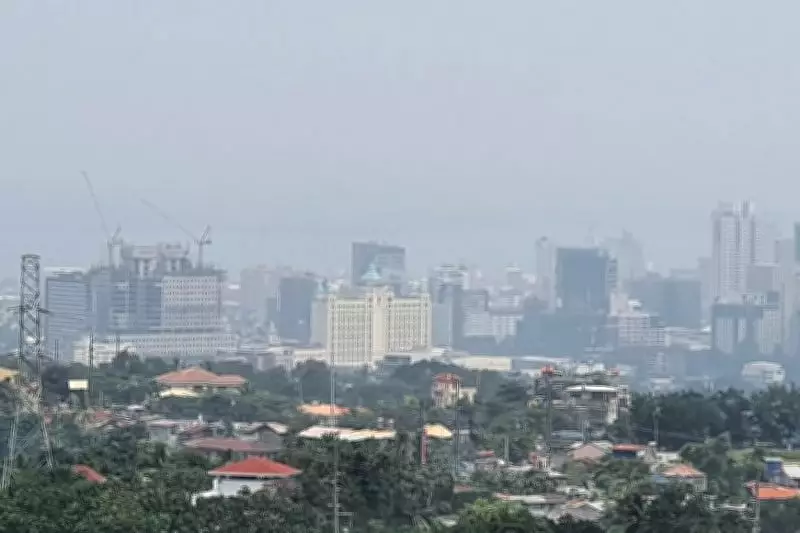
On Friday, April 17, 2026, the air quality in several areas of Metro Cebu deteriorated significantly, reaching levels classified as 'unhealthy for sensitive groups'. Haze was visibly observed across multiple locations, prompting concerns from environmental authorities and residents alike.
Real-Time Monitoring Reveals Alarming Spike in PM2.5 Levels
Data released by the Environmental Management Bureau in Central Visayas (EMB 7) indicated that as of 8 a.m. on April 17, the Talisay City monitoring station recorded an air quality index (AQI) of 101 for fine particulate matter (PM2.5). This reading surpasses the threshold of 100, moving from the 'fair' category into 'unhealthy' territory. Concurrently, PM10 levels at the same station, situated within the Talisay City Hall compound, were measured at 72 AQI, which remains in the 'fair' classification.
EMB 7 spokesperson Cindylyn Pepito emphasized that this spike was captured in real time, highlighting the sudden nature of the air quality decline. She explained that AQI values between 51 and 100 are considered 'fair,' while any reading above 100 is deemed 'unhealthy,' posing increased health risks.

Understanding the Health Implications of Air Pollutants
PM10, or coarse particles, are pollutants measuring 10 micrometers or smaller. These particles typically get trapped in the nose and throat but can still trigger respiratory issues. In contrast, PM2.5, or fine particles, are 2.5 micrometers or smaller and present a more severe health threat. Their minute size allows them to penetrate deep into the lungs and even enter the bloodstream, potentially leading to conditions such as asthma, heart disease, and lung cancer.
The air quality index serves as a critical tool for gauging air pollution levels and associated health effects, with higher values indicating greater concern for public well-being.
Investigating the Causes Behind the Haze
Initial findings from EMB 7 point to local sources as primary contributors to the haze observed on April 17. Pepito noted that the agency is actively verifying the exact causes, but early assessments suggest factors like vehicular emissions from fuel combustion and fugitive dust from roads. She also mentioned that hot weather and dusty road conditions may have exacerbated the situation, as particles become more mobile under such circumstances.
'Roadside emissions and possible emissions within the area. It should also be noted that the heat of the weather is another factor,' Pepito stated. Field personnel observed that various activities in the vicinity likely led to the elevated readings. Additionally, EMB 7 is analyzing wind direction data to determine if pollutants were transported toward the monitoring station.
Weather Conditions and Heat Index in Cebu
According to Mark Gales, a weather specialist at the Philippine Atmospheric, Geophysical and Astronomical Services Administration (Pagasa) Visayas, temperatures in Cebu from Monday, April 13, have ranged between 31.2 and 31.8 degrees Celsius. The heat index, which factors in humidity to reflect how hot it feels, has varied from 34 to 36 degrees Celsius.
In a prior report from October 2025, Pagasa defined haze as fine dust particles suspended in the air that reduce visibility. For the upcoming weekend, temperatures in Cebu are forecasted to reach 31 to 33 degrees Celsius, with the heat index expected to range from 35 to 37 degrees Celsius.
Health Precautions Advised for Vulnerable Groups
In response to the elevated PM2.5 levels, EMB 7 has issued health advisories urging residents, particularly vulnerable populations such as children, the elderly, and individuals with pre-existing respiratory conditions, to limit their outdoor exposure. The bureau recommends wearing N95 masks when venturing outside to mitigate the risks associated with inhaling fine particles.
Contrasting Air Quality in Toledo City
While Metro Cebu grapples with poor air quality, monitoring in Toledo City presents a stark contrast. Readings from Barangay Cabitoonan show both PM10 and PM2.5 levels firmly within the 'good' category, with AQIs of three and five, respectively. This indicates minimal health risk and acceptable air quality in that area.

EMB 7 categorizes air quality on a scale that includes:
- 'Good' – little to no risk.
- 'Fair' – acceptable air quality.
- 'Unhealthy for sensitive groups' – potential health risks for vulnerable populations.
Higher categories such as 'Very Unhealthy,' 'Acutely Unhealthy,' and 'Emergency' correspond to escalating levels of health concern.
The bureau has committed to ongoing monitoring of air quality conditions and a thorough investigation into the sources of the haze to prevent future occurrences.