Metro Cebu Air Quality Plummets to 'Very Unhealthy' Status Amid Severe Haze
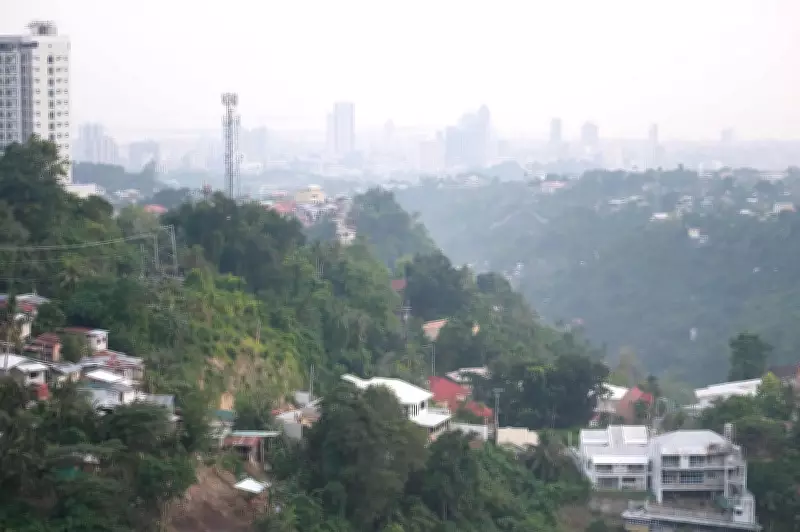
The air quality in Metro Cebu was classified as "very unhealthy" on the morning of Sunday, April 19, 2026, according to data released by the Environmental Management Bureau in Central Visayas (EMB-7). This alarming decline is attributed to persistent thick haze enveloping parts of the metropolis, driven by extreme heat and stagnant atmospheric conditions.
Sharp Rise in Air Pollution Index
Based on readings from the Talisay City monitoring station, the Air Quality Index (AQI) surged dramatically from 112 on April 18 to 199 by 8 a.m. on April 19. This spike reflects a rapid increase in fine particulate matter (PM2.5) levels since April 17, indicating a significant deterioration in air quality over a short period.
At this elevated AQI level, the pollution now poses a health risk to the general public, not just individuals with pre-existing conditions. "At an AQI of 199, the air quality is now a concern for everyone, not just those with pre-existing conditions," stated EMB-7 in an official release.

Causes of the Hazardous Haze
EMB-7 explained that the current conditions result from severe heat and stagnant air, which hinder the dispersion of pollutants in the atmosphere. "In very hot weather, high-pressure systems often lead to stagnant air. Without strong winds or rain to 'wash' the atmosphere, pollutants from vehicles and industry don't disperse; they hover over the city, creating the hazy conditions recently observed in Talisay and Cebu City," the bureau noted.
This lack of air movement creates a "zero dispersion" scenario, where emissions from vehicles, road dust, and other sources accumulate over urban areas instead of being carried away. Additionally, local fires have exacerbated the haze, including grass fires at the South Road Properties (SRP) and a residential fire in Brgy. Pahina Central on Saturday, April 18.
Health Risks and Precautionary Measures
EMB-7 warned that prolonged exposure to the current air conditions can lead to throat irritation, coughing, and breathing difficulties. While the general public is at risk, vulnerable groups face heightened dangers, including children, pregnant women, senior citizens, and individuals with asthma or heart and lung diseases, who may experience more severe respiratory complications.
To minimize health risks, authorities have urged residents to take the following precautions:
- Stay indoors and keep windows and doors closed.
- If using air conditioning, set it to "recirculate" mode to prevent outdoor air from entering.
- Avoid outdoor activities such as jogging, sports, or heavy labor, as deep breathing can inhale more toxic particles.
- When going outside is necessary, wear N95 or KN95 masks; ordinary cloth or surgical masks provide insufficient protection against fine particles.
Those experiencing chest pain or breathing difficulties are advised to seek immediate medical consultation.
Background and Weather Context
Just a day earlier, on Friday, April 17, air quality in Metro Cebu was still categorized as "unhealthy for sensitive groups" with an AQI of 101, highlighting the rapid deterioration over the weekend. In a telephone interview with SunStar Cebu on Sunday, April 19, Pagasa Visayas Weather Specialist Janina Marte reported that the actual temperature at the time was 31 degrees Celsius, underscoring the role of heat in exacerbating the pollution crisis.