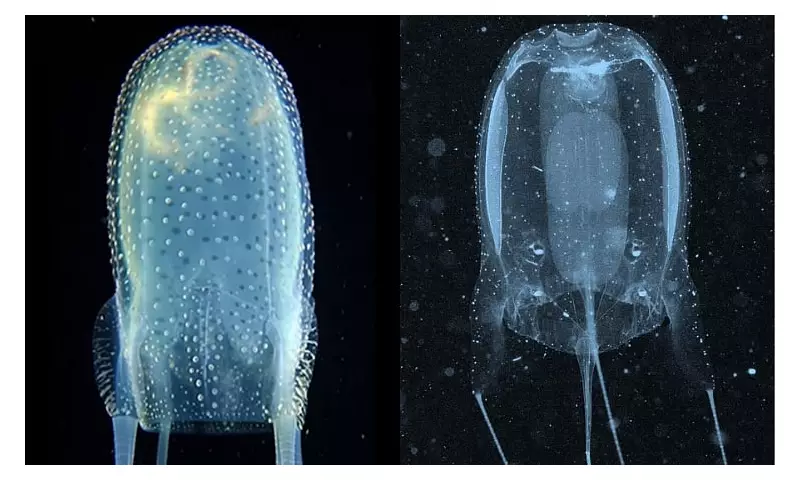
In a significant boost to the country's marine biodiversity records, a team of Filipino and international researchers has documented several newly recorded species of box jellyfish in Philippine waters. This discovery is crucial for the Philippines, a nation situated within the globally significant Coral Triangle and renowned for its rich marine ecosystems.
Unveiling Hidden Marine Life
The research team, led by Dr. Sheldon Rey Boco of The Philippine Jellyfish Stings Project, included experts from the University of the Philippines – Diliman College of Science’s Institute of Environmental Science and Meteorology (UPD-CS IESM), Western Australia's Batavia Coast Maritime Institute, and local photographers and divers. Their work, published in Thalassas: An International Journal of Marine Sciences in early 2026, addresses a critical gap in the documentation of carybdeid box jellyfish, creatures known for their potent venom and ecological role.
Dr. Boco emphasized three core reasons for the study. "They are integral to the marine food chain, serving as both predator and prey, which helps maintain ecological balance," he stated. "Their presence or absence acts as an indicator of ocean health. Furthermore, their powerful venom, which can cause severe reactions like Irukandji syndrome and hospitalizations, holds potential for developing life-saving medical treatments."

Challenging Discoveries and Citizen Science
The team's findings include the first Philippine records of Alatina alata, Carybdea cuboides, Malo sp., and Morbakka virulenta. They also confirmed new records for Copula sivickisi and Malo filipina. Documenting these species was exceptionally difficult, as most inhabit offshore waters at least 100 meters from shore and at depths of 20-30 meters.
To overcome this, researchers conducted specialized blackwater dives at night from 2017 to 2021 and in 2024, observing the adult medusa stage. They also leveraged citizen science, collecting photos and videos from recreational divers. "In the age of AI, verifying authenticity became a new challenge. We treated each submission like evidence, scrutinizing metadata, lighting, and anatomical details to ensure our research was based on genuine records," Dr. Boco explained.
Future Research and Predictive Goals
Looking ahead, the team aims to streamline citizen science participation by simplifying reporting processes, allowing for quicker submissions of high-quality sightings. They also plan to enhance their blackwater dive operations to conduct real-time, in-situ experiments on jellyfish behavior and environmental interactions.
The ultimate goal extends beyond Philippine borders. The researchers hope to develop models to predict the current and future distribution of these jellyfish species across the region's seas. This study, partially supported by citizen contributions, marks a vital step in understanding and safeguarding marine biodiversity in the Coral Triangle.