Binaliw Landslide Exposes 26 Years of Systemic Neglect in Waste Law Enforcement
The recent trash slide at the Binaliw Sanitary Landfill in Cebu City did far more than simply expose mountains of accumulated waste. It revealed decades of profound neglect, weak enforcement mechanisms, and a troubling culture where legal mandates have been treated as optional rather than obligatory. This catastrophic event serves as a stark reminder that garbage mountains do not collapse overnight—they grow steadily through daily indifference and administrative failures.
A Law Ignored for Decades
When the waste mass shifted dramatically at the sanitary landfill facility, officials immediately discussed contingency plans, hauling adjustments, and engineering responses. However, the fundamental failure was not mechanical but administrative in nature. Landfills do not collapse in isolation—they fail after years of tolerated shortcuts and ignored regulations.
Republic Act 9003, enacted on January 26, 2001, was specifically designed to prevent exactly this type of environmental and public health crisis. This visionary legislation decentralized responsibility for solid waste management, placing it precisely where it should begin—at the barangay level. Yet for twenty-six years, compliance has remained largely theoretical rather than practical, existing more on paper than in actual implementation.

The Broken Chain of Responsibility
The landfill represents merely the endpoint of a broken system. Communities and authorities consistently react at the tail end of the waste management chain—focusing on dumpsites, hauling trucks, and emergency measures. RA 9003 establishes clear mandates: only residual waste should reach final disposal facilities, biodegradable materials should be composted locally, recyclables should be recovered systematically, and segregation must occur at the source.
Had these requirements been strictly enforced over the past quarter-century, the Binaliw Sanitary Landfill would never have received the overwhelming volume that contributed to its collapse. The landfill did not fail alone—the entire system supporting it failed comprehensively. That system begins in our barangays, where segregation and recovery should occur before waste ever reaches collection points.
Barangay Responsibilities Long Overdue
The uncomfortable but necessary question emerges: Is it finally time to strictly impose RA 9003 obligations on barangays and their officials? The honest answer is that this enforcement is long overdue. Barangays are not mere extensions of city government—they are distinct political units with defined statutory duties under the law.
RA 9003 requires barangays to enforce segregation at source, establish and operate materials recovery facilities (MRFs), conduct sustained environmental education campaigns, and penalize non-compliance appropriately. The law specifically mandates that barangays handle collection of segregated biodegradable and recyclable wastes, while cities or municipalities manage non-recyclable and special wastes.
Although local government units bear primary responsibility for implementing the law, private sector and community participation is strongly encouraged. For twenty-six years, enforcement has been selective, inconsistent, or completely lacking in political will. The result now stands before us—unstable, overflowing, and dangerously close to complete systemic failure.
Shared Accountability and Governance Failure
This situation does not merely involve scapegoating barangay captains. Responsibility is shared across multiple levels: cities must ensure proper engineering, planning, and oversight; haulers must follow established protocols; households must practice proper segregation. However, barangays can no longer claim "it's the city's problem" when the law explicitly states otherwise.
The Binaliw incident, while tragic, provides clarifying momentum for reform. If Cebu City is genuinely serious about addressing its waste crisis, this moment demands comprehensive audits of every barangay's MRF, consistent enforcement of segregation requirements without exceptions, meaningful penalties for repeated violations, incentives for compliant barangays, and visible, consistent enforcement mechanisms.

Such measures will undoubtedly prove unpopular—discipline always faces resistance. Yet governance is not a popularity contest but a fundamental responsibility to protect public health and environmental integrity.
Mayor's Appeal and Systemic Challenges
In a recent development, Cebu City Mayor Nestor Archival appealed for unity and concrete support from the City Council, barangay officials, and environmental groups on February 20, 2026, as the city continues grappling with a massive 500-ton daily garbage problem. Archival urged stakeholders to focus on practical solutions, emphasizing that the city remains in "crisis mode" and cannot afford political infighting instead of constructive collaboration.
"If you have suggestions, put them on the table. We are one," the mayor stated during a sideline interview at the Usapang Budget Forum held at the Department of Education Ecotech Center in Lahug, Cebu City. He specifically urged both barangay officials and council members to "help each other, not target each other."
The mayor revealed that while the city generates 500 tons of waste daily, current management capacity handles only about 150 tons directly, leaving approximately 350 tons requiring external hauling and processing. He acknowledged significant logistical challenges involving truck availability, scheduling coordination, and transportation distances, describing the issue as primarily a programming and management concern.
Archival estimated that improved segregation practices could reduce waste by up to 50 tons daily—approximately 20 tons from barangay-level biodegradable waste and another 15 to 25 tons from recoverable materials. These numbers highlight the substantial impact that proper RA 9003 implementation could achieve.
The Ultimate Lesson in Governance
The broader lesson emerging from this crisis is that society often demands accountability only after catastrophic failures—whether collapsed bridges, buildings, or landfills. True governance means enforcing laws proactively, before disasters force reactive measures. RA 9003 has waited twenty-six years to be taken seriously as the foundational framework it was designed to be.
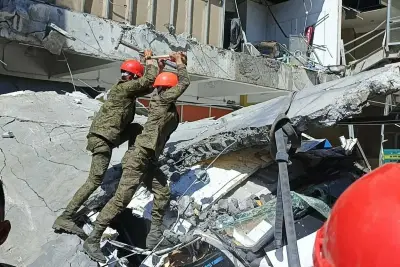
The fundamental reality is that the Binaliw incident represents not merely an engineering failure but a governance failure a quarter-century in the making. It is well past time for barangay officials to recognize that RA 9003 is not a suggestion but the law of the land. Perhaps it required a mountain of garbage sliding down, injuring and killing workers, to remind everyone that ignored laws eventually collapse—just like the landfills they were meant to regulate.