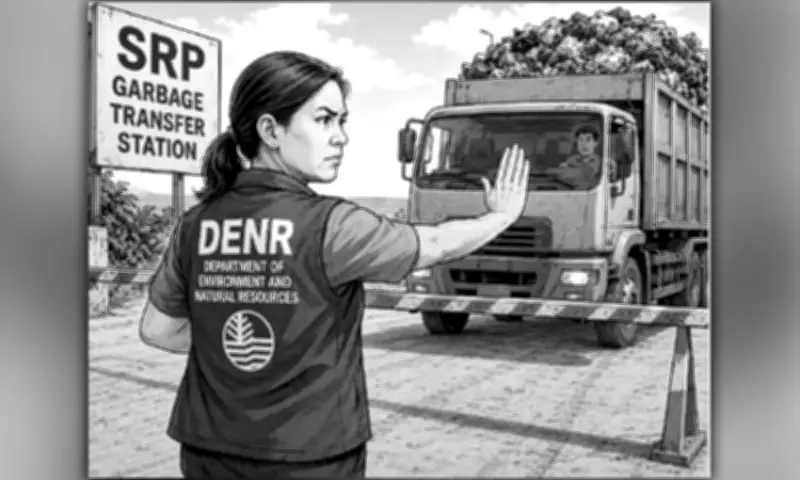
The Department of Environment and Natural Resources (DENR) has clarified that the South Road Properties (SRP) cannot be used as a garbage transfer station, especially without environmental permits and clearances. Despite this, the Cebu City government continues to use it, disregarding potential impacts on the environment and public health. This constitutes a violation of Republic Act 9003, or the Ecological Solid Waste Management Act, which mandates proper segregation and management of solid waste.
Waste Management Challenges
It is undeniable that the city faces a significant challenge in managing increasing volumes of waste. However, a rushed solution that bypasses legal and procedural requirements cannot be the answer. Using the SRP without environmental compliance endangers the sea, air, and the overall ecosystem of the area.
DENR Order
As a result, the DENR has ordered the city to clear the piled-up garbage at the SRP within 60 to 90 days. This should be seen as an opportunity for the local government to establish a more robust and sustainable waste management system—not only for now but for the future.

It is crucial that waste-related projects, such as materials recovery facilities or waste processing centers, undergo the proper permitting process. The Environmental Impact Statement System is not merely a formality but a mechanism to ensure that development does not harm the environment.
Collective Responsibility
Ultimately, the SRP issue reminds everyone that waste management is not only the government's responsibility but a collective obligation. Compliance with the law, discipline in household segregation, and the development of sustainable solutions are key to avoiding similar crises.
If not addressed properly, the SRP—once a symbol of progress for Cebu City—could become a mark of failure in protecting the environment.