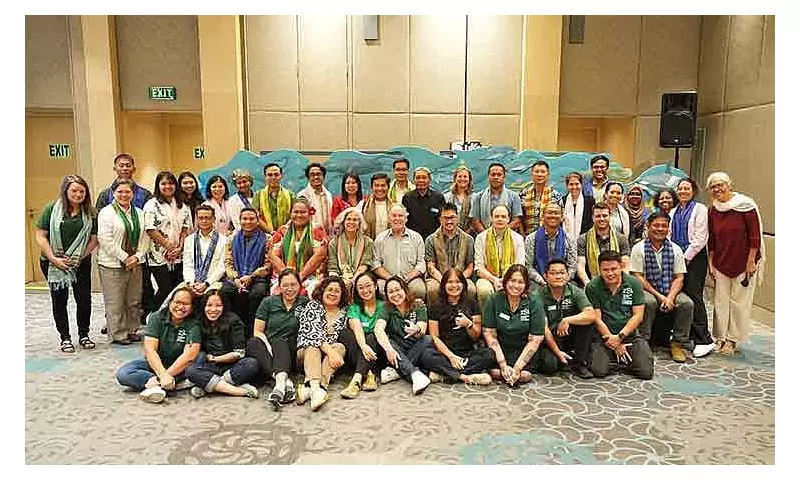
The Philippines recently took a central role in Asia's push for ocean conservation by hosting a pivotal regional gathering in Iloilo City. The Asia Regional Large-Scale Marine Protected Area (LSMPA) Workshop, held on January 9, 2026, brought together a diverse coalition dedicated to safeguarding the world's seas.
Uniting Nations for Ocean Ambition
Organized by the Zoological Society of London - Philippines (ZSL Philippines) in partnership with the Blue Nature Alliance and Big Ocean, the two-day event served as a critical platform for collaboration. Representatives from seven nations—the Philippines, Indonesia, Thailand, Malaysia, Maldives, Vietnam, and the Solomon Islands—converged to share knowledge. Participants hailed from government agencies, academic institutions, and non-governmental organizations, all united by the urgent global 30x30 target to protect 30% of the ocean by 2030.
The workshop focused on overcoming significant hurdles in large-scale marine protection. Experts exchanged insights on pervasive challenges, including policy gaps, governance complexities, climate change impacts, illegal fishing, and the need for transboundary cooperation. Laure Katz, Executive Director of the Blue Nature Alliance, highlighted the region's crucial role, stating, "With the highest nearshore marine biodiversity in the world, Asia has long been at the forefront of coastal protection."

Building a Roadmap for Regional Action
The discussions aimed to translate leadership into concrete action. Key outcomes from Iloilo included laying the groundwork for an Asia Regional LSMPA Community of Practice, a peer-learning network for managers. Participants also worked on developing a strategic roadmap to extend protection beyond near-shore areas, specifically targeting waters past 12 nautical miles. This effort emphasizes strengthening the vital links between science, policy, and local communities.
Naiʻa Lewis, Director of Big Ocean, expressed great optimism for the region's potential: "The potential for Asia is huge. It can be a trailblazer, creating a 'Big Ocean 2.0,' leading the second wave of large-scale protection, and showing the world that fisheries, food security, and conservation can be addressed together."
The Philippine Rise: A Flagship Project
A standout example of this ambitious vision is the proposed Philippine Rise Ocean Conservation Area. Spearheaded by ZSL in collaboration with the Department of Agriculture–Bureau of Fisheries and Aquatic Resources and the Blue Nature Alliance, this project is monumental in scale. It aims to protect approximately 150,000 square kilometers, covering about 7.5% of Philippine waters. If established, it would stand as one of Asia's largest single marine protected areas, designed to conserve biodiversity while directly supporting long-term food security for the nation.
"The thinking around marine protected areas has long been at a much smaller scale," noted Edwina Garchitorena, Country Director of ZSL Philippines. "We know the challenges remain—from community understanding to governance alignment—but we also know the impact will be there. We are committed to helping make this shift happen."
The workshop concluded with a strong consensus on pressing threats and necessary actions. Participants identified pollution, climate change, and illegal fishing as primary pressures. Key recommendations for moving forward include:

- Aligning marine conservation goals with national food security objectives.
- Developing equitable, long-term financing mechanisms with government backing.
- Harmonizing ocean-related policies to streamline implementation.
- Enhancing public participation and community-driven approaches.
Katz affirmed the momentum, adding, "The movement for large-scale protection with comprehensive solutions both nearshore and offshore has started in Asia with governments, particularly in the Philippines and Indonesia, taking bold steps." The Iloilo workshop has set a collective course, proving that through science, inclusive policy, and unwavering regional partnership, the ambitious 30x30 target is within reach.