Davao Gulf Fishing Ban Yields Positive Results Amid Regional Fisheries Decline
After six years of implementing a three-month closed season in Davao Gulf, the Bureau of Fisheries and Aquatic Resources in Davao Region has reported an increase in fish catch and fish size. This positive development comes against a backdrop of mixed performance in the region's fisheries sector, as detailed in recent data from the Philippine Statistics Authority (PSA).
Overall Fisheries Production Declines by 7.3%
Fisheries production in the Davao Region declined by 7.3 percent in the third quarter of 2025, reflecting a complex landscape across various subsectors. According to PSA data, total fisheries output fell to 14,454.67 metric tons (MT) from 15,592.24 MT in the same quarter last year. This contraction was driven by declines in aquaculture and marine municipal fisheries, which offset gains in commercial and inland fishing.
Commercial Fisheries Sector Shows Strong Growth
The region's commercial fisheries sector emerged as a bright spot, expanding by 52.8 percent year-on-year to 2,491.03 MT, up from 1,629.90 MT in the third quarter of 2024. Davao Oriental dominated commercial production with 2,345.82 MT, accounting for 94.2 percent of the regional total. The City of Davao contributed 120.46 MT, equivalent to 4.8 percent of output.

However, commercial fishing activity sharply declined in Davao Occidental (down 78.9 percent) and Davao del Sur (down 58.1 percent), highlighting uneven growth across provinces. The surge in commercial catch signals stronger offshore fishing activity, particularly in marine waters beyond 15 kilometers from shore.
Marine Municipal Fisheries Experience Decline
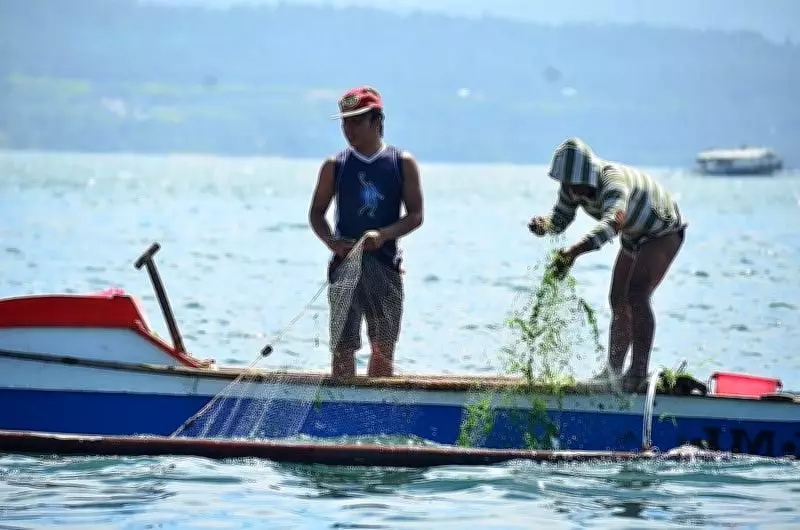
Marine municipal fisheries, which cover small-scale fishing within 15 kilometers of the shoreline, recorded a 5.6 percent decline, slipping to 7,141.28 MT from 7,562.37 MT a year ago. Despite the overall contraction, Davao Occidental posted a significant 48.1 percent increase, producing 2,484.57 MT. Meanwhile, Davao Oriental remained the largest contributor with 3,326.67 MT, representing 46.6 percent of the regional total.
Steep declines were observed in Davao del Sur (down 43.8 percent) and Davao Oriental (down 20.6 percent), pulling down overall municipal performance.
Inland Fisheries Nearly Double Output
Inland fisheries production climbed by 87.7 percent, reaching 13.74 MT from 7.32 MT in the same quarter last year. Davao del Sur led inland production with 5.45 MT, reflecting a remarkable 636.5 percent increase. Davao de Oro followed closely with 5.43 MT, up 118.1 percent year-on-year.
Although inland fisheries account for only a small fraction of total output, the sharp increase suggests improving productivity in lakes, rivers, and other inland water bodies.
Aquaculture Contracts by 24.8%
Aquaculture, which includes fishpond, cage, and seaweed farming, declined by 24.8 percent, with total production falling to 4,808.61 MT from 6,392.65 MT in 2024. Davao del Sur remained the top aquaculture producer at 2,524.34 MT, accounting for 52.5 percent of regional output, despite a 39.2 percent drop.
Davao del Norte recorded a 9.3 percent increase, while Davao Oriental posted a strong 62.9 percent growth, albeit from a low base. In contrast, Davao Occidental experienced a steep 69.2 percent decline. The downturn in aquaculture significantly contributed to the region's overall fisheries contraction, given its large share in total output.
Top Species and Provincial Breakdown
Milkfish remained the region's top species by volume, although production declined to 3,451.52 MT from 4,930.46 MT a year earlier. Squid rose to second place with 1,869.95 MT, while yellow-fin tuna slipped to third with 1,206.07 MT. Other key species included big-eyed scad, frigate tuna, roundscad, whiteleg shrimp, seaweed, big-eyed tuna, and skipjack. The changing rankings reflect shifting catch patterns and possible supply adjustments across marine and aquaculture subsectors.

By province, Davao Oriental retained its position as the largest contributor to total fisheries production, accounting for 40.9 percent of regional output. Davao del Sur followed with 22.0 percent, while Davao Occidental contributed 19.3 percent. The City of Davao, newly disaggregated from Davao del Sur data starting in 2025, recorded 843.92 MT, equivalent to 5.8 percent of the regional total.