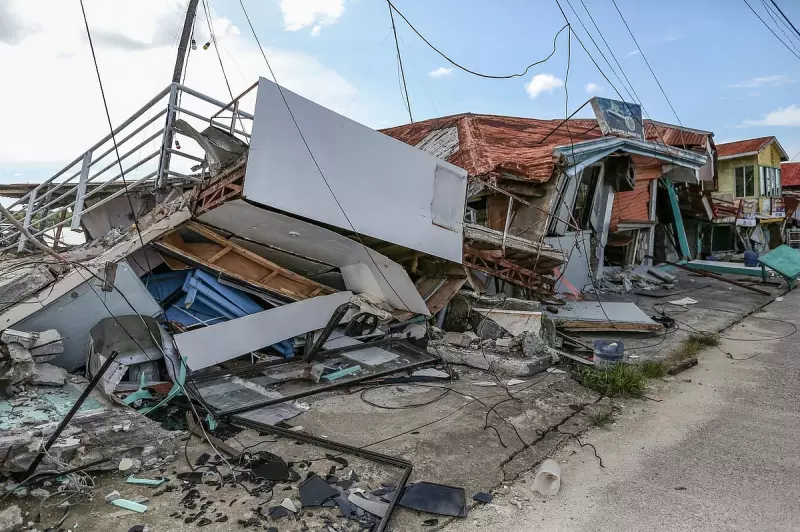
When a powerful earthquake strikes, the immediate fight for survival eventually gives way to a longer, more uneven battle: the struggle to rebuild. In Bogo City, Cebu, this phase of recovery has exposed a critical divide, as the pace of reopening schools has split sharply along public and private lines. The urgent need to resume education is being weighed against the non-negotiable demand for student safety, creating a tense stalemate for thousands of learners.
A Landscape Divided: The Status of Bogo City Schools
Four months have passed since a 6.9-magnitude earthquake struck off the coast of Bogo City on September 30, 2025. Yet, the city's educational recovery remains a tale of two systems. While several private institutions managed to resume face-to-face classes before the Christmas break of 2025, public schools stand silent and empty. Bogo City Mayor Maria Cielo Martinez confirmed on Sunday, January 4, 2026, that public schools are still in a holding pattern. They await a formal compliance checklist and a final green light from the Schools Division Superintendent (SDS) before students can return to their desks.
The Root of the Delay: Widespread Infrastructure Damage
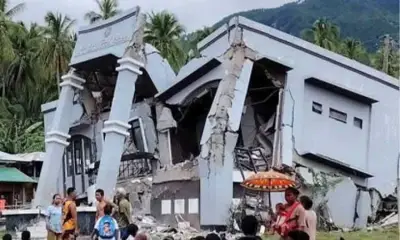
The prolonged closure is not a matter of bureaucracy alone; it is a direct consequence of devastating physical damage. Data from the Provincial Disaster Risk Reduction and Management Office (PDRRMO) paints a stark picture of destruction across northern Cebu, with 2,709 classrooms affected region-wide.

In Bogo City, the impact was total: all 38 public schools sustained damage. A detailed assessment breaks down the crisis:
- 142 classrooms were totally damaged.
- 281 classrooms sustained major damage.
- 377 classrooms were marked with minor damage.
Neighboring municipalities like San Remigio and Tabogon reported similar devastation. With so many structures covered by the National Indemnity Insurance Program (NIIP), rigorous safety inspections have become a necessary, yet time-consuming, prerequisite to any reopening.
Why Recovery Paces Differ: Public Process vs. Private Agility
The contrasting timelines for reopening underscore a fundamental difference in how private and public institutions operate. Private schools in Bogo City, after conducting their own safety assessments, were able to restart classes independently. The public system, however, must navigate a centralized, standardized process to ensure uniform safety standards for all.
As Mayor Martinez explained, "Ang public school nagpaabot pa mi sa decision sa SDS." The SDS is finalizing a standardized compliance checklist, slated for release on Monday, January 5. Every public school in the division must satisfy this checklist before reopening, a step that private schools did not have to wait for.
Leadership Perspectives on Safety and Urgency
Local officials are grappling with the dual pressures of safety protocols and educational urgency.
Mayor Maria Cielo Martinez highlighted the procedural hold-up, noting, "Kay she (SDS) said maghimo pa daw siya ug checklist ugma (Monday, Jan. 5) for things the schools need to comply with una maka face-to-face."
In nearby Medellin, Mayor Edwin L. Salimbangon took a more proactive approach. He issued Executive Order 1, lifting the suspension of classes effective January 5, but with a strict condition: buildings must first be certified safe by engineers from the Department of Public Works and Highways (DPWH) and the Department of Education (DepEd).
Dr. Salustiano Jimenez, the DepEd 7 director, pointed to a perennial obstacle: funding. While emphasizing the essential nature of in-person classes, he revealed that DepEd 7 had requested P5.5 billion for repairs. To date, only a fraction of that amount has been released through Quick Response Funds (QRF).

The Ripple Effects: Learning Loss and Systemic Challenges
The continued shutdown of public schools carries severe consequences. It disproportionately affects students who may lack access to reliable digital or hybrid learning tools, widening the educational gap. Director Jimenez warned that learning backlogs have already reached up to 30 days in some schools, threatening the academic progress of approximately 700,000 students across Central Visayas.
This local crisis reflects a global pattern in post-disaster recovery, often called the "second disaster" of administrative and financial delays. It tests systems like the NIIP and highlights the importance of specific allocations in the P1.044 trillion 2026 DepEd budget for repairing disaster-hit classrooms. Furthermore, the reliance on DPWH for structural verification—amid reported shortages of technical personnel—shows how broader labor gaps can stall community recovery.
What Comes Next for Northern Cebu's Schools
All attention now turns to January 5. In Medellin, a phased reopening begins, utilizing shifted schedules and blended learning models where damage persists. In Bogo City, the SDS's compliance checklist will set the next steps in motion.
For schools that cannot immediately reopen, DepEd is deploying Temporary Learning Spaces and "EduKahon" kits to provide stopgap solutions. Permanent reconstruction for the most severely damaged structures is expected to begin later in 2026, but for thousands of students and their families, the return to normalcy cannot come soon enough.