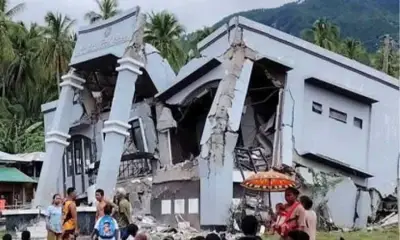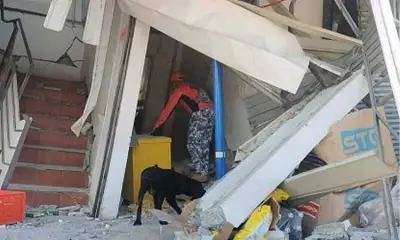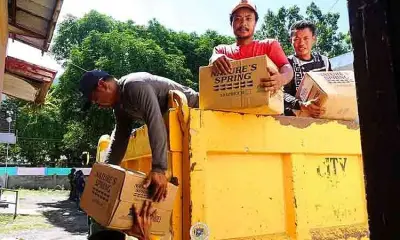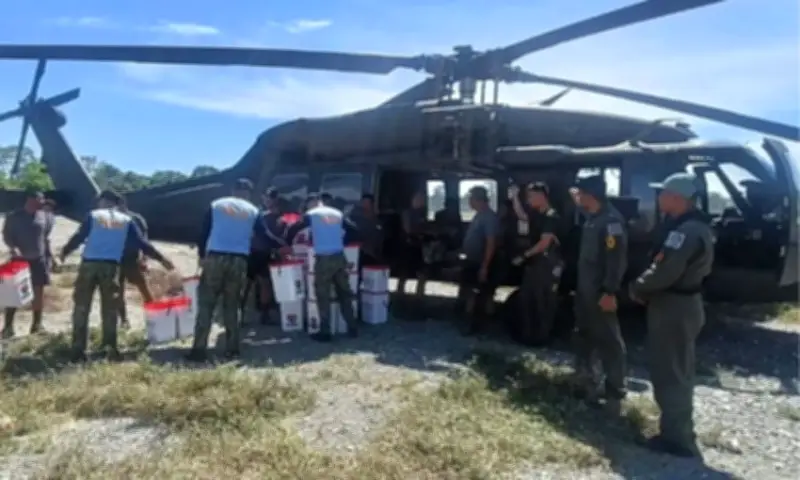
The Philippine Air Force has deployed S-70i Black Hawk helicopters to deliver relief goods from the Department of Social Welfare and Development (DSWD) to communities hit by a magnitude 7.8 earthquake that struck off Maasim, Sarangani, on June 8, 2026.
Massive Impact Across Mindanao
More than 1.6 million people across Mindanao continue to grapple with the aftermath of the powerful earthquake, with thousands of families still displaced and extensive damage reported in several regions, according to the latest data from the DSWD.
As of June 20, 2026, the DSWD's Disaster Response Operations Monitoring and Information Center (DROMIC) reported that 1,608,057 individuals or 376,544 families have been affected. The figure covers 627 barangays across Zamboanga Peninsula (Region 9), Davao Region (Region 11), Soccsksargen (Region 12), and the Bangsamoro Autonomous Region in Muslim Mindanao (Barmm), making it one of the largest disaster response operations in Mindanao in recent years.

Displacement and Destruction
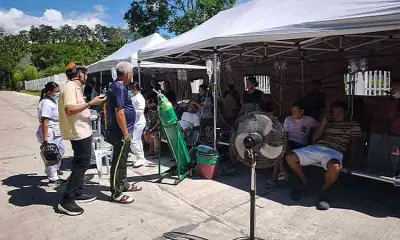
Despite ongoing relief efforts, thousands remain unable to return home due to safety concerns, damaged structures, and continuing aftershocks. DSWD data showed that 23,028 individuals from 5,288 families are currently staying in 52 evacuation centers, while 63,351 individuals or 16,673 families are temporarily sheltering with relatives or friends.
The earthquake left a significant trail of destruction. Authorities recorded 15,039 houses destroyed and 69,537 houses partially damaged, underscoring the enormous rehabilitation challenge ahead.
Humanitarian Assistance
In response, the DSWD has extended P318.65 million worth of humanitarian assistance, including family food packs, hygiene kits, sleeping kits, financial assistance, and other emergency relief items distributed through local government units and partner agencies.
Relief operations remain ongoing as assessment teams continue validating reports and identifying additional needs. The DSWD reported having P4.42 billion worth of available relief resources, including Quick Response Funds and stockpiles of food and non-food items positioned nationwide.
Beyond food and shelter, the agency has focused on psychological support. DSWD records show that 307 beneficiaries have received social protection services, including child-friendly space interventions, while 130 individuals have undergone psychological first aid. Vulnerable groups in evacuation centers include infants, young children, pregnant women, senior citizens, persons with disabilities, and indigenous peoples.
Government agencies continue to coordinate relief distribution, damage assessments, and recovery programs. Authorities have urged residents to remain vigilant against aftershocks and to follow safety advisories.