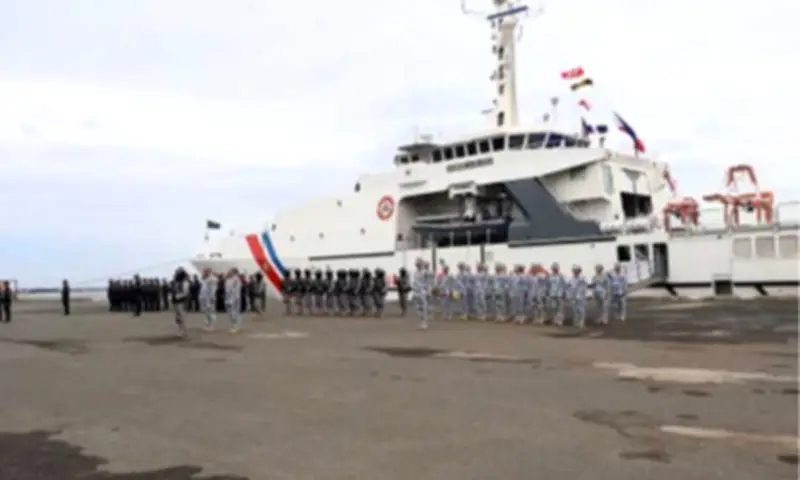
The Philippine Coast Guard (PCG) held a send-off ceremony on Thursday for BRP Gabriela Silang and BRP Miguel Malvar as they depart to join the Rim of the Pacific Exercise (RIMPAC) 2026 in Hawaii. The event took place at the PCG headquarters in Manila.
Milestone Participation
PCG Commandant Admiral Ronnie Gil Gavan said during a media interview that the PCG's involvement this year is a significant milestone, as it was previously limited to an observer role. "The Philippine Coast Guard has arrived—we are now able, we are now capable of participating in such an exercise alongside our peers and partners," Gavan stated.
He emphasized that the PCG has reached the minimum level of fleet readiness required to be an active player in the exercise. "With the modernization of the PCG—with the support of President Ferdinand R. Marcos Jr., Congress, the Senate, and the industry—the Coast Guard has finally achieved this level of readiness," he added.

Exercises and Drills
During the event, Gavan noted that BRP Gabriela Silang, BRP Miguel Malvar, and their crews will participate in exercises and drills with the United States Coast Guard (USCG) and other participants. These activities will focus on:
- Search and rescue operations
- Information exchange
- Public affairs coordination
- Humanitarian assistance
"This exercise will also test how far our logistics system has come. We can now send our ships away from our comfort zone, from our bases," Gavan explained.
New Vessels on the Horizon
Gavan also highlighted that the PCG is set to receive the USCGC Reliance, a 64-meter cutter used by the USCG for offshore oil rig inspections, fisheries, search and rescue, and other missions. "It is a welcome addition—it is still in good hull condition and has been proven capable in harsh conditions. Initially, we will be receiving one starting next year. But before that, we will also be receiving two smaller coastal patrol boats," he said.
International Cooperation
The PCG contingent will join more than 30 partner nations in RIMPAC 2026, aiming to advance maritime cooperation, operational interoperability, humanitarian assistance and disaster response, maritime law enforcement, and regional maritime security.