An Octogenarian's Journey: Witnessing a Nation's Tumultuous History
Thank God I have reached this milestone and am proud to be an octogenarian. Not everyone is blessed with such an opportunity. I often reflect on the Chinese saying of Ying and Yang, symbolizing how life is divided into halves: night and day, happiness and sadness, success and failure. I have shared in moments of joy, but also endured profound pain. Here, I highlight some of the pains I have experienced and witnessed, far more than I ever expected or felt I deserved.
The Shadows of Conflict and Corruption
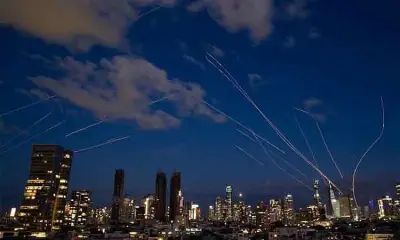
Among the worst events I have seen is the Iran war versus the USA and Israel conflict, a devastating global strife. More recently, I have witnessed unprecedented thievery from elected officials, with corruption infiltrating almost all branches of government. Ghost flood control projects, running into billions of pesos, have been pocketed by leaders, betraying public trust. I may have heard the bombs dropped by the Japanese invading army when they targeted Clark Air Force Base, as World War II exploded following the bombing of Pearl Harbor on December 8, 1941. My older brother, Alfredo, as a young boy, told me he was delighted to watch the sky feature 'dog fights' between US air force pilots and their Japanese counterparts.
Dangerous Decades and Political Turmoil
By the fifties, I was already in shorts, somewhat grown up, when dissident groups led by then Huk supremo Luis Taruc roamed the countryside, ambushing government soldiers. Those were perilous years; the Huk movement nearly toppled the established government, only averted when Ramon Magsaysay, a popular figure among the masses, was elected president. The succeeding years brought tranquility until 1972, when Ferdinand Marcos proclaimed martial law to perpetuate his rule. His political rivals were jailed, media outlets closed down, curfews imposed, and basic rights curtailed. Then came the so-called EDSA revolution, where people were overjoyed as Marcos left the country, and power transferred to widow Corazon Aquino. However, the country was badly managed, with a dramatic increase in joblessness.

Modern Struggles and Cultural Nostalgia
The COVID-19 pandemic raged, filling hospitals with the sick, while vaccines were insufficient. Sickness and deaths were tallied daily by the government—a heartbreaking period. I have witnessed both bad and good years. The best years were my teen years, growing up with the music of Elvis Presley and the Beatles. My friends in Porac and barkadas in Angeles City were not really affected by the rivalry of then President Carlos P. Garcia of Bohol and Vice President Diosdado Macapagal of Pampanga, but we all admired President John F. Kennedy of the United States. Benigno 'Ninoy' Aquino of Tarlac, Ferdinand E. Marcos of Ilocos Norte, and Gerardo Roxas of Capiz were rising political stars—senators when senators were real senators.
Golden Eras of Entertainment and Economy
Charito Solis, Gloria Romero, and Paraluman were model pin-up girls on calendars, while Fernando Poe Jr., Romeo Vasquez, and Lou Salvador Jr. were screen idols. In sports, Gabriel 'Flash' Elorde vs. Harold Gomes fought at the new Araneta Coliseum in Cubao, Quezon City; Elorde knocked out Gomes in the first round and won the world junior lightweight crown. The exchange rate was two pesos to one US dollar, and money scrips were still legal tender in cities like Angeles and Olongapo. Miguel Cuaderno served as Central Bank governor, and Henry Sy was selling shoes on Carriedo Street near Quiapo Church. Plaza Miranda, in front of the church, was like London's Hyde Park, where political meetings were held.

A Simpler Time Before Modern Complexities
There were no party list members of the House of Representatives; senators were brilliant and honorable, with no pork barrels for lawmakers—Janet Napoles may not have been born yet. 'Upong dyes lang po' was a sign below the rearview mirrors of jeepneys. Few buses plied Metro Manila, with La Mallorca Pambusco of Geronimo 'Hitler' Enriquez and Philippine Rabbit owned by the Buan and Paras families of Tarlac serving Pampanga. There was no North Luzon Expressway yet, but President Macapagal in 1962 tasked the Bureau of Public Highways to build the highway. Tricycles did not exist; instead, horse-drawn calesas roamed the streets. 'Those were the days my friend, I thought they never end...'—a nostalgic refrain for a bygone era of simplicity and integrity.