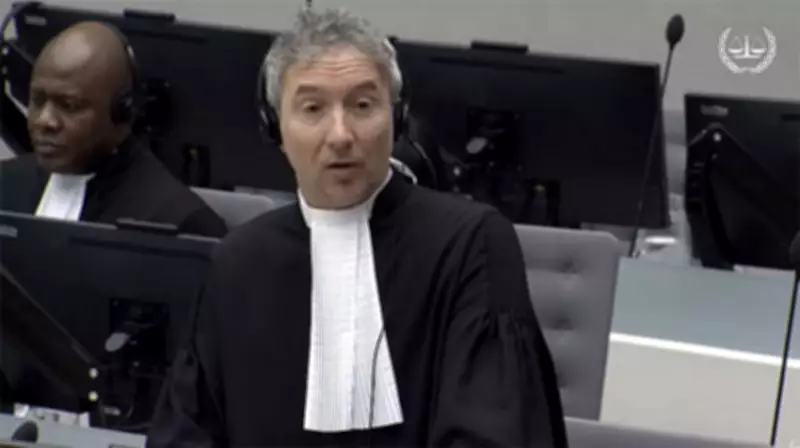
ICC Prosecutor Details 'Dead List' Evidence in Duterte Drug War Hearing
During the second day of confirmation of charges hearings at the International Criminal Court (ICC) on Tuesday, February 24, 2026, prosecutor and trial lawyer Edward Jeremy presented compelling evidence regarding the killings of numerous "high-value targets" (HVTs) during the peak implementation of former President Rodrigo Duterte's controversial drug war.
The 'PRRD List' Presented as Evidence
Jeremy introduced the so-called "PRRD list," a documented roster of HVTs allegedly targeted under Duterte's anti-drug campaign, famously known as "Oplan Tokhang." According to testimony from an unnamed witness, inclusion on this list almost invariably led to fatal police operations. "Basically, the PRRD list is a dead list," Jeremy stated unequivocally to the court.
Among those named on the list who were killed during police operations were former Albuera, Leyte Mayor Rolando Espinosa and Ozamiz City Mayor Reynaldo Parojinog. Espinosa was killed on November 5, 2016, by operatives from the Criminal Investigation and Detection Group (CIDG) while serving a search warrant inside his detention cell at the Baybay City Provincial Jail. Police claimed Espinosa resisted, prompting officers to return fire and causing his instantaneous death.

Another drug suspect, Raul Yap, was killed in what authorities described as a "shootout" three months after he surrendered to then-Philippine National Police (PNP) chief Ronald dela Rosa and admitted involvement in illegal drug operations. Espinosa had also implicated his son, Kerwin, in drug activities prior to his death.
Pattern of Rhetoric and Policy
Jeremy presented video clips of Duterte's public remarks, including speeches where the former president openly encouraged lethal force against suspects and offered assurances that security forces would be protected, pardoned, and even rewarded. "And this was the pattern," Jeremy explained. "Out of one side of his mouth, quietly, occasionally, he would speak about self-defense. This was Mr. Duterte, the lawyer, keenly aware of his own legal jeopardy, especially once he was no longer President."
He continued, "And on the other side of his mouth, loudly, frequently, he would say kill and I would protect you, I will pardon you, and I will promote you. And this was Mr. Duterte, the strongman President."
Child Victims and Disproportionate Targeting
The prosecution also highlighted the deaths of several children during Duterte's drug war, most notably 17-year-old Kian delos Santos, who was killed by police during an anti-illegal drug operation in Caloocan City on August 16, 2017. Police claimed Delos Santos shot at them, forcing them to return fire in self-defense. However, Jeremy noted that CCTV footage contradicted this account, showing police dragging the teenager across the ground before he was shot twice in the head after pleading for his life. Three police personnel were subsequently convicted for Delos Santos' murder.
Jeremy argued that Delos Santos' killing prompted Duterte to temporarily withdraw anti-drug operations, leading to a reduction in drug war-related deaths. "In announcing his temporary withdrawal, Mr. Duterte sarcastically stated that he hoped this would satisfy 'bleeding hearts' in the media," Jeremy said. "In this way, he publicly communicated that this was not a genuine effort to prevent crime, but rather a temporary attempt to placate public criticism."
Official Terminology and Community Impact
The prosecutor further highlighted testimony and evidence indicating that the term "neutralize" in official anti-drug planning documents, including a memorandum signed by Dela Rosa, was understood within operations to mean "to kill." Jeremy emphasized that poor and vulnerable communities were disproportionately targeted under Oplan Tokhang because they lacked the resources to file complaints against police abuses.
"To quote one witness, he stated, 'It was said that the ones that we had to do the Tokhang operation on had to be poor, those who do not have the means to file a complaint or to complain,'" Jeremy recounted.

Jeremy described how the prosecution's evidence systematically links Duterte's rhetoric, public statements, and policy directives to a widespread pattern of extrajudicial killings that affected multiple regions across the Philippines. The hearing continues as the ICC examines allegations of crimes against humanity in connection with the drug war that claimed thousands of lives during Duterte's presidency.