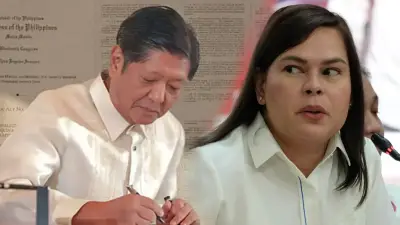
President Ferdinand "Bongbong" Marcos Jr. officially enacted the country's financial blueprint for the coming year by signing the General Appropriations Act (GAA) for 2026 on Monday, January 5, 2026. The monumental budget, valued at P6.793 trillion, earmarks a historic level of resources for local governments, signaling a major shift towards decentralized governance and empowerment.
Unprecedented Financial Boost for Local Governments
During a press conference, Acting Department of Budget and Management (DBM) Secretary Rolando Toledo detailed the substantial allocations directed to Local Government Units (LGUs). The cornerstone is the National Tax Allotment (NTA), which exceeds P1 trillion for 2026. Secretary Toledo emphasized that this massive NTA figure is separate from other significant revenue streams for LGUs, including over P31.7 billion in special shares from the national government and an additional P1.41 billion originating from fire code fees.
Furthermore, the Local Government Support Fund (LGSF) is set to receive P57.87 billion. This allocation represents more than double the funding provided in the previous year. The LGSF is a critical instrument for enhancing basic public services and providing targeted support to financially constrained or geographically isolated communities, ensuring that development reaches every corner of the archipelago.

Enhanced Disaster Response and Local Autonomy
A significant portion of the national budget is dedicated to building resilience. From the P39.82 billion National Disaster Risk Reduction and Management Fund (NDRRMF) for 2026, a direct allocation of P15.33 billion is designated for rehabilitation and reconstruction projects to be implemented by LGUs themselves. This direct funding mechanism aims to accelerate recovery efforts in the aftermath of calamities.
Secretary Toledo also highlighted the P10.685 billion set aside for the Quick Reaction Fund (QRF), an essential emergency reserve. He outlined a proactive replenishment policy, stating that this fund can be replenished once LGUs have utilized 50 percent of their allocated QRF, ensuring continuous readiness.
A Philosophy of Localized Governance
The dramatic increase in LGU funding is not merely a fiscal adjustment but a reflection of the administration's core governance philosophy. Secretary Toledo articulated this belief clearly, stating, "The administration's belief is simple and direct -- if the problem is local, the strategy or decision should also come from the local government."
He further explained that the 2026 budget represents a transformative approach: "That's why in 2026, we did not just increase the funds of the LGUs, we changed the very way of placing funds in the budget. The role of the local government is clearer, their power is more complete, and their accountability is more defined." This strategic move is intended to bring public services closer to the people and leverage local knowledge to achieve national development goals.