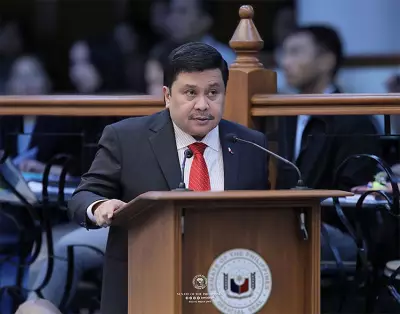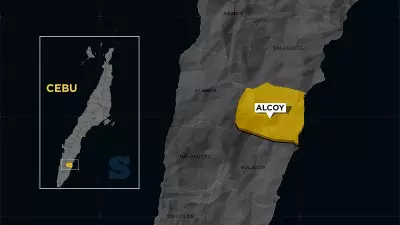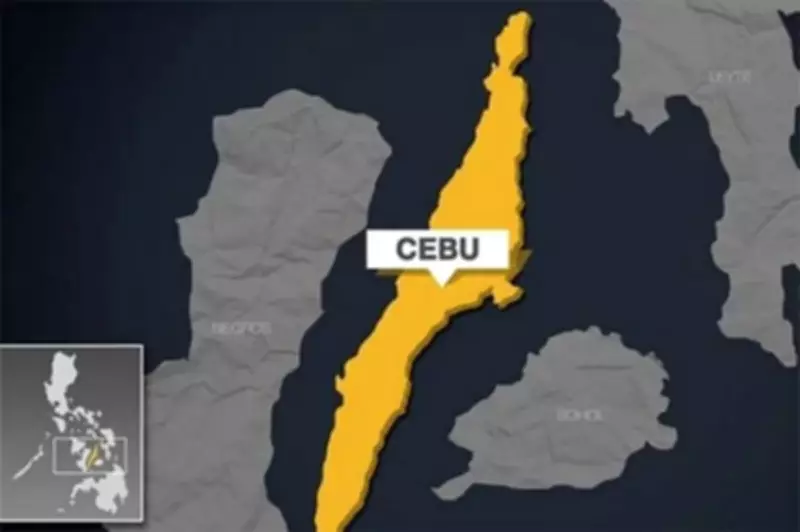
The Cebu Provincial Board has approved the Provincial Government Offices Freedom of Information Ordinance of 2026, a landmark measure aimed at enhancing public transparency and accessibility. Approved during its regular session on May 25, 2026, the ordinance was authored by Board Member Malcolm Sanchez and grants Filipino citizens the right to request and receive official records, local budgets, and public contracts.
Scope and Guidelines
The ordinance applies to all offices, departments, and government corporations under the Provincial Government, while component cities and municipalities are encouraged to adopt similar measures. It sets strict processing deadlines based on document complexity: three working days for simple requests, seven working days for complex requests, and 20 working days for highly technical files. Digital copies sent via email or online links are free, though minor fees may apply for physical printing; indigent citizens are entirely exempt.
Exceptions and Appeals
Access may be denied if the requested data involves national security, ongoing law enforcement investigations, bank secrecy, or personal details protected under the Data Privacy Act. Requestors can contest a denial within 15 working days before a newly formed Provincial FOI Review Committee, which must resolve the appeal within 10 working days. The ordinance also mandates the Provincial Government to regularly publish annual budgets, procurement plans, and project updates on public websites and bulletin boards without waiting for requests. Officials who unjustifiably withhold public records will face administrative penalties under Civil Service rules, while those releasing data in good faith are protected from liability.

While the Philippines has implemented a national transparency policy since 2016, it only applied to national executive agencies, leaving a loophole that merely encouraged local governments to adopt a similar approach. This new local ordinance finally closes that gap.
Online Request Portal
Under the newly approved mechanism, citizens can request public documents online through a dedicated portal. The local platform will function similarly to the National Government's electronic FOI portal under the Presidential Communications Office. Cebu Province Public Information Officer Ainjeliz dela Torre Orong said that while applicants must declare their purpose when filing a request, the program remains purpose-blind. "The portal will let people put what they need, what office or department they are requesting from, and their purpose. The purpose, to clarify, is not the reason for a request to be declined because our FOI is purpose-blind. The purpose is there for tracking purposes only, but they can ask for anything as long as it is a public document," Orong said. The portal will allow requestors to monitor the progress of their applications, which are bound by strict processing timelines aligned with Republic Act 11032.
Building Public Trust
Sponsoring the measure, Sanchez said the policy serves as a foundation for genuine public engagement and institutional trust, noting that making public documents accessible is essential to building an open, citizen-centered government. "We see people coming here to the office asking where to go and who to approach just to get information. So we have this FOI, we have a procedure and mechanism on where Cebuanos should go, where to go and where to access files pertaining to some transactions, some records and projects," Sanchez said. "Closer to the people, true transparency. So, through the ordinance we will bring back the people's trust in the government and give people access to documents pertaining to the programs and projects of the government. So, we really urge the Cebuanos to actively participate in governance," Sanchez added.
Sanchez said the goal of the ordinance is to establish a Provincial Government that is transparent and responsive to the needs of the Cebuanos. Under the provisions of the ordinance, the Cebu Provincial Information Office has a 90-day period from its passage to formulate and release the detailed implementing rules and regulations. The law takes effect 15 days after its full publication in a newspaper of general circulation and its posting in at least three public places across the province, including the official provincial website.

Residents React
For residents, the local law changes how they interact with the government by tearing down traditional barriers to public data. Young citizens living in the province said the arrival of this law brings a strong sense of relief and a practical way to guard public funds. KC Salaritan, a 21-year-old resident from Pinamungajan, said the law gives voters the proof they need to know if they made the right choice during elections. "In that way, people will see transparency regarding where their taxes go. They will have an assurance that their taxes are being used properly, so that their vote for that politician won't be wasted," Salaritan said.
Beyond tracking revenue, Renante Libores, a 21-year-old student from Talisay City, said the ordinance is a necessary remedy for an institution that has historically felt isolated from the community it serves. "It's very transparent because as a Filipino citizen, we really need transparency here in our institutions, especially at the Capitol. Because for me as a student here in Cebu City, the Capitol sometimes feels 'on and off' in terms of being reachable. So for the Capitol to transform and mandate this, it is nice and a good sign," Libores said.
Karol Tapere, a 21-year-old resident from San Fernando, said the ordinance makes it much easier for citizens to coordinate with provincial authorities by simplifying the paperwork required to obtain public records. "For me, it is a good ordinance that was approved because, of course, for ordinary people, it will no longer be difficult to get information from the Capitol. Also, this will help people trust public officials, and the process of getting information will be faster," Tapere said.