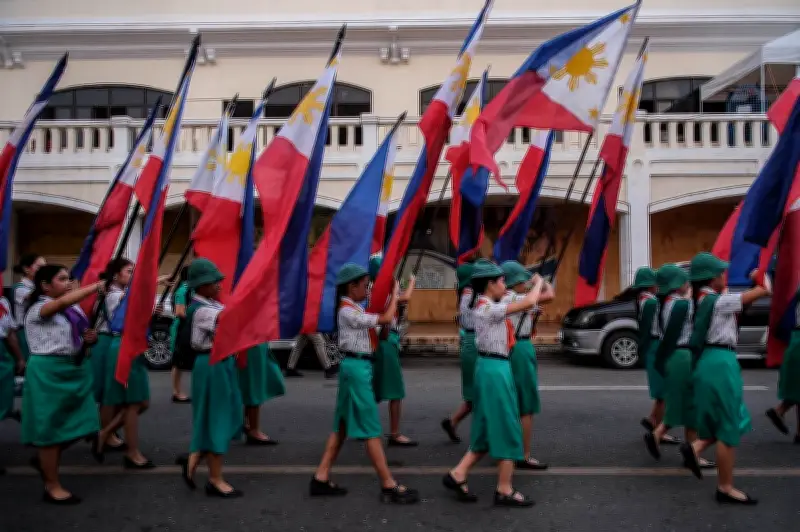
The 128th anniversary of Philippine Independence was commemorated across Cebu on Friday, June 12, 2026, with official ceremonies, parades, and tributes. While government officials called for unity, progressive groups staged protests asserting that genuine freedom remains elusive for many Filipinos.
Ceremonies at the Cebu Provincial Capitol
Governor Pamela Baricuatro led a flag-raising ceremony and the symbolic release of doves at the Cebu Provincial Capitol. The event represented the nation's enduring freedom and the continuing commitment of Filipinos to uphold it. Attendees included members of the Provincial Board, department heads, employees of the Cebu Provincial Government, and personnel from the Philippine National Police Regional Office 7.
In her Independence Day message, Baricuatro urged Cebuanos to set aside political differences and work together for the common good. She stated, "Cebuanos deserve leadership that unites, rather than separates," and concluded with, "Mabuhi ang Sugbo, mabuhi ang mga Cebuano."

Lapu-Lapu City Commemoration
In Lapu-Lapu City, local officials, government employees, and stakeholders gathered at the Liberty Shrine in Mactan for a flag-raising and wreath-laying ceremony honoring Filipinos who fought for freedom. The program recalled Datu Lapulapu's victory over Ferdinand Magellan's forces in the Battle of Mactan, considered the country's first recorded resistance against a foreign invader. It also included the reading of the Proclamation of Philippine Independence.
Cebu City Parade
The Cebu City Government, together with various government agencies and private sector groups, held a parade from Plaza Sugbo to Plaza Independencia as part of the nationwide celebration. Participants marched carrying Philippine flags and banners in commemoration of the country's declaration of independence from Spain on June 12, 1898.
President Marcos Jr.'s Message
President Ferdinand Marcos Jr. called on Filipinos to draw inspiration from the country's heroes and work together in advancing the common good. He paid tribute to those who secured the nation's liberty and to generations of Filipinos who helped build the Republic. "It was the moment we formally asserted our right to govern ourselves and determine our own destiny," Marcos said of the declaration of independence in Kawit, Cavite. "The years that followed tested our resolve as we built institutions, strengthened national unity, and sustained a truly independent republic." He also urged Filipinos to protect truth, use technology responsibly, and help restore public trust amid growing divisions. "As we honor this day, we are reminded that freedom is not merely a legacy we inherit but a responsibility we must uphold," he added.
Protests by Progressive Groups
Not all Independence Day activities focused on celebration. Various sectoral groups held the "HINDIPENDENCE Day: People's Parade and Cultural Protest" in Cebu City, arguing that the country has yet to achieve genuine freedom and national sovereignty. The activity began at Carbon Freedom Park, where participants joined the Save Carbon Movement Human Chain before marching through major city streets and culminating in a cultural protest program at Metro Colon.
Jaime Paglinawan Sr., chairperson of Bayan Central Visayas, said the protest sought to highlight continuing foreign influence and economic policies that burden ordinary Filipinos. "Wala pa jud nato nakab-ot ang tinuod nga kagawasan," Paglinawan said. Organizers said the protest also highlighted issues such as rising prices, landlessness, low wages, and poverty, while calling for greater unity and collective action among various sectors.
Significance of the Day
Despite differing views on the country's state of freedom, the day's events underscored the significance of Independence Day as both a celebration of the nation's hard-won sovereignty and a reminder of the continuing challenges facing Filipinos more than a century after independence.