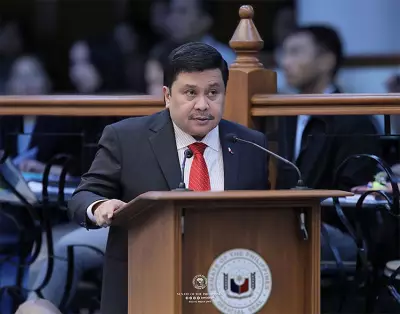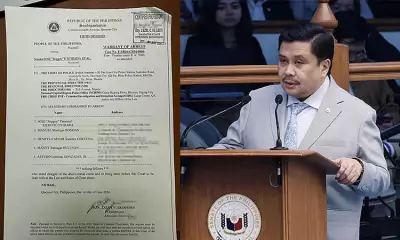
The recent arrest of Senator Jinggoy Estrada on plunder charges has sent shockwaves through the Philippine political landscape, particularly among congressmen who voted 'NO' on the impeachment complaint against Vice President Sara Duterte. The speed and manner of the arrest raise troubling questions about selective justice and political maneuvering.
How the Arrest Unfolded
On Monday, the Sandiganbayan issued an arrest warrant against Estrada for plunder, a non-bailable offense. Unlike other corruption cases where bail is allowed, plunder carries no temporary liberty. Almost immediately, the Department of Interior and Local Government (DILG) secretary personally led the arrest, accompanied by police officers. The swift action caught many off guard.
What Makes This Frightening?
Days before the warrant was issued, some minority senators reportedly knew that Estrada would be arrested. This foreknowledge suggests that information was leaked from within the Sandiganbayan or other sources. Majority senators also seemed to anticipate the arrest, calculating potential changes in Senate leadership. The timing and efficiency of the warrant processing for Estrada's case contrast sharply with other plunder cases, such as that of a Chinese-Filipino congressman, where warrants took much longer. This selective urgency is alarming.

If senators can be targeted this easily, congressmen facing similar plunder charges—especially those who voted 'NO'—could be next. Even more concerning is the implication for ordinary citizens with criminal cases: if the powerful are vulnerable, the common person has even less protection.
The Flood Control Scandal and BBM's Broken Promise
Meanwhile, President Bongbong Marcos (BBM) has remained silent on the billions of pesos lost to ghost flood control projects. In his 2024 SONA, he claimed over 5,500 projects were completed, but later admitted they were nonexistent, saying 'you should be ashamed.' He promised a thorough investigation and a task force to prosecute those responsible. Yet, no one has been charged, and the issue has faded from headlines as the impeachment trial of VP Sara dominates news cycles.
Public Works Secretary Manuel Bonoan, who provided the false data, has not been imprisoned or even suspended. It appears BBM was misled by his cabinet, but no accountability has followed. The prioritization of the impeachment trial over the flood control scandal suggests that BBM's allies are more focused on political survival than on justice for the stolen billions.
This pattern of selective justice—swift action against political opponents and silence on allies' corruption—undermines public trust. If the government can arrest a senator overnight but cannot prosecute those behind phantom projects, citizens have every reason to fear a system that protects the powerful while targeting the vulnerable.