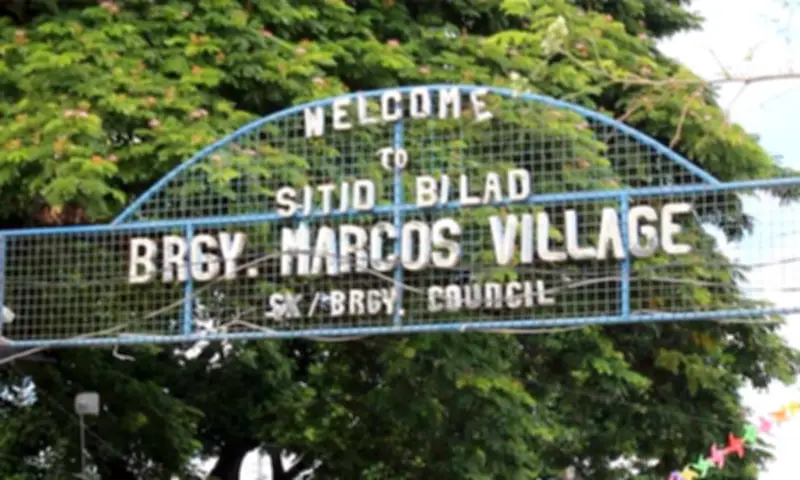
Gaborio Margarito, an Aeta resident of Marcos Village in Mabalacat City, shared his community's story while pointing to a photograph of his daughter during an interview. He expressed gratitude for the assistance provided under the Bawat Bayan Makikinabang program, saying it continues efforts that have helped improve the lives of Indigenous Peoples in their community.
Community Evolution and Relocation
Margarito has witnessed how their community has evolved through the years. As a beneficiary of the government's Bawat Bayan Makikinabang (BBM) program under President Ferdinand R. Marcos Jr., he sees the initiative as a continuation of efforts that have long contributed to the welfare of Indigenous Peoples (IPs). He recalled that decades ago, their community was relocated to what is now Marcos Village. The relocation was facilitated during the administration of former President Ferdinand E. Marcos Sr., providing Aeta families with an opportunity to establish a permanent settlement and rebuild their lives.
Continuity of Support
Today, the assistance being extended by the government under President Marcos Jr. carries special meaning for many members of their tribe. "What his father started for our community is now being continued by his son. The assistance being given today is a big help to us. We are grateful because it shows that we have not been forgotten," Margarito shared. For him and other members of the Aeta community, the support represents more than material aid. It is recognition that IPs remain part of the country's broader development agenda.

Program Goals and Local Impact
Their story reflects one of the goals of the Bawat Bayan Makikinabang program—to ensure that the benefits of development reach communities across the country, including those that have historically faced social and economic challenges. While IPs are among those benefiting from the initiative, the program is also empowering local governments to address the needs of their constituents more effectively. In Marcos Village, Barangay Captain Jose Jerry Dacio welcomed the assistance provided through the program, noting that direct support to barangays allows local leaders to implement projects that respond to the immediate needs of residents.
"We are very happy because the assistance was brought directly to the barangay. Many residents will benefit from the projects that we will be able to implement," Dacio said. Among the projects identified by the barangay are educational assistance initiatives that will help students pursue their studies and the acquisition of a barangay patrol vehicle to strengthen peace and order efforts in the community. The barangay captain said these initiatives are expected to benefit hundreds of residents, improving access to opportunities while enhancing public safety and local services.
"We are thankful because many people are benefiting from this support. We hope that these programs will continue so that more communities can experience their benefits," he said.
Grassroots Impact and Future Hopes
The experiences of Margarito and Dacio highlight how development programs create impact when they reach communities at the grassroots level. For IPs, the assistance helps address longstanding concerns about inclusion and access to opportunities. For local governments, it provides resources that can be translated into programs and services that directly improve people's lives. Together, these outcomes demonstrate how national programs can create meaningful change when implemented at the community level.
As Marcos Village continues to benefit from government assistance, residents remain hopeful that development efforts will bring lasting improvements to their quality of life. For the Aeta families who have called the community home for generations, and for local leaders working to improve public services, the Bawat Bayan Makikinabang program represents more than a government initiative. It symbolizes a continuing commitment to ensure that progress reaches every sector of society.

Their aspirations echo a vision shared by many Filipinos: a future where opportunities are accessible to all, where no community is left behind, and where development is measured not only by infrastructure and investments, but by the lives transformed along the way. In Marcos Village, that vision is taking shape—one community, one family, and one generation at a time.