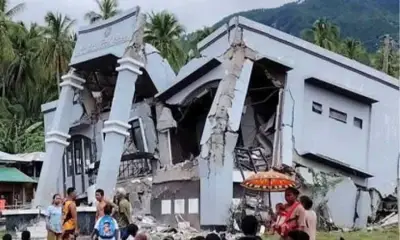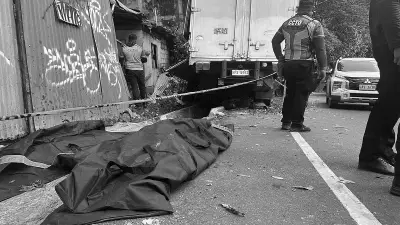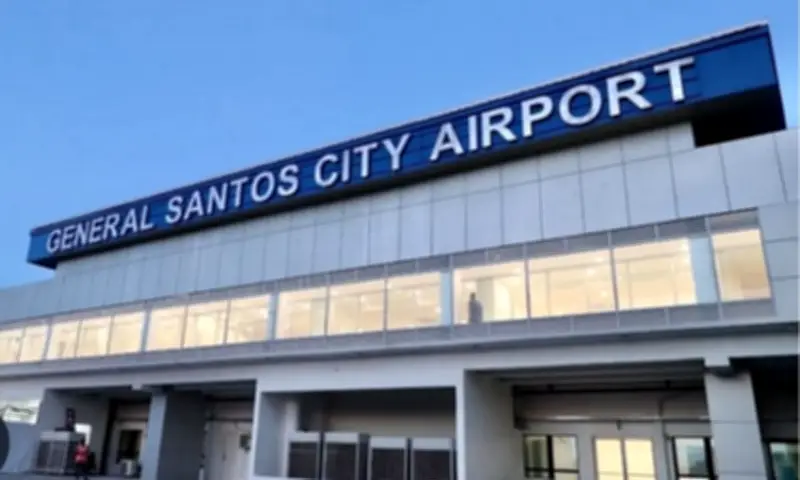
Operations at General Santos International Airport remain limited to government, military, humanitarian, relief, and cargo flights as authorities complete safety inspections following the June 8 magnitude 7.8 earthquake, even after repairs to damaged ceilings and other airport facilities were completed.
The Department of Transportation (DOTr) reported on Wednesday, June 10, that cleanup and restoration works at the airport have been substantially completed, with debris from collapsed ceiling panels, damaged wall sections, and other affected areas already cleared to support ongoing disaster response operations.
The repairs were undertaken immediately after Transportation Secretary Giovanni “Banoy” Lopez inspected the airport on June 9 and ordered the expedited rehabilitation of facilities damaged by the powerful earthquake that struck off the coast of Sarangani, triggering widespread destruction across parts of Mindanao.

According to the DOTr, the completed repairs have restored access to critical sections of the airport, allowing government agencies, the military, humanitarian organizations, and cargo operators to continue using the facility as a key logistics hub for relief and rescue efforts in quake-hit communities.
In a statement, Lopez said the immediate restoration of the airport was necessary to ensure the uninterrupted flow of aid and emergency personnel into affected areas.
“The President’s order to us is to expedite the clearing and repair of the debris blocking the airport so that our relief operations in the province can proceed smoothly and continuously, and also in preparation for the return of commercial operations in the coming days,” Lopez said.
The transportation chief added that while visible damage inside the terminal has already been addressed, authorities are continuing detailed structural inspections and operational assessments to ensure the airport can safely accommodate regular passenger traffic.
Following the earthquake, the Civil Aviation Authority of the Philippines (CAAP) suspended commercial flight operations after portions of the passenger terminal sustained damage, including fallen ceiling materials, wall debris, and cracks in several structures.
Reports from aviation authorities also noted damage to parts of the control tower facility, prompting comprehensive safety evaluations before normal operations could resume.
To support emergency response activities, Lopez directed CAAP to partially reopen the airport for military, government, humanitarian, relief, and cargo flights, underscoring the facility's strategic role in delivering assistance to earthquake-affected provinces in southern Mindanao.
CAAP earlier announced that commercial landing and takeoff operations would remain restricted while engineers conduct final inspections of airport infrastructure, navigation facilities, and passenger areas.
A Notice to Airmen (NOTAM) restricting commercial operations remains in effect from 3 p.m. on June 8 until 6 p.m. on June 11, although authorities may issue further advisories depending on the outcome of ongoing assessments.
Passengers with scheduled flights are advised to coordinate directly with their respective airlines for updates on cancellations, rebooking arrangements, and alternative travel options.
Based on the latest CAAP advisory, at least 20 flights operated by Philippine Airlines, PAL Express, and Cebu Pacific between General Santos City and Manila, Cebu, and Iloilo have been affected by the suspension of commercial services.
The DOTr said the airport's restoration forms part of broader efforts to normalize transportation services in areas affected by the earthquake. However, authorities have yet to announce a definite timeline for the full reopening of General Santos International Airport to commercial passenger flights, pending the completion of all safety checks and regulatory clearances.