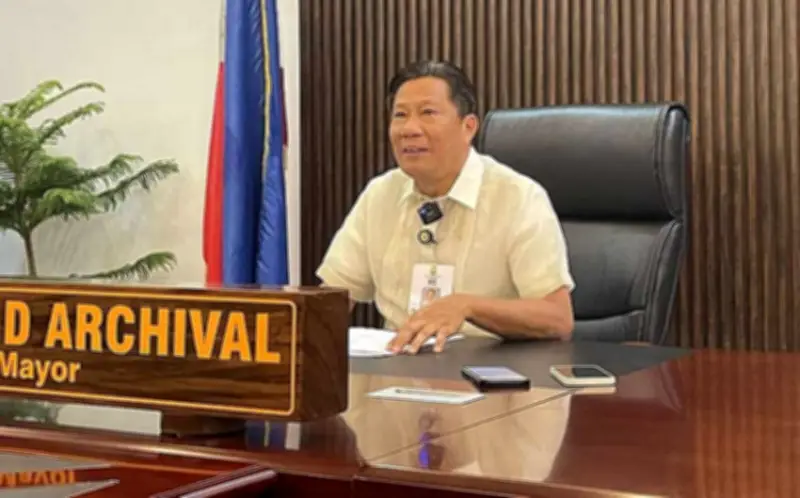
Cebu City Mayor Nestor Archival has issued an executive order (EO) restoring the quarterly distribution of financial assistance for senior citizens and establishing stricter guidelines on benefit claims, validation and reporting requirements to improve accountability and streamline payouts.
Executive Order Details
Under the EO signed on June 3, 2026, qualified senior citizens will receive P3,000 every quarter, equivalent to P1,000 per month, beginning with the second quarter of 2026. The issuance formally shifts the City's senior citizen financial assistance program back to a quarterly distribution schedule, a move City Hall said aligns with the policy direction of both the executive and legislative branches while helping frontline offices manage workloads more efficiently.
Archival said the measure was adopted in consideration of the challenges brought about by typhoon Tino and the need for the City Treasurer's Office (CTO) to expedite the release of assistance to vulnerable sectors. The EO noted that consolidating assistance into quarterly payouts would allow beneficiaries to receive larger amounts at one time while enabling city offices to balance regular government services with ongoing post-typhoon recovery efforts.

Distribution Schedule
Under the new guidelines, senior citizens will receive their assistance every quarter, with payouts expected to follow a regular cycle in April, July, October and December or January, unless modified by a future issuance. The City will conduct distributions over a 10-calendar-day period, with schedules to be announced at least one week in advance. Payout activities will run from 8 a.m. to 3 p.m.
For the first three days of every distribution period, payouts will be held in barangay or school gymnasiums. Bedridden senior citizens will receive house-to-house distribution during the same period. Beneficiaries who fail to claim their assistance during the three-day barangay distribution may still collect their aid at the CTO within the remaining seven days. However, any unclaimed assistance after the 10-day distribution period will be forfeited.
Senior citizens who fail to claim their benefits for three consecutive quarters without valid justification may be temporarily inactivated from the program.
Stricter Identification Requirements
The EO also imposes stricter identification requirements. Qualified recipients must personally present their original Office of Senior Citizens Affairs (Osca) identification card when claiming assistance. Scanned copies, photocopies, and digital reproductions will not be accepted. Senior citizens who have lost their IDs must secure a replacement card or certification from Osca before claiming their assistance.
The order further requires personal claiming of benefits, prohibiting the use of authorization letters during distributions. To strengthen accountability, thumbmarks will no longer be accepted in lieu of signatures. If a beneficiary cannot sign due to illness or illiteracy, an accompanying relative or companion and a barangay official or Gender and Development (GAD) focal person must sign the payroll as witnesses.
Deceased Beneficiaries
Despite the prohibition on authorized representatives, the EO provides an exception for deceased beneficiaries who remain listed in the payroll. Immediate family members may claim the deceased senior citizen's assistance beginning on the fourth day of the distribution period, provided they present the deceased's original Osca ID, death certificate, proof of relationship and a valid government-issued ID. However, family members may only claim the assistance corresponding to the current payout and may no longer collect benefits that were previously forfeited.

Accountability Measures
The EO likewise imposes additional reporting requirements on city personnel involved in the distribution process. Disbursement officers and concerned departments must regularly submit updated lists of senior citizens who are deceased, bedridden, have transferred residence, or have experienced other status changes. For bedridden beneficiaries receiving house-to-house assistance, the City now requires photographic documentation showing the actual turnover of funds. The photos must include the disbursing officer, a representative from the Barangay Affairs Office or a barangay official and a household member of the beneficiary.