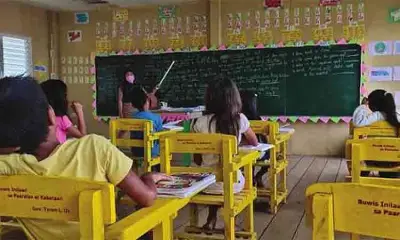
The year 2026 has not suddenly made the teaching profession difficult. The weight has been accumulating silently for many years, but this year feels distinctly different because educators are finally giving that burden a name. Social media posts circulating among teachers, listing behaviors and habits to avoid, resonated deeply not due to their radical nature, but because they sounded achingly familiar.
The Growing Weight of the Teaching Profession
These shared reminders describe the ordinary reality for countless educators: late-night paper checking, time borrowed from family dinners, and the reflexive urge to say "yes" even when the body and mind are exhausted. For many teachers in the Philippines, reading these lists brought a nod of recognition. Some felt a sense of relief in the shared experience, while others felt exposed. The author, writing as a fellow teacher and not an exception, admits to needing these reminders personally, acknowledging the slip into unsustainable habits—sometimes unknowingly, sometimes willfully—until the consequences become unavoidable.
The role of a teacher has expanded far beyond knowing the lesson plan and managing a classroom. It now encompasses significant emotional labor, relentless paperwork, and social expectations that rarely pause. International studies have long warned of burnout in professions where workloads are high and personal control is low. Local surveys in the Philippines echo this finding within schools, particularly where administrative duties compete directly with lesson preparation time. This is precisely why teacher well-being is critical. A tired teacher can still stand before a class, but a depleted one struggles to maintain the patience, creativity, and genuine care that effective teaching demands.

Breaking Harmful Cycles and Finding a Sustainable Path
One pervasive habit many educators fight to break is the tendency to say yes to everything. In a Filipino culture that often praises self-sacrifice, taking on extra work can feel like a moral duty. Accepting one more committee assignment or responding to messages after hours seems harmless in isolation. However, establishing boundaries is not an act of selfishness; it is a necessary practice for clarity and longevity. The author confesses to failing at this, often replying to messages after work under the guise of a "quick" task that rarely is.
Overload becomes dangerously easy to normalize. When everyone in the school environment appears exhausted, constant fatigue starts to feel like the standard. Teachers sometimes joke about surviving on coffee and minimal sleep, framing it as a badge of resilience. Yet, this unending tiredness damages physical and mental health and gradually erodes empathy. Teaching requires full presence, not merely endurance.
Another silent challenge is comparison. It emerges when educators measure themselves against colleagues who seem to publish more, lead more projects, or manage everything seamlessly. However, every classroom, student, and personal life circumstance is different. Filipino teachers often juggle multiple roles both at work and at home. Professional and personal growth is inherently personal and uneven. Remembering this does not eliminate insecurity, but it can make those feelings more manageable.
Reclaiming Voice and Protecting the Person Behind the Role
In the daily struggle to survive the workload, professional development is often the first thing postponed. When tasks pile up, dedicated learning feels like a luxury. However, stagnation slowly drains the joy from the profession. Growth does not always require formal seminars. It can be found in reading a relevant article, observing a peer's technique, or honestly admitting "I don't know" and learning alongside students. These moments, as noted, can bring the vitality back to teaching.
The digital age adds another layer of complexity. A careless social media post can travel far beyond its original context, making a teacher's digital footprint a part of their professional identity. Guarding this space is not about fear; it is about thoughtful professionalism. Many educators, including the author, are learning to pause before sharing online.

These social media reminders also speak to the issue of voice. Teachers are often conditioned—explicitly or implicitly—to remain quiet, avoid friction, and endure policies they know could be improved. Silence feels safer. Yet, thoughtful advocacy is part of the responsibility to the profession and to students. Speaking up does not mean shouting; it means choosing the right moment, grounding concerns in evidence, and having the courage to be clear.
One crucial reminder hits closest to home: before the teacher came the person. The profession takes much, but it should not take everything. Teachers value family, relationships, and being present in their own lives. When work consistently pushes these aside, something essential wears thin. Balance is imperfect, and some weeks will fail. What matters is recognizing when work begins to crowd out life itself.
A related, quiet fear is the fear of not mattering. In education systems increasingly driven by metrics and data, it is easy for an educator to feel invisible. However, teaching continues to shape lives in small, steady ways. Each careful explanation, each respectful correction, and each word of encouragement leaves a mark that may not be immediately visible but endures.
The call of 2026 is not a demand for teachers to do more. It is an invitation to do better by committing to what is sustainable. Teaching as a human-centered profession deserves protection, not because teachers are fragile, but because the work itself is profoundly human. These circulating reminders are not rigid rules to obey, but mirrors for self-reflection. The author needs them as much as any colleague. Perhaps this shared honesty is where professional dignity begins: teaching with deep commitment, living with conscious balance, and choosing not to disappear in the process.
– Herman M. Lagon, who describes himself as a "student of and for life" aspiring to a life-giving world grounded in social justice. His views are his own.