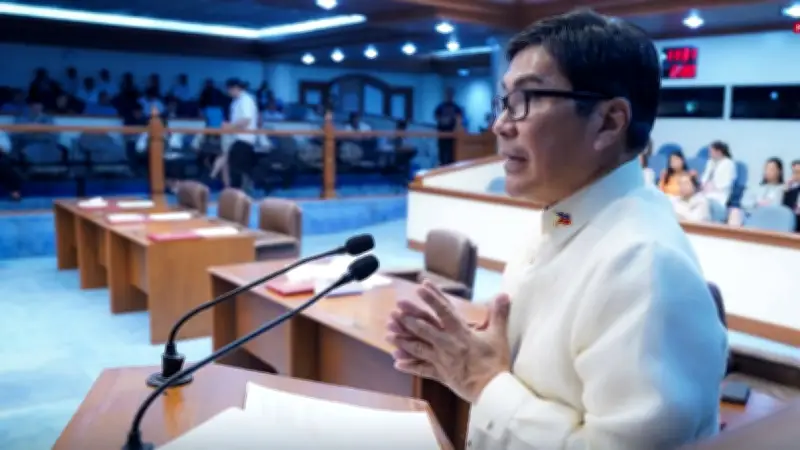
Senator Erwin Tulfo revealed that several congressmen in the House of Representatives are opposing the signing of the Senate version of the bill that seeks to institutionalize the Assistance to Individuals in Crisis Situations (AICS) due to a provision that prohibits government officials from participating in the distribution of aid.
According to Tulfo, the disagreement has resulted in a "deadlock" over the controversial "anti-epal provision." In a media statement after a special session in the Senate on Wednesday, he said, "It seems they don't like the anti-epal provision. We added that because it has become a practice. They use it during elections—distributing AICS. We removed that."
"Since I was still with the DSWD, I saw that and I banned politicians from it. Now they want to remove the provisions that prohibit politicians," Tulfo added.

The senator explained that the provision aims to prevent the use of aid for politicking or "political patronage," which he said has long been an issue in the program's implementation. He emphasized that the provision clearly prohibits elected officials and government employees from directly distributing financial assistance from the Department of Social Welfare and Development (DSWD).
The AICS is a DSWD program that provides financial aid to individuals in crisis, including medical expenses and other urgent needs. Tulfo previously headed the agency before becoming a senator.
Tulfo also explained the concept of "epal," a slang term referring to politicians who insert themselves into activities where their presence is unnecessary. He stressed that politicians should not be involved in aid distribution because the funds come from the government and should only be implemented by agencies like the DSWD.
The AICS bill is among the priority measures of President Ferdinand Marcos Jr.'s administration, aiming to make the program a law and ensure regular funding. Due to the disagreement, the bill is expected to be further discussed in a bicameral conference committee to reconcile the versions of the Senate and the House.