University of Cebu instructor Bong Jobert Dechos has spent years performing across different dance genres before entering academia. He believes teaching folk dances is vital for preserving Filipino identity. “Teaching folk dances is a vital aspect of preserving our Filipino identity,” Dechos said. “Being given the opportunity to handle Philippine Folk Dances and International Folk Dance and Other Dance Forms is a profound privilege. It allows me to channel years of dedication and instill that same lifelong passion within the next generation of physical educators.”
Handurawan 2026 Culminating Presentation
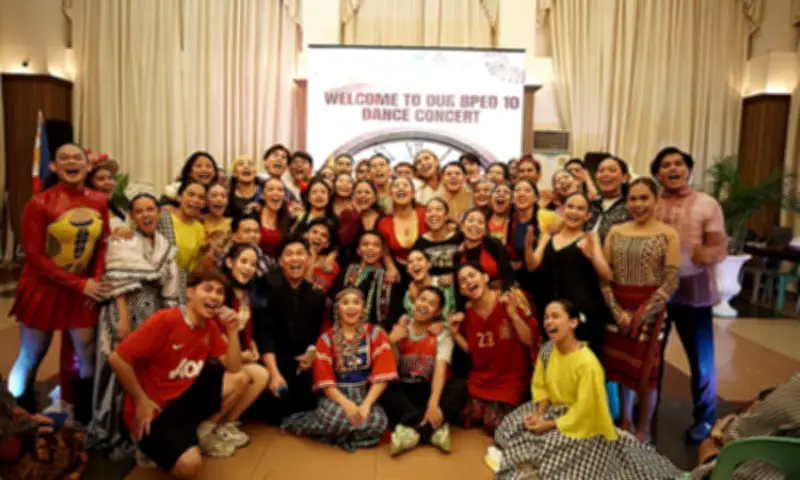
His students recently showcased that passion during “Handurawan 2026,” a culminating presentation featuring 19 Philippine folk dances and 12 international dance forms, ranging from staples such as Tinikling and Pandanggo sa Ilaw to global traditions and contemporary styles. The extensive repertoire challenged students not only to master choreography but also to understand the cultural contexts behind each performance. “With only 53 students involved, this was the smallest group I have managed since I started organizing culminating activities for these subjects. However, this smaller number allowed me to tailor the dance repertoire directly to their unique abilities and capacities,” said Dechos.
Student Perspectives on Cultural Preservation
For student Beau Dela Cerna, the experience carried personal meaning. “Since I was a child, I’ve been actively participating in fiestas,” Dela Cerna said. Aside from performing, Dela Cerna served as stage manager and helped oversee costumes, props and portions of the choreography. For the student, folk dances are inseparable from Filipino identity. Among the repertoire, Dela Cerna found Pangalay to be the most difficult because of the balance and coordination required throughout the performance. Yet the challenge only deepened the student’s appreciation for the art form. “As a student and future educator, I encourage everyone not to forget our culture but to continue giving importance to it,” Dela Cerna said.

Another student, Evander Kit Gabud, shared a similar perspective. Having performed Festival, Tinikling and Pastores, Gabud identified Tinikling as the most demanding dance because of the precision required. “You need timing, rhythm and communication with your partner,” he said. The challenge was familiar territory. Gabud has been dancing since childhood and was a member of the Pajo Elementary Dance Group in Lapu-Lapu City, a program known for developing young cultural performers. For him, preserving traditional dances means preserving a way of life. “It’s important to preserve our traditional dances because this is part of the Filipino way of life,” he said.
Expert Evaluation and Authenticity
The commitment to authenticity was also evident behind the scenes. Guest evaluator Caesar Amirhassan Nimor, who has more than 18 years of combined dance experience across various institutions and currently teaches in graduate school, attended the presentation at Dechos’ invitation. “I see a lot of talents and future potential teachers for dance,” Nimor said. According to Nimor, authenticity in cultural dance extends beyond memorizing movements. Understanding the story and meaning behind each performance is equally important. “The expression goes with the dance,” he said. “If you know the meaning of the dance, the expression becomes spontaneous. I don’t only teach the dance steps, but the meaning behind the dance.” He also emphasized the importance of accuracy — from costumes and props to hand gestures and footwork — ensuring that cultural traditions are represented respectfully and correctly.
Those lessons reflect what Dechos has consistently told his students since their first meeting. “They are not just future teachers; they are the future preservers of our culture and tradition,” he said. “The only way to truly preserve our heritage is by developing a deeper understanding of the importance and relevance of these diverse folk dances.” The irony is that many Filipinos only realize the value of folk dance after graduation. As Dechos put it, “We must always look back with gratitude to our past, for it is the foundation of everything we hold in the present.”