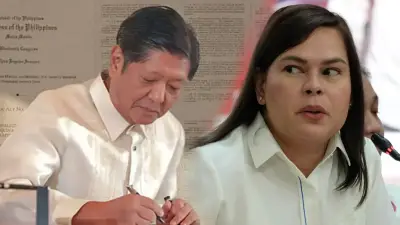
President Ferdinand "Bongbong" Marcos Jr. has officially enacted the country's spending plan for the coming year, signing into law the General Appropriations Act (GAA) for 2026 with a total value of P6.793 trillion. The signing ceremony took place on Monday, January 5, 2026.
A Budget Forged From Challenges
In his remarks, President Marcos framed the new budget as a direct response to a difficult 2025, a year he said tested the nation with climate disruptions, earthquakes, economic uncertainty, and exposed widespread corruption. He stated these painful challenges made it clear that real change could no longer wait.
"These challenges are painful, but they also made one thing clear: real change could no longer wait," Marcos said. He added that the 2026 budget marks the start of moving forward with difficult but necessary governance reforms to rebuild public trust and deliver an honest, effective government.

The legislative process for this budget was notable for its enhanced transparency. Congress broke tradition by broadcasting some bicameral conference committee meetings online, a move responding to past public concerns over budget controversies. The ratified GAA was transmitted to the Executive branch on December 29, 2025, leading to a brief period where agencies operated on a reenacted 2025 budget until the new one was signed.
Key Sector Allocations and Priorities
The 2026 national budget directs massive funding toward human development and social protection, aligning with the administration's medium and long-term plans.
The education sector receives the largest share, with more than P1.34 trillion allocated. This funding aims to create new teaching and non-teaching positions, promote teachers, improve learning quality, and address the classroom backlog.
Healthcare is another top priority, receiving what the President called the largest health sector budget in history at P448.125 billion. This is intended to promote Universal Health Care access, strengthen disease surveillance, and improve PhilHealth benefits to lower out-of-pocket expenses for families.
To bolster food security, the agricultural sector is allocated over P297 billion. This budget will focus on modernizing supply systems and supporting farmers and fisherfolk, including crucial investments in farm-to-market roads to reduce transport costs and post-harvest losses.
Furthermore, social services get more than P270 billion to transform the social protection system, aiming to move beyond short-term relief toward addressing systemic vulnerabilities and achieving a single-digit poverty rate by 2028.
Safeguards and Anti-Corruption Measures
President Marcos strongly emphasized accountability and transparency in the implementation of the 2026 budget. He highlighted a specific provision that prohibits politicians from any involvement in the distribution of cash or financial assistance, ensuring aid reaches intended beneficiaries without patronage.
A significant portion of his address focused on controlling the Unprogrammed Appropriations (UA). He thanked Congress for limiting these funds to essential needs and vowed they would not be treated as "blank checks" or a backdoor for discretionary spending.
"We will not allow the Unprogrammed Appropriations to be misused," Marcos asserted. He explained that UA releases would only happen after meeting clearly defined triggers and careful validation, with details on funding sources and purposes made transparent to the public.
To enforce this discipline, the President revealed he had vetoed P92.5 billion worth of items under the Unprogrammed Appropriations.
Addressing the Filipino public directly in Filipino, Marcos acknowledged past public apprehensions about the budget. "We feel your concerns and apprehensions regarding the previous budget. I share your desire to ensure that every peso of taxes goes to the right projects," he said. He promised a more prudent, careful, and responsible approach to spending public funds, with every program undergoing thorough scrutiny for clear public benefit.

The enacted budget, now known as Republic Act 12314, also includes funds for the updated base pay and increased subsistence allowance for military and uniformed personnel.