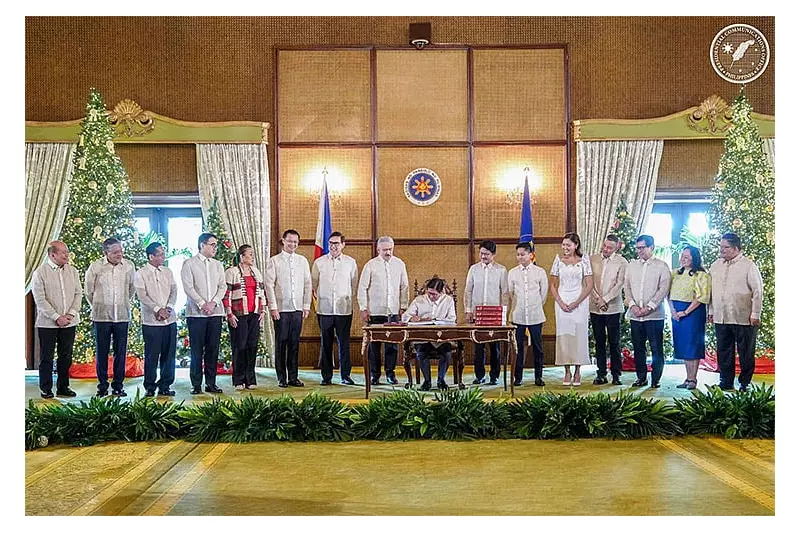
President Ferdinand Marcos Jr. has taken a decisive step to enforce stricter fiscal control by vetoing nearly P92.5 billion worth of line items under the Unprogrammed Appropriations (UA) of the 2026 General Appropriations Act (GAA). The move, announced on January 6, 2026, aims to curb discretionary spending and restore public trust.
What Projects Were Vetoed?
The President excised seven specific allocations from the spending plan previously approved by Congress. The vetoed items include substantial sums intended for various government initiatives.
The complete list of vetoed appropriations is as follows:

- Budgetary Support for Government-Owned and -Controlled Corporations: P6.895 billion
- Prior Years’ Local Government Unit Shares: P14.623 million
- Payment of Personnel Services Requirements: P43.245 billion
- Fiscal Support for Arrearages for Comprehensive Automotive Resurgence Strategy (CARS) Program: P4.32 billion
- Revitalizing the automotive industry for competitiveness enhancement (RACE) Program: P250 million
- Comprehensive and adequate insurance protection of strategically important government assets and interest: P2 billion
- Government of the Philippines Counterpart for Certain Foreign-Assisted Projects: P35.77 billion
Key Programs Retained in the Unprogrammed Fund
Not all items under the UA were removed. President Marcos retained three major allocations, signaling continued priority for specific strategic areas.
The retained funds include:
- Support for Foreign-Assisted Projects: P97.306 billion
- Program on Risk Management: P3.6 billion
- Revised Modernization Program of the Armed Forces of the Philippines: P50 billion
Strengthening Safeguards and Transparency
President Marcos emphasized that this veto is a cornerstone of his administration's commitment to fiscal discipline. He clarified that Unprogrammed Appropriations are not blank checks and should not serve as a backdoor for discretionary spending.
“Let me be clear: the Unprogrammed Appropriations are not blank checks. We will not allow the Unprogrammed Appropriations to be misused or treated as a backdoor for discretionary spending,” Marcos stated.
He outlined that the utilization of any remaining UA funds will be governed by strict triggers and validation processes. Releases will be made transparent, with public details on the funding source and purpose.
Political Support and Historical Context
The presidential decision has garnered support from lawmakers who have previously raised concerns about the potential misuse of unprogrammed funds. Senator Erwin Tulfo, the vice chairman of the Senate Committee on Finance, lauded the veto.
Senator Tulfo had earlier questioned the bicameral conference committee's decision to retain P243 billion in unprogrammed appropriations in the final 2026 budget bill. He warned that such large, loosely defined funds could be susceptible to abuse, having been linked in the past to controversies like ghost flood control projects.
This decisive action by the President sets a firm tone for the administration's handling of the 2026 national budget, prioritizing accountability and careful fiscal management over flexible but risky spending mechanisms.