A recent nationwide survey has revealed a clear consensus among Filipinos regarding which international partners they trust to help the Philippines protect its national interests in the face of ongoing tensions in the West Philippine Sea (WPS).
Overwhelming Trust in Like-Minded Allies
The survey, commissioned by the think tank Stratbase and conducted by Pulse Asia from December 12 to 15, 2025, involved 1,200 respondents and has a margin of error of +/- 2.8 percent. It allowed participants to select up to five countries or organizations they believe the Marcos administration should collaborate with.
The results were decisive. The United States garnered the highest trust rating at 82 percent, followed by Japan at 64 percent, Canada at 58 percent, and Australia at 51 percent. In stark contrast, only 11 percent of Filipinos, or roughly one in ten, expressed trust in China.

Victor Andres Manhit, Founder and CEO of Stratbase, stated that the findings reflect strong public confidence in partners that respect international law and a rules-based order. "Filipinos know who is violating our rights, and they know who our friends are," Manhit emphasized.
A Pattern of Aggression and Diplomatic Protests
The survey's context is a series of repeated Chinese actions in the disputed waters. According to reports, China has persistently harassed Philippine vessels using dangerous blocking maneuvers and water cannons, endangering Filipino fishermen and Philippine Coast Guard (PCG) personnel.
Data from the National Maritime Council shows that by the third quarter of 2025, 78 incidents had been reported. These include:
- 37 instances of shadowing
- 13 radio challenges
- 7 dangerous maneuvers
- 2 water cannon attacks
- 1 ramming incident
- Blocking activities and the laying of nets
In a concerning December incident, the China Coast Guard had a "close and direct" contact with three Filipino fishermen, resulting in injuries and damage to their boats. These actions directly threaten Philippine sovereignty, food security, and the livelihoods of coastal communities.
The Philippine government has responded with consistent diplomatic protests. In 2024 alone, at least 47 protests were filed. Data from the National Task Force for the West Philippine Sea indicates a total of 445 diplomatic protests lodged against China since 2020, underscoring a continuing pattern of behavior rather than isolated events.
A United Front and a Call for Firmness
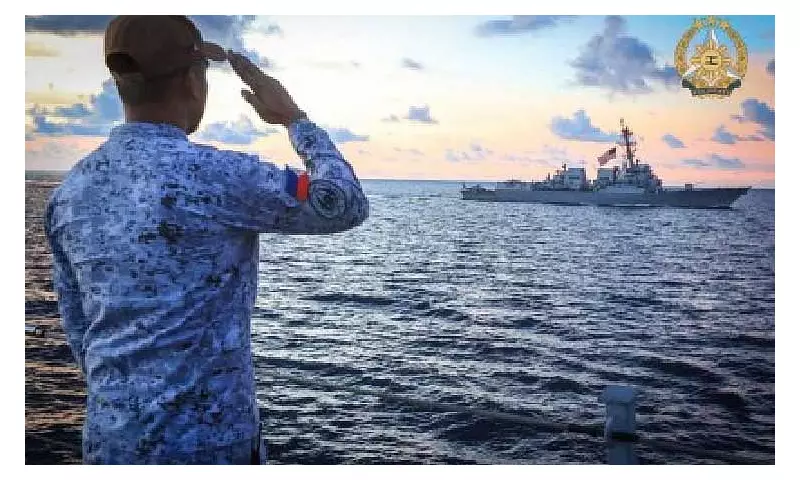
Despite these challenges, the Philippines maintains a united approach in defending its maritime domain. The Armed Forces of the Philippines (AFP) and the PCG remain on the frontlines, sustaining a strong presence and enhancing cooperation with trusted partners.
Manhit praised the restraint and courage of uniformed personnel and called for their full support. He stressed that the Philippines must not tolerate China's illegal actions. "I expect the government to stand firm, to protect our seas, and to work closely with countries that share our commitment to peace and a rules-based order," he concluded.
The survey results and the documented incidents present a clear picture of public sentiment and the geopolitical reality in the West Philippine Sea, highlighting the critical importance of strategic alliances in safeguarding national rights.