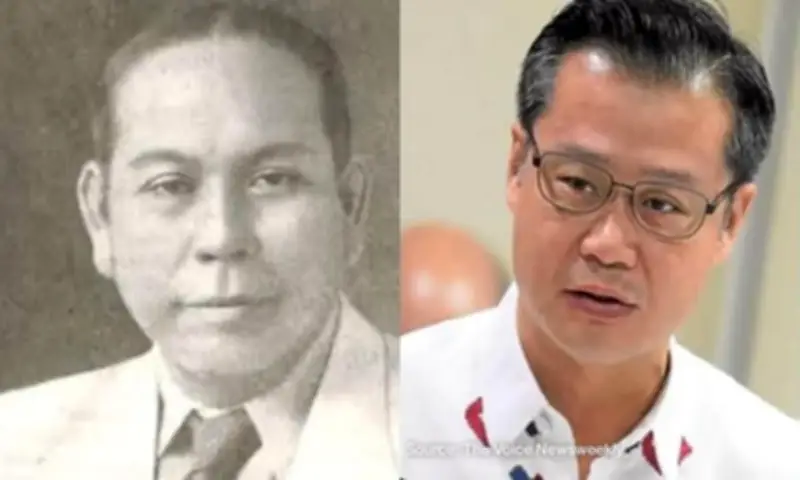
The ongoing Senate crisis in 2026 has brought to light a historical Supreme Court case involving an eminent Cebuano, Mariano Jesus Cuenco (1888-1964), who served as Senate president, assemblyman, and governor. The events leading to the current mess began on June 1 and 2, when the 13-person majority bloc led by Allan Peter Cayetano (APC) boycotted sessions, resulting in no quorum and a paralyzed chamber. On June 3, Francis "Chiz" Escudero attended, raising the minority to 12, enabling it to claim a quorum. This led to a "counter-coup," stripping the majority label from the Cayetano bloc and installing Sherwin "Win" Gatchalian as president pro-tempore and acting Senate president.
The Bone of Contention: Quorum
The Cayetano bloc argues there was no valid quorum and APC has refused to step down. The Constitution requires a majority of each House to constitute a quorum, which in the 24-member Senate means 13 senators. The Gatchalian bloc, however, claims quorum existed by counting only 22 members, as Jinggoy Estrada was arrested on plunder charges and "Bato" Dela Rosa was hiding from an International Criminal Court warrant. They cite the Supreme Court ruling in Avelino vs. Cuenco (GR # L-2821), which introduced the concept that senators beyond the Senate's "coercive jurisdiction" may not be counted in determining quorum. They also point to a precedent on May 5, 2015, when then-Senate President Franklin Drilon declared a quorum with only 12 senators present, as Bong Revilla and Juan Ponce Enrile were detained.
A Principal Figure in the 1949 Crisis
Mariano Jesus Cuenco was the respondent in the Supreme Court case cited by the new majority. A Cebu governor and assemblyman from Cebu's old fifth district, he became a senator and the fourth Senate president after the war. Cuenco, after whom Cebu City's M.J. Cuenco Avenue is named, was born in Carmen town and studied at Colegio de San Carlos (now University of San Carlos). He was installed as Senate president on February 18, 1949, under controversial circumstances. In that session, senators Lorenzo Tanada and Prospero Sanidad planned to present charges of corruption against then-Senate President Jose Avelino. Avelino's group delayed the expose, and after a commotion, Avelino banged the gavel and led his faction out. The remaining 12 senators continued, declared the presidency vacant, and installed Cuenco.

1949 and 2026: Similarities and Differences
Both cases involve disputes over Senate leadership, control of committees, and the Blue Ribbon Committee. In 1949, a rump session proceeded after a questionable adjournment; in 2026, a questionable session followed a two-session boycott. One elected a new president after declaring the seat vacant; the other chose a president pro-tempore as acting president. President Elpidio Quirino recognized Cuenco's election, while Malacañang has recognized the new majority in 2026 as a way to break the legislative impasse.
The Corruption Factor
An uncanny parallelism is the corruption issue. In 1949, senators were about to expose corruption involving the Senate president. In 2026, the controversy is about controlling the Senate to push competing narratives on corruption, with the 2028 presidential race and the impeachment trial of Vice President Sara Duterte as underlying conflicts. Both groups face corruption charges before courts and public opinion.
Sole Prerogative of the Senate
Selection, suspension, or removal of its president is the Senate's sole prerogative. In 1949, the Supreme Court initially declined to rule on the feud, citing a political question, but later reconsidered due to legislative paralysis and threat to public order. The validity of the 1949 exception has not been raised by the Cayetano bloc in public statements, but they argue that the 2026 circumstances are different. Some lawyers contend that while 12 senators can constitute a quorum under the exception, the election of a permanent president or president pro-tempore requires an absolute majority of all members, as the business of choosing leaders has a higher threshold.