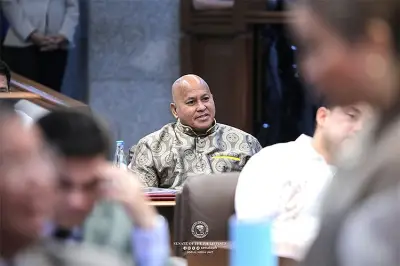
The Integrated Bar of the Philippines (IBP) has weighed in on the ongoing leadership dispute in the Senate, asserting that the chamber had a valid quorum during its session on June 3. On that day, the remaining senators declared all positions vacant and elected Senator Sherwin Gatchalian as Senate president pro tempore.
IBP cites Avelino vs. Cuenco case
The IBP referred to the Supreme Court decision in Avelino versus Cuenco (G.R. No. L-2821, March 4, 1949) to determine the existence of a quorum. Under Article VI, Section 10 of the 1935 Constitution, a majority of each House constitutes a quorum to do business, but a smaller number may adjourn from day to day and compel the attendance of absent members.
In the Avelino case, 12 senators called for a quorum after then-Senate President Jose Avelino and nine allied senators walked out when Senator Lorenzo Tañada threatened to expose corruption allegations against Avelino. The remaining 12 senators declared all positions vacant and elected Senator Mariano Jesus Cuenco of Cebu as Senate president. The Supreme Court ruled that the 12 senators constituted a majority of the 23-member Senate, as one member was in the United States.

Application to current situation
The IBP argued that under the Avelino doctrine, the Senate had a quorum on June 3 because the majority of the 22 sitting senators (since two seats were effectively vacant) was 11. Senator Ronald "Bato" dela Rosa was in hiding, while Senator Jinggoy Estrada was detained on non-bailable plunder charges. Therefore, the 11 senators present represented a majority. The IBP emphasized that all actions and resolutions passed during that session are presumed regular in the discharge of official functions.
For two days, the Senate held no sessions. However, Senator Francis Escudero later joined, bringing the total to 12, which again constituted a quorum. Dela Rosa and Estrada were not counted as they could not be compelled to attend.
Contrasting interpretations
Senator Alan Peter Cayetano insists he remains Senate president, while Senator Loren Legarda declared the leadership change invalid, arguing that 13 votes are required under Article VI, Section 16(1) of the 1987 Constitution, which states that the Senate shall elect its President by a majority vote of all its members.
Given these conflicting legal interpretations, the IBP suggests that only the Supreme Court can settle the matter by clarifying whether the Avelino doctrine applies to the current Senate leadership crisis.