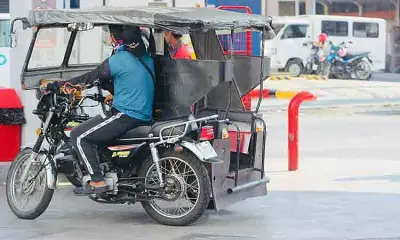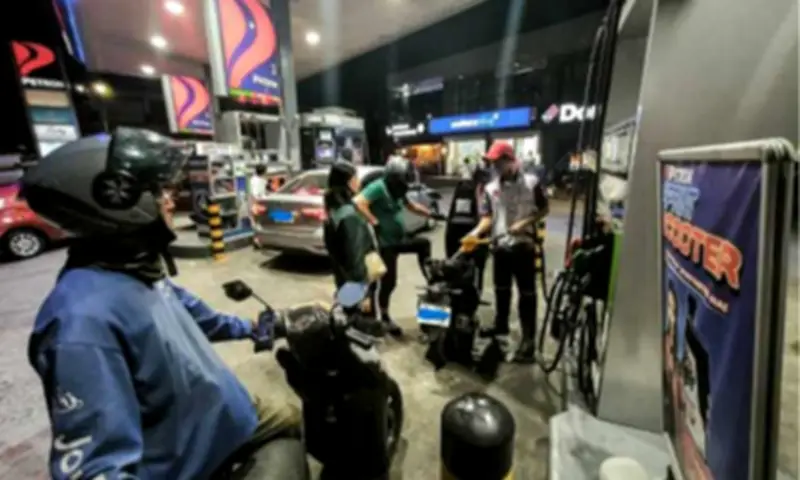
Long queues at the pumps have become a grim fixture of the daily commute for local public utility vehicle drivers in Mandaue City. Drivers are increasingly vocal about the uneven rollout of government fuel subsidies and the bruising impact of fuel price volatility on their households.
Daily Struggle for Drivers
For drivers navigating the streets of Mandaue, the struggle is not just about catching passengers. It is a tense daily calculation of operational costs, shifting government aid criteria, and the survival of their families.
Ronaldo Ramos, who has been driving for years, expressed deep frustration over the systemic gaps in how the government's fuel subsidy program is distributed. Speaking from a Flying V gas station in Mandaue City where his vehicle is officially registered for the program, Ramos revealed that many in the transport sector feel completely left behind.

"We are frustrated because many of us drivers did not receive the promised 5,000-peso assistance, nor were we included in the additional 1,500-peso list," Ramos said, highlighting a major breakdown in the subsidy distribution system. "We have no choice but to endure this and keep moving forward because we cannot afford to stop working."
Piecemeal Relief and Administrative Hurdles
Ramos currently relies on a piecemeal discount of 10 pesos per liter applied directly at the pump, a mechanism that tracks a running balance on his receipts. However, even this relief comes with administrative hurdles, as the system enforces strict weekly cutoffs every Monday, complicating how drivers manage their daily fuel intake against actual earnings.
The pressure is mounting as the new school year approaches, a period that traditionally demands higher household expenses. "If we do not drive, our families will starve," he explained. "With classes starting soon, we desperately need money to buy school supplies and meet the requirements for our children. The passenger numbers are low, and when fuel costs eat up most of what we take in, there is barely anything left to bring home."
Gasoline Drivers Left Out
While diesel drivers like Ramos grapple with administrative delays, gasoline-powered public transport operators face an even starker reality: complete exclusion from the station-level subsidy program.
Steve Tangub, who operates a rented gasoline-powered vehicle, pointed out the glaring inequity in the government's current relief framework, which heavily favors diesel lines while ignoring the sharp price spikes hitting gasoline users. "Diesel drivers were able to avail of the 10-peso discount, but there is absolutely nothing for us because we use gasoline," Tangub said, noting that gasoline prices in the area had previously surged to nearly 74 pesos per liter. "We are heavily affected by these prices because gasoline is incredibly expensive, yet our sector was completely excluded from the fuel subsidy program."
Tangub said that while diesel prices have also risen significantly, reaching up to 55 pesos per liter at their peak, gasoline drivers have had to absorb their higher fuel costs entirely out of pocket without any safety net.
Survival Tactics and Long Lines
To survive the financial squeeze, Tangub and hundreds of other gasoline drivers are forced to hunt for the cheapest fuel rates in Mandaue City. This has turned specific low-cost gas stations into chaotic bottlenecks. "Whenever prices drop even a little bit, this specific station becomes incredibly crowded and the lines get very long because it is known as the cheapest option in Mandaue," Tangub said. "It offers a bit of an advantage, but passenger volumes are still low right now. We can only hope that things improve once classes are fully underway."
Anxiety Over Long-Term Outlook
Both drivers expressed deep anxiety about the long-term outlook of their livelihood, noting that the temporary price drops offer little comfort against global uncertainties. "We all know these prices will never truly go back to the 60-peso range," Tangub remarked grimly. "The moment a global conflict or a war escalates somewhere else, fuel prices will immediately skyrocket again, and we will be right back to where we started, struggling to survive."

As the transport sector bears the brunt of these economic shifts, the stories of Ramos and Tangub underscore a growing demand from local transport workers for a more inclusive, streamlined and aggressive government intervention to protect the city's most vulnerable front-line workers.