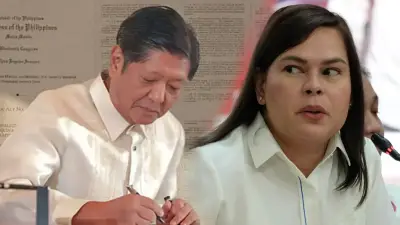
In a significant legal development, Atty. Manases Carpio, the spouse of Vice President Sara Duterte, has formally requested a Quezon City court to invalidate a subpoena demanding the submission of his annual Income Tax Returns (ITRs). This subpoena was issued by the House Committee on Justice as a component of its ongoing investigation to determine whether there is sufficient basis for a potential impeachment case against Vice President Sara Duterte.
Scope of the Subpoena and Carpio's Objections
The subpoena specifically directs the Bureau of Internal Revenue to provide the ITRs of the Duterte-Carpio couple spanning from 2007 to 2025. However, Carpio has raised strong objections, arguing that he is not a party to the case and, therefore, the committee lacks jurisdiction over him. He emphasized that tax returns are considered private documents, containing sensitive personal information about a taxpayer's income and expenses, and cannot be disclosed without proper authorization.
Privacy Concerns and Legal Arguments
In his motion, Carpio stated, "A taxpayer's tax returns, which contain personal information relating to a taxpayer's income and expenses, are confidential information. It cannot be divulged without notice to, nor the prior written consent of the taxpayer." This stance highlights the tension between individual privacy rights and governmental investigative powers.

Congressional Authority and Counterarguments
On the other side, Bicol Saro Representative Terry Ridon has asserted that the House committee possesses the authority to request documents relevant to its investigation. This is to ascertain if there are adequate grounds for initiating impeachment proceedings. Ridon further contended that privacy claims cannot be upheld when the matter falls within the constitutional authority of Congress to conduct impeachment investigations.
The case underscores a broader debate over the limits of congressional power versus personal privacy in the context of high-profile political inquiries. As the legal proceedings unfold, the outcome could set a precedent for future impeachment investigations and the handling of confidential taxpayer information in the Philippines.