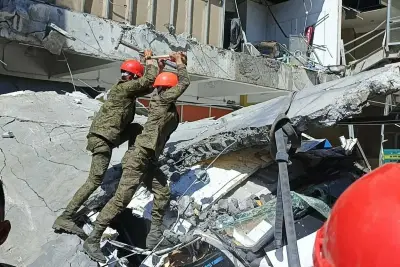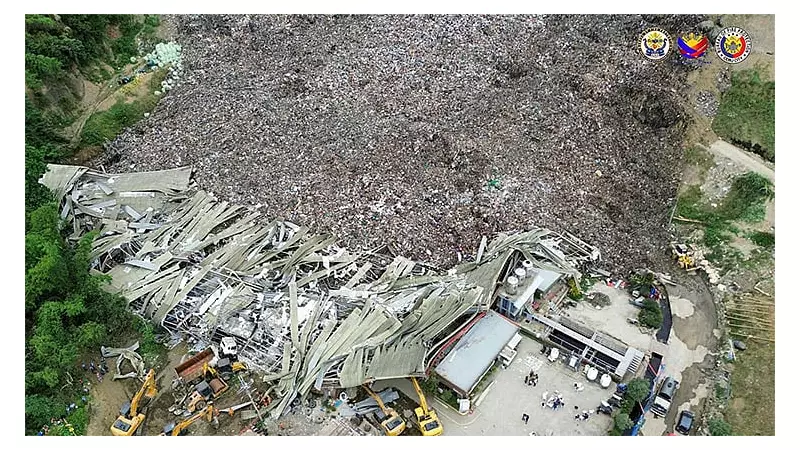
The recent tragedy at the Binaliw landfill has laid bare critical weaknesses in Cebu City's approach to handling its garbage, forcing officials to confront an urgent need for systemic change. The incident, which involved a massive "trash slide," has highlighted an over-dependence on a single disposal site, severe environmental risks, and a logistical system pushed to its breaking point.
A Milestone in Recovery and a Call for Independent Probe
City Councilor Joel Garganera, who chairs the committee on environment, stated that the recovery of the last missing employee on Sunday, January 18, 2026, marked a somber milestone. The worker had been trapped since the landslide of garbage occurred on January 8. However, Garganera immediately shifted focus to the necessary next steps: rehabilitating the landfill, mitigating environmental dangers, and fostering a public culture of strict waste segregation and recycling.
He strongly advocated for the City Hall to launch its own investigation into the disaster, rather than relying solely on the probe by the Department of Environment and Natural Resources (DENR). This stance comes despite Mayor Nestor Archival's Sunday statement of support for the DENR's findings. "Don't we have our own investigation? We have lawyers and technical people on solid waste management... we want to know why it happened," Garganera emphasized, linking transparency directly to restoring public trust.

He also clarified that the city's declaration of a state of calamity on January 11 was crucial not only due to the tragic loss of life but also to legally expedite the procurement of emergency waste disposal alternatives.
Logistical Nightmare and a Search for Alternatives
The scale of the problem is daunting. Cebu City produces an estimated 600 to 700 tons of waste every single day. Garganera pointed out that the failure of the Binaliw site caused the entire waste management system to collapse, exposing the peril of having only one primary facility. As a temporary fix, garbage is being hauled to a site in Polog, Consolacion, but the councilor described this as a "logistical nightmare" plagued by soaring costs and major traffic disruptions.
The situation is set to become even more dire. The temporary agreement for the Consolacion site expires on February 11, 2026, forcing the city to scramble for another location. Potential options in Minglanilla, Pinamungajan, Toledo City, or Bogo City all come with heavy logistical burdens and the strong likelihood of opposition from local communities. "Just imagine 1,000 tons a day... they [alternative sites] will be overwhelmed... it will disturb the local community," Garganera warned.
A 'Disaster Waiting to Happen' and the Push for Sustainable Solutions
Reflecting on the Binaliw site itself, Garganera labeled it a "disaster waiting to happen" and raised the critical question of who could guarantee that the mountainous pile of garbage would not slide again. Looking beyond immediate crisis management, he remains a vocal proponent of adopting waste-to-energy technology as a long-term, sustainable solution. In fact, he plans to travel to Yokohama, Japan, on Tuesday, January 20, to observe their advanced waste management systems firsthand.
The Binaliw tragedy serves as a stark wake-up call for Cebu City. It underscores that without immediate and comprehensive reforms—including infrastructure diversification, environmental safeguards, and public cooperation—the urban center remains vulnerable to repeating this devastating crisis.